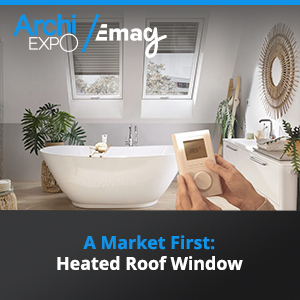


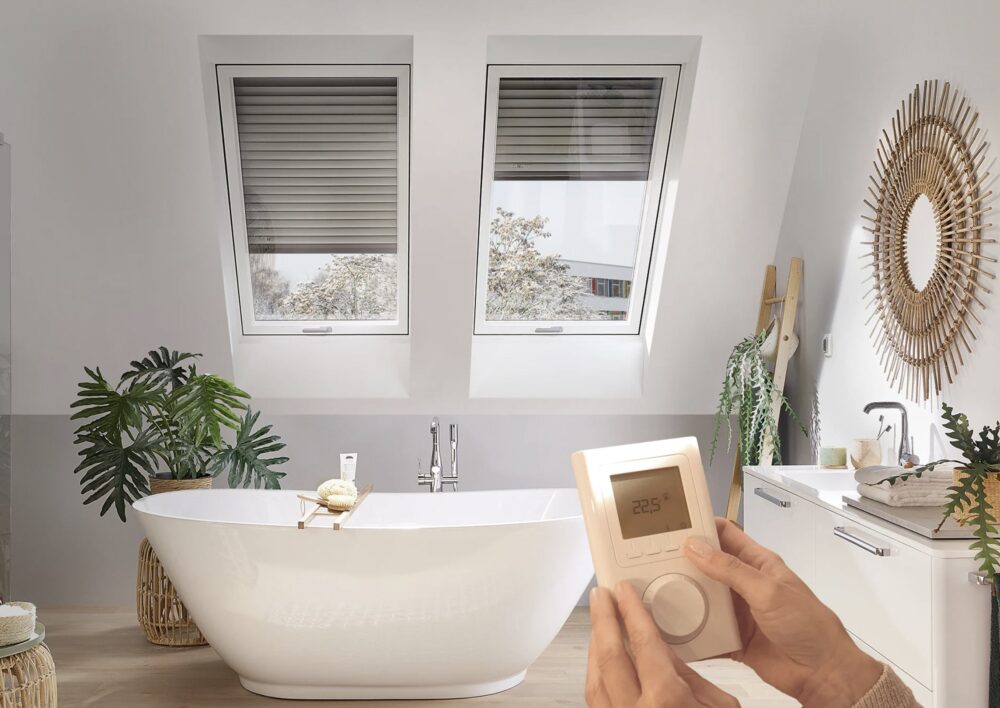

A pioneering infrared glazing technology transforms the roof window into a radiant heat source designed for compact, humid, and highly insulated living spaces.
At the 2025 ARTIBAT trade fair, Roto unveiled Designo Heat, the first heated roof window on the market, marking a notable step forward in high-performance building envelope innovation. Using a transparent metallic-oxide coating embedded in a triple-glazed assembly, the window generates infrared radiation that warms the room within minutes, offering architects and interior designers a new way to integrate heating where space is limited.
Beyond comfort, the system addresses a persistent challenge in attic bedrooms and sloped-roof bathrooms: condensation. By maintaining a consistently warm glass surface and avoiding air movement, Designo Heat minimizes moisture buildup, reduces risks of mold, and enhances indoor comfort for sensitive occupants. With smart-home-compatible controls and thermal performance meeting modern standards, Roto’s latest innovation invites industry professionals to rethink the role of roof windows in future climate-responsive building design.
Technical Features: Triple Glazing and Combating Humidity and Condensation
At the core of Designo Heat is a deceptively simple yet technically sophisticated premise: transform the roof window into a heating surface without compromising thermal or acoustic performance. Roto achieves this through a triple-glazed assembly equipped with invisible metallic-oxide coatings that emit infrared radiation when powered. This approach preserves the window’s core specifications—a thermal coefficient of 0.99 W/m²K and acoustic insulation of 38 dB, while adding an entirely new function.
“The heating is not connected to the thermal insulation coefficient of the window itself,” the development team at Roto explained in an email correspondence with ArchiExpo e-Magazine. “This ensures the performance figures remain intact.”
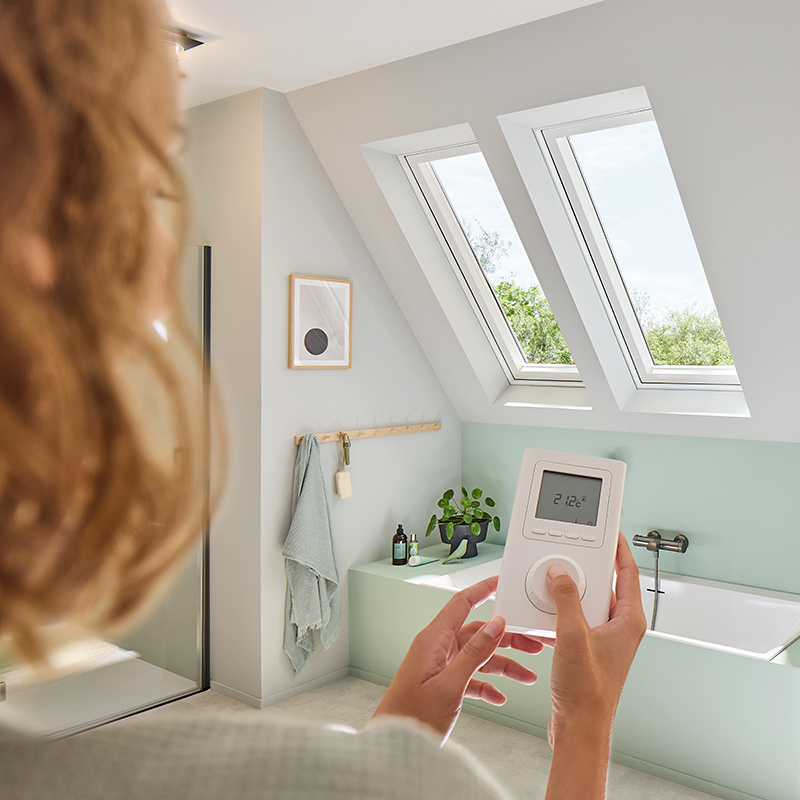
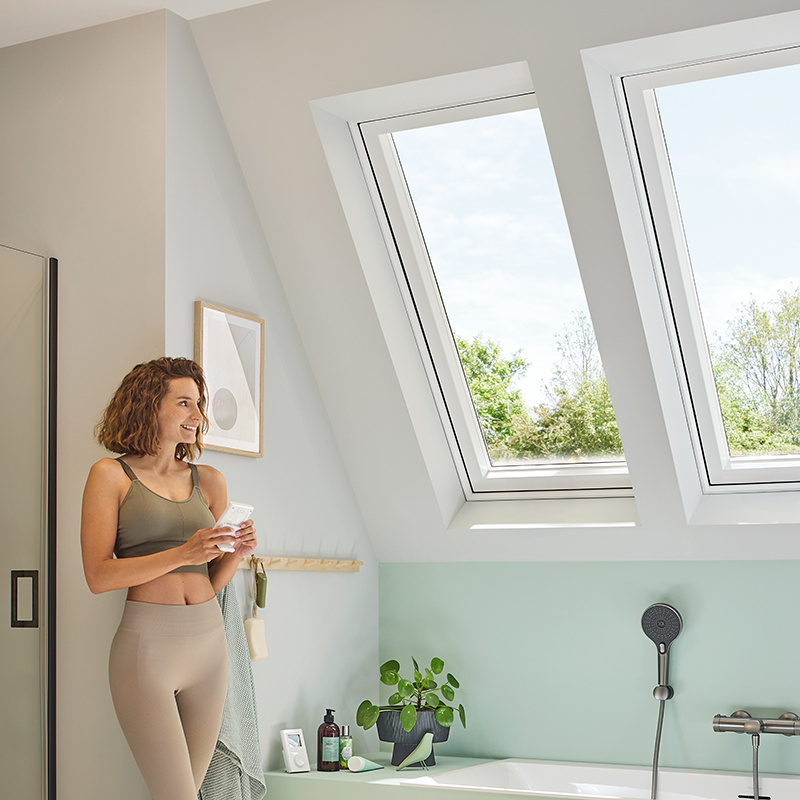
This integration is especially relevant in compact or high-humidity spaces under the roof. By warming the inner glass surface, the system prevents fogging while active and can even eliminate light residual moisture if activated after condensation has formed. Although condensation control was not a driving factor during development, Roto acknowledges the advantage as a meaningful secondary benefit:
“The positive effect of preventing condensation is an additional advantage, but it has had no direct influence on the development.”
For architects and designers, this combination of thermal performance, radiant heat, and moisture control opens opportunities to rethink comfort under the roof. The warm glazing radiates heat evenly through the space without circulating air, enhancing comfort and improving overall indoor quality, particularly in bathrooms and attic rooms where convection heaters are difficult to install. The result is a multifunctional window solution that performs structurally, thermally, and now climatologically, all within the same envelope component.
Integrating Designo Heat into Smart Home Ecosystems
Designo Heat has been engineered with system flexibility in mind, reflecting Roto’s long-standing strategy of treating roof windows as active components within broader home automation frameworks. While the product can operate as a straightforward plug-and-play unit, its architecture is deliberately open. Roto offers an open system emphasizing that all electric Roto roof windows—including Designo Heat—are prepared for connection to external control panels, thermostats, and smart home ecosystems.
Through this open approach, Designo Heat can be switched on or off using virtually any compatible control interface, whether analog or digital. For users seeking immediate smart-home compatibility, Roto currently provides a Delta Dore room temperature sensor and radio receiver, which integrate seamlessly with the TydomHome platform. This enables scheduling, remote activation, and inclusion in wider home energy-management routines encompassing lighting, blinds, or HVAC systems. Architects working on smart or automated dwellings gain a straightforward path to integrate heating at the envelope level without additional construction complexity.
Equally important is the system’s adaptability to third-party smart home environments.
“If smart home systems are used, it is only needed to integrate the control units or compatible products.”
This ensures that future-proofing is built into the product architecture, allowing Designo Heat to evolve alongside emerging standards in building automation and energy optimization. In renovation or new-build projects where interoperability is increasingly a requirement, this flexibility positions the heated roof window not just as an isolated feature, but as a plug-in architectural component within connected living spaces.
Energy Efficiency and Life Cycle
The energy and environmental implications of Designo Heat distinguish it from traditional convection-based heating systems. Because it relies on radiant infrared emission rather than air movement, the system delivers targeted thermal comfort with rapid response times, an ideal solution for rooms used intermittently throughout the day.
“With Designo Heat it is not necessary to use additional heaters in most rooms beneath the roof,” freeing up floor and wall space while lowering installation impact.
The sustainability profile of the system depends strongly on the electricity source. When paired with a photovoltaic installation, Designo Heat becomes particularly efficient, minimizing its environmental footprint. Even when powered conventionally, it outperforms oil or gas-based systems by eliminating the need for ducts, radiators, or complex infrastructure. For new buildings or roof extensions, this reduction in mechanical equipment translates into material savings and greater design flexibility.
From a life-cycle perspective, Designo Heat maintains the same durability as Roto’s premium roof window range. The infrared technology does not reduce the product’s longevity, and recyclability remains high across its components.
“The life cycle of the roof window is not affected by infrared technology. It is a reliable premium solution.”
By consolidating heating and glazing into a single element, Designo Heat simplifies building construction, reduces embodied energy associated with additional heating hardware, and offers long-term operational efficiency, a combination that aligns with the industry’s growing emphasis on low-impact, high-performance building envelopes.