


This article was written by Steven South, Design Director, Senior Associate at Spectorgroup.
Mobility has become an important component of office design; not just a feature, but a philosophy that serves to shape how and where employees work and move throughout their day. The most successful offices today enable fluidity between environments, acting as a seamless chain of settings that foster greater focus, connection, and creativity.
For workplace designers, the challenge lies in creating more dynamic modes of spatial interaction. This might include spaces that encourage movement between desks, cafes, terraces, VR labs, maker spaces, or even nearby local establishments. This move to embrace adaptability and variety is characteristic of the new mobility-driven workplace, which supports well-being, maximizes space efficiency, and helps to create a culture of choice day-to-day.
Movement as a Key Design Principle
Studies have shown that even moderate physical activity during the workday can promote well-being, from improved mental health to increased energy. They revealed an immunity boost, which results in an improved ability to fight against infectious diseases, chronic diseases, and irregular weight management, while reducing risks of other illnesses. But in most offices, mobility depends on personal initiative rather than being integrated through design. Our approach at Spectorgroup reframes this, implementing mobility as not just an incidental component of the workplace but an intentional feature represented in each design decision.
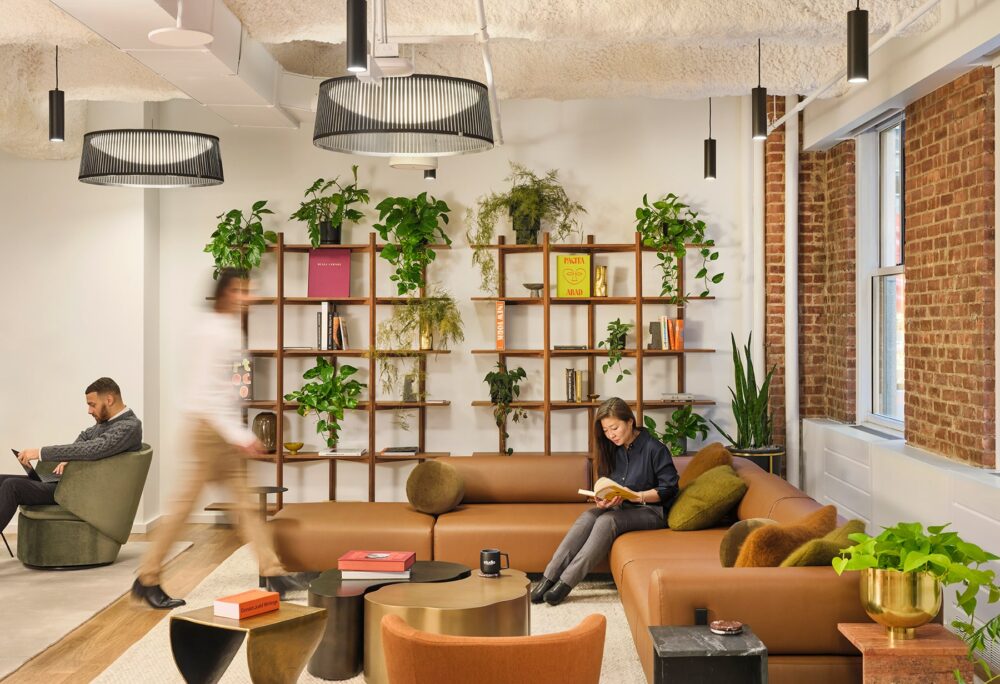
A recent project of ours exemplifies this point. At Studio by Tishman Speyer’s 1 Rockefeller Plaza coworking location, movement is built directly into the building’s daily rhythm. Comprising two full floors, the coworking space acts as an interconnected ecosystem, blending distinct zones to encourage a natural transition from space to space. Here, flexibility is a core guiding principle, allowing users to adapt their environment to the ever-changing structure of the workday.
Designing for Variety and Well-Being
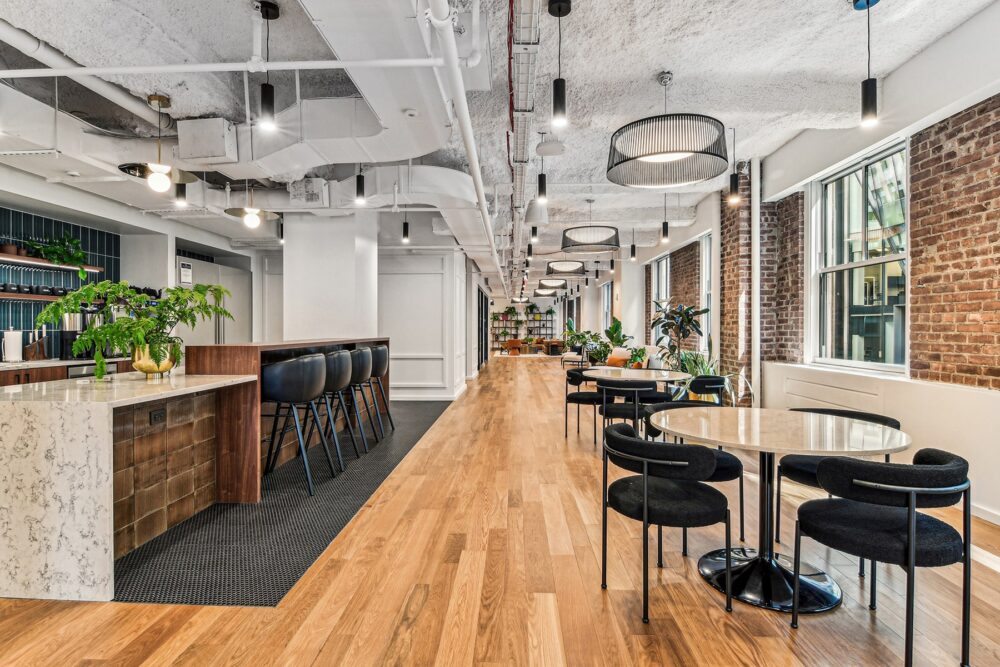
Variety and mobility have a symbiotic relationship. When thoughtfully considered and layered cohesively, diverse workspace typologies empower users to choose settings that align directly with their tasks, mood, and even energy levels on a given day. Studio by Tishman Speyer’s deliberate mix of environments—from cafe-style seating to acoustically treated meeting rooms, wellness spaces, and even outdoor terraces—embodies this approach in practice.
Different modes of productivity necessitate unique spaces that accommodate different needs, from individual focus to informal, dynamic brainstorming. Providing access to these zones throughout the day encourages circulation among teams, which serves the dual purpose of enhancing opportunities for spontaneous interaction. The result is a mobile workplace that reacts to the pulse of daily life in a more organic way. Teams might begin their day at a shared table to discuss project planning, before transitioning to private offices or breakout rooms to make progress on deliverables, then gathering in lounge areas or cafe spaces to exchange ideas before wrapping up the day on the terrace.
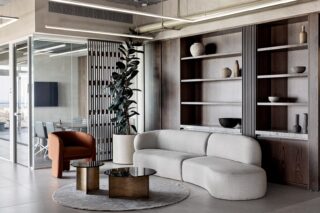
Environments like Studio by Tishman Speyer mirror the ebbs and flows of work rhythms. The result is an activated space that reflects the realities of ever-varying human interaction, without trying to force it to fit the building’s offerings. This design approach upends traditional methods of workplace strategy, using materiality to reinforce a sense of vitality and movement. Natural light, textured finishes, and exposed brick pay homage to the building’s architectural heritage, while acoustic treatments and biophilic elements reduce stress and promote mental ease. By encouraging regular movement and engaging the senses in a variety of ways, design transforms the workspace from a static experience to a living, breathing entity that responds to the diverse needs and expectations of teams.
Wellbeing is, in this context, not defined by a single room or dedicated space. It’s embedded via design into the very fabric of the office, in each moment that encourages a pause, a shift in setting, or promotes a new perspective. Wellness and mobility are then two sides of the same coin, working together to keep teams energized, engaged, and empowered.
Creating Hybrid Agility
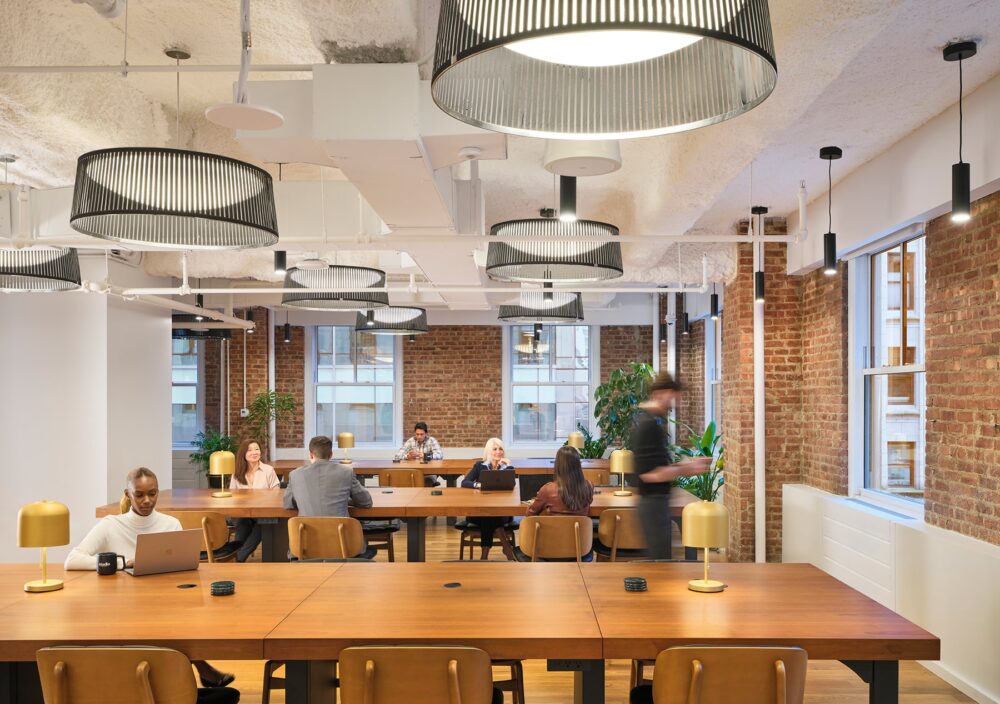
If there’s one thing that today’s hybrid models demand, it’s agility. Whether to accommodate an influx of staff, or to ensure a consistent vibrancy, today’s work environments should expand and contract with shifting needs. Our design philosophy embraces this concept holistically, utilizing modular furniture, flexible partitions, and mobile seating that allows for reconfigurability on demand. Technology is further integrated seamlessly across different zones and space types, ensuring that movement never means becoming disconnected.
Studio by Tishman Speyer leverages these systems to enhance choice while maintaining overall cohesion. 1 Rockefeller Plaza was planned from the outset with transformation in mind: cafes become informal meeting areas, multi-purpose lounges become event hubs, and adaptable seating arrangements anticipate anything from solo work to full-team strategy brainstorming Each design decision is aimed at increasing individual autonomy, and this freedom not only creates a better working experience, but also gives teams a greater sense of ownership over their space.
But agility is not just contained within the physical walls of a location. Studio by Tishman Speyer’s 1 Rockefeller Plaza design anticipates how professionals might step outside the office altogether, and incorporates this reality into overarching strategy—whether going to nearby cafes, plazas, or rooftops, teams can move through an expanded network of settings to stay productive wherever and whenever inspiration strikes.
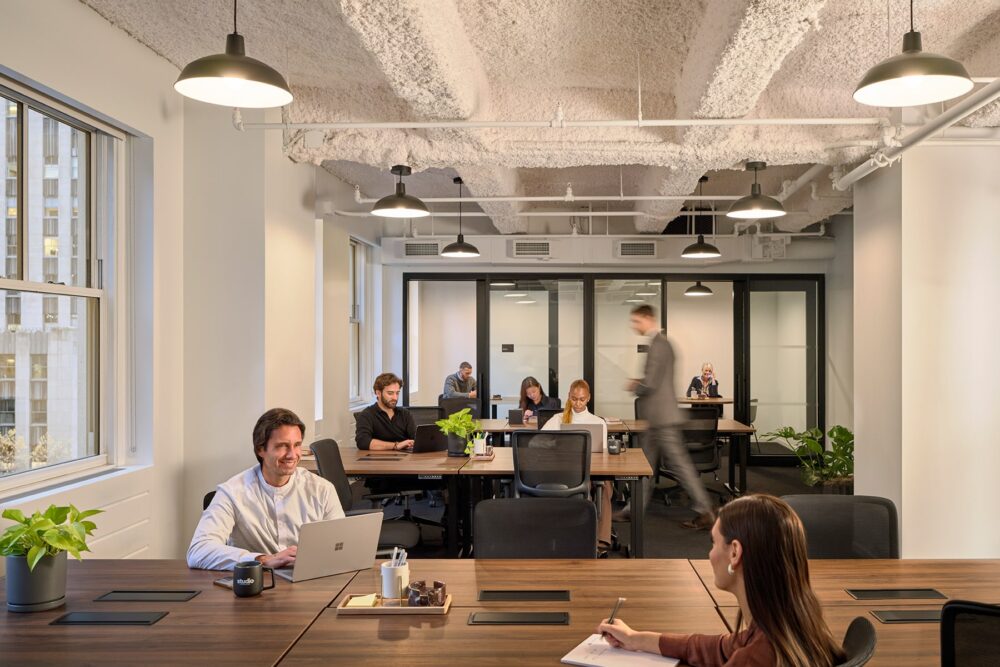
This reflects a broader shift from the prioritization of space ownership to the need for greater access to experience. An equally important aspect is the characteristic identity of the building and neighborhood the space is located in, which contributes to creating a more holistic sense of place. Vibrant, amenity-rich environments make mobility a cultural consideration as well as a functional one. Dynamic workplaces located in dynamic neighborhoods yield a greater sense of connection, which ultimately maximizes employee experience.
Blending adaptive design, access to technology, and human-centric planning, Studio by Tishman Speyer provides a prototype for the new hybrid office, one that responds more seamlessly to the individual needs of organizations and individuals while demonstrating the power of place.
The Mobile Office as the New Standard
The concept of mobility is redefining the experience of modern work. No longer tied to a fixed destination, the office is a more fluid, empowering experience today—extending across floors, space types, and even the neighborhoods in which they exist. Embedding mobility into the design from early phasing, workplaces are becoming ecosystems that are more responsive to human needs, healthier, and more reflective of the ways people truly live and interact with one another.
As our team at Spectorgroup continues to explore the philosophy of design for mobility, projects like Studio by Tishman Speyer at 1 Rockefeller Plaza demonstrate that the most successful workplaces are those that keep people in motion; physically, but also creatively, leaving behind static layouts in favor of workplaces that truly move.