


The tension between markets and creativity unsettles art: An irreconcilability exists between the idealized freedom of artistic production, the need for an artist’s economic security, and the transactional view of art as an ‘investment.’ With the advent of digital art and its development over the past two decades, these tensions have compounded. Some digital artwork has proliferated, which is (virtually) indistinguishable from investment, such as waves of certain NFT’s, which are purchased not for their aesthetic qualities or novelty, but rather for their (anticipated) capacity to accrue value over time.
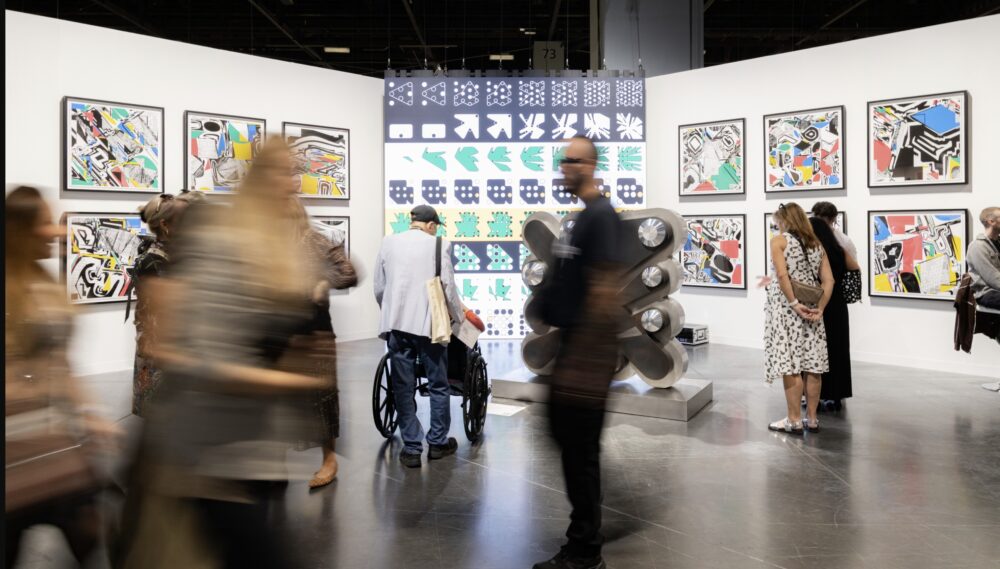
At Art Basel Miami, a panel of three artists—Kiya Tadele, Maya Man, and Jack Butcher—gave a talk, moderated by Dr. Jeni Fulton, titled “Infinite scroll: Art, algorithms and images today,” discussing the current state of digital art. Since all three artists’ work were exhibited in Basel’s new Zero 10 section, consisting of digital art (and artwork commenting on the digital), the talk acted as a broad overview of the themes found throughout Zero10.
Algorithmic Gravity
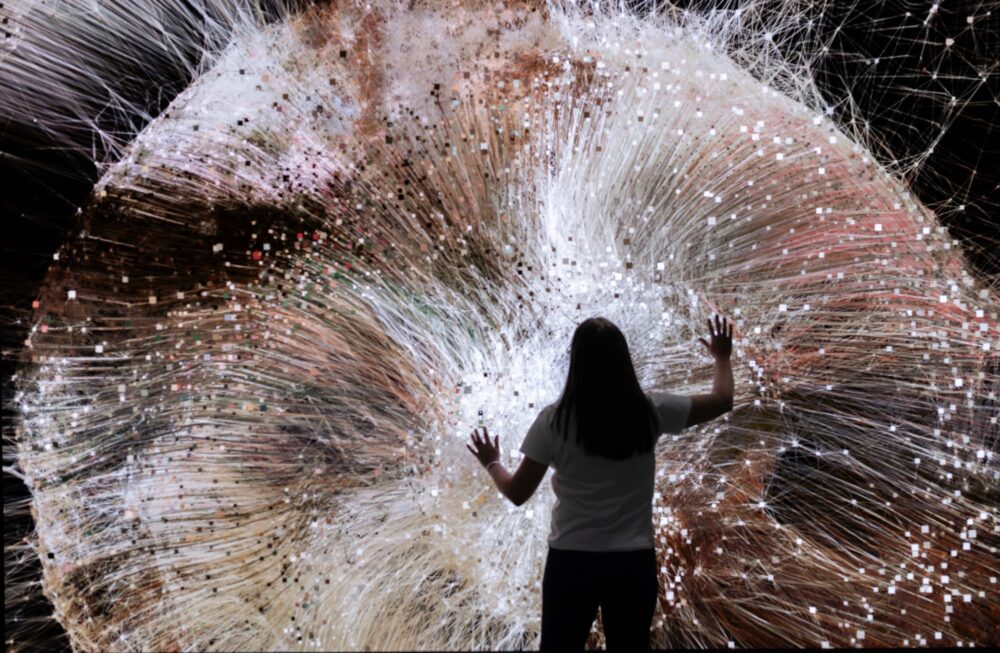
When asked by Dr. Fulton what has changed since the first pieces emerged, around 2014, which dealt with the medium of social media, Man responded that the “familiarity” with social media—and the dominance of the algorithm—has irrevocably altered the everyday experience of the internet. ‘The algorithm’ was common throughout the talk, especially how it directs attention through what Dr. Fulton called “distribution channels” (social media). Attention and virality are certainly determined by this enigmatic gravity: A force that involuntarily draws in users toward particular digital objects (such as an artwork’s image circulating on social media).
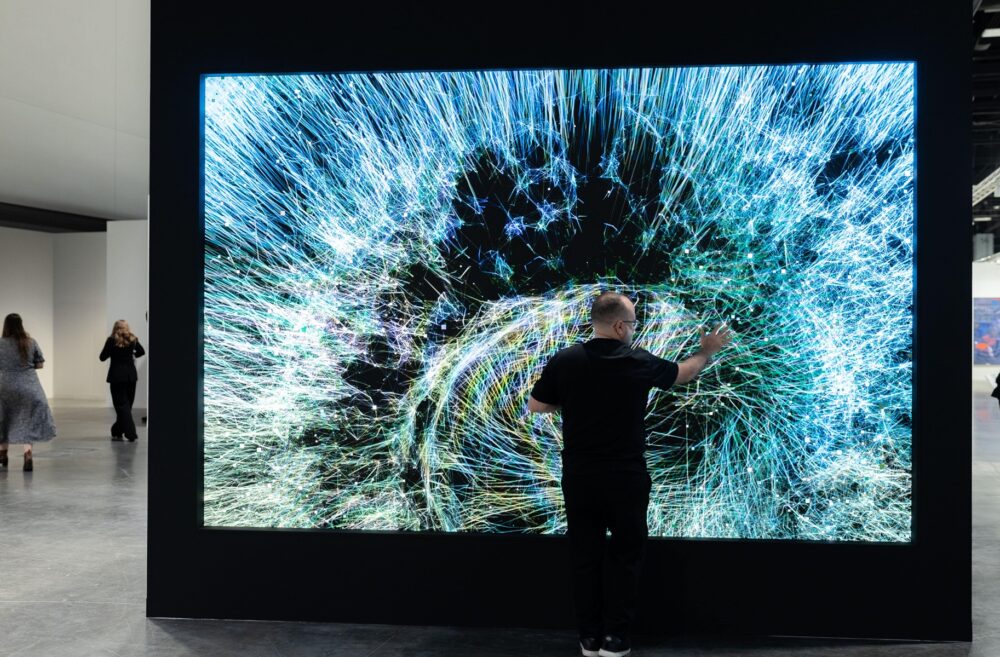
In the everyday sense, algorithms are immaterial; virtual chains of code conceptually inaccessible to the average user, and literally inaccessible to all due to proprietary laws and corporate secrecy. One piece in Zero10, titled Tessellations by Michael Kozlowski, rendered algorithms material, showing the paths of an algorithm’s data through metal-plated resin, replicating an actual digital algorithm.
In five pieces—two tower-like columns and three works on the wall—Tessellations visually exhibit the circulation of information in a compelling flourish.
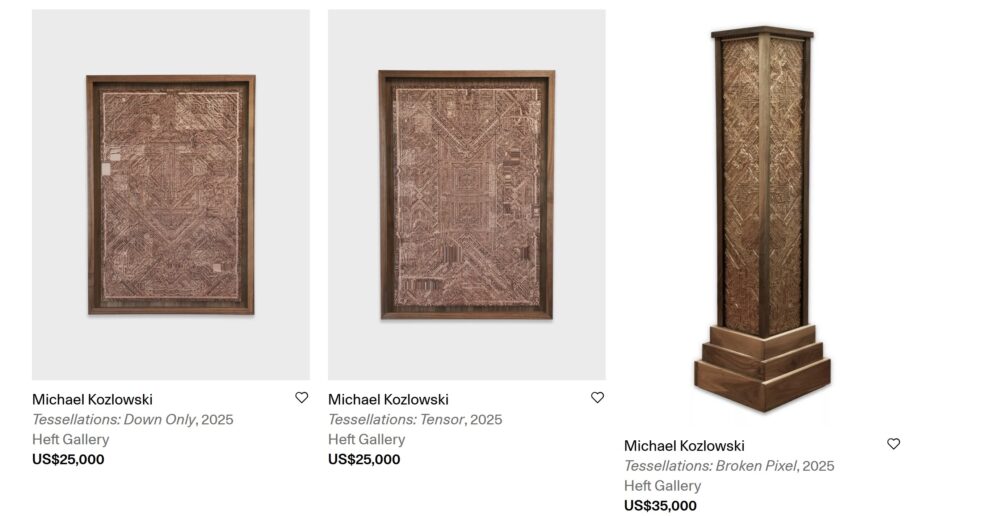
It was fascinating to view an algorithm, something we frequently find ourselves being directed by and used to funnel us through information, from the outside, mapped at a distance from any specificity of data. Seeing the distribution of data, abstracted from any particular content, made it less mysterious; yet the visuality of the actual patterns seemed completely alien to any natural human language we understand.
The Power of the Market
Money and markets were undoubtedly the most controversial elements of the “Infinite Scrolls” talk. While the artists make their livelihood from selling art online and are proponents of things such as NFTs, Dr. Fulton was also candid about the “instability” of these markets, not only in the financial sense but also due to hacking and general mishandling of these digital objects. Man considers NFTs “certificates” of ownership and financially advantageous for digital artists, yet seems marginally reluctant about NFTs’ current usage and the imagery associated with them. Similarly, Tadele saw the utility of NFTs and digital artwork for artists to gain audiences and be compensated for their work.
Jack Butcher, an artist who has made over a billion from digital sales, was utterly blunt about markets and digital art, stating that artwork is “worth whatever someone is willing to pay.” He wants the transactiveness of art to be completely transparent.
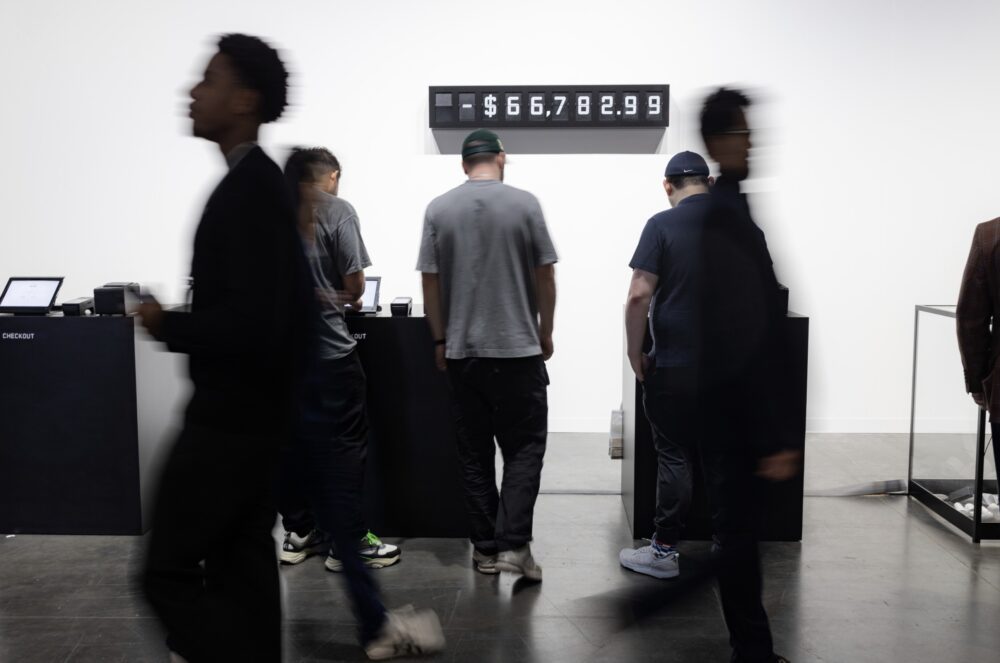
His artwork, titled Self Checkout—also shown in Zero10—did precisely this. The performative artwork was simple: The piece consisted of two payment terminals, with a clear box between them, with a receipt ribboning into it. Above, there was a number—its meaning elusive at first—but, eventually, it dawned on the viewer (possibly after reading the wall-text) that it represents the cost of the piece ($74,211!) against the amount Art Basel patrons have paid at the terminals. A viewer could literally approach the work, insert an amount, swipe their card, and pay money. The piece’s purpose is to be the embodiment of the transference of wealth facilitated by ‘art.’
During the talk, Butcher insisted that Self Checkout was “not cynical.” He said it was not a critical commentary on the economics of art; it was totally representative of Butcher’s ideal transaction between artist and buyer. Self Checkout was, because of this, completely devoid of any real substance—it is reduced to pure transaction in the act of performativity. The transfer of money from viewer to creator exhausts the piece.
If the piece had been a critical commentary on the reduction of art to economic transaction, it would have only been uninteresting and banal. But the fact that this was, to Butcher, a non-cynical work, rendered it completely non-novel and vapid. All the things that make art meaningful—aesthetics, beauty, mystery, inexplicability, saying the unsayable, profound provocation—were entirely omitted in the name of transparent monetary value. He achieves his goal with the piece, but what remains is utterly art-less.
Jack shares his multifaceted career journey from graphic design to freelancing and entrepreneurship.
Digital Stories
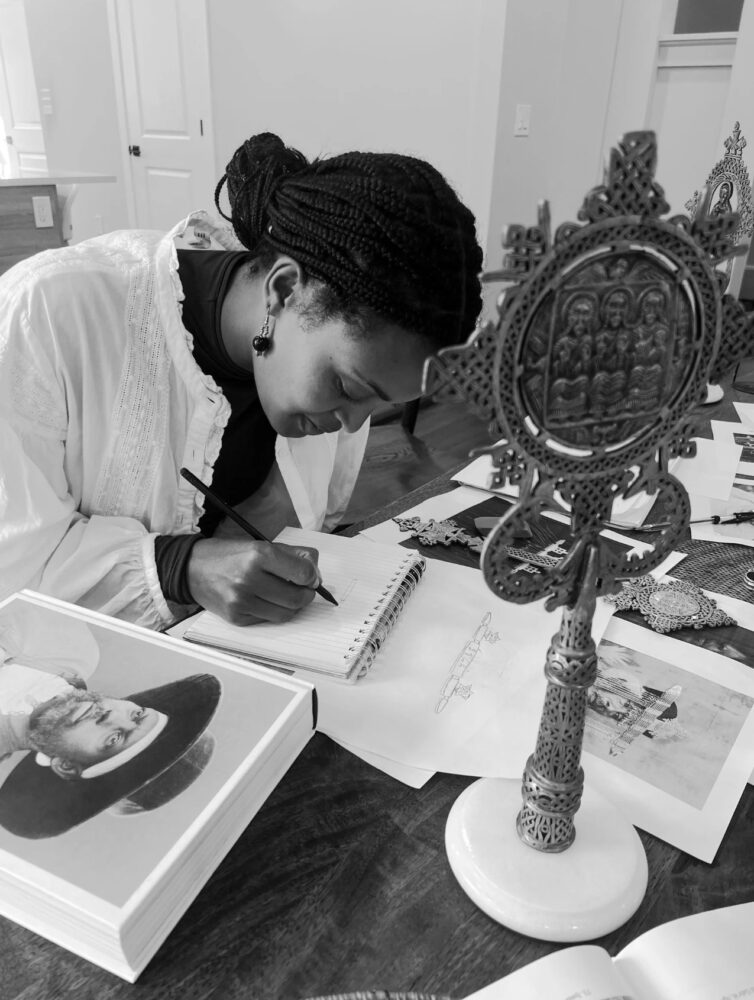
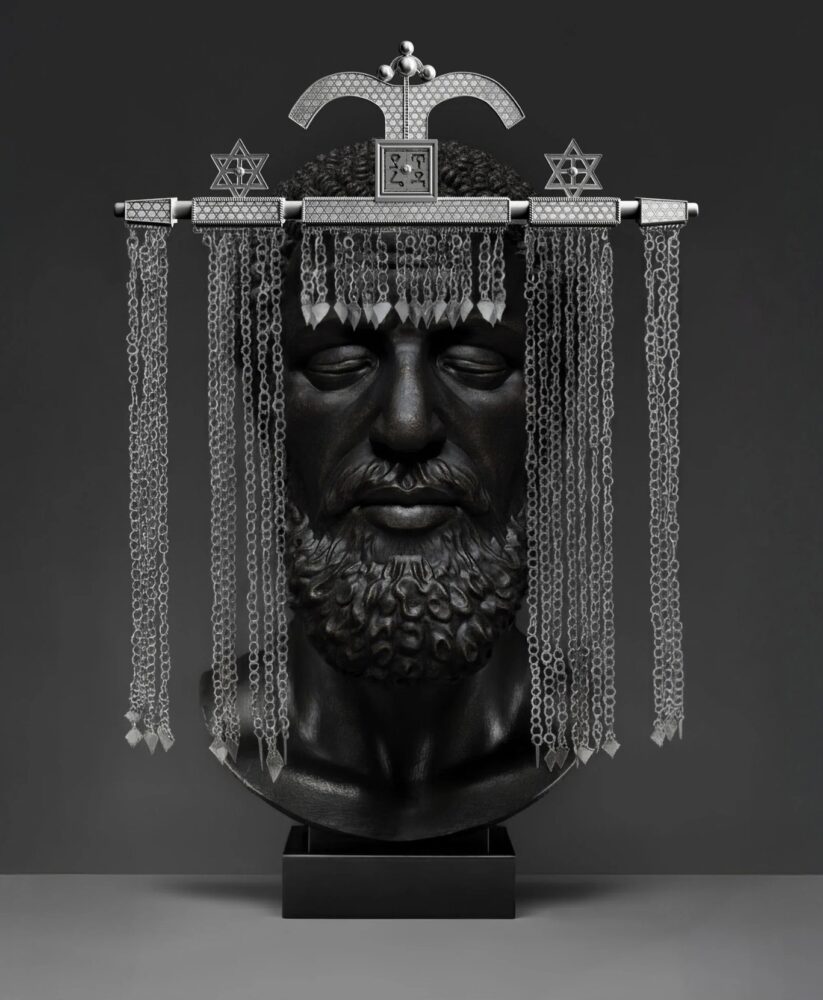
Kiya Tadele and Maya Man both emphasized the ability of the digital domain to tell stories. For them, virtuality permitted them to tell stories in new ways. Tadele’s work focuses on narratives from Ethiopia, where she is from. Her pieces in Zero10, as part of the family collective Yatreda, digitally presented traditional Ethiopian imagery, namely the crown worn by male warriors, titled Twenty-First Century Akodama. Next to the digital image of a man wearing the crown was a sterling silver sculpture of the crown, showing the physical object beside its digitization. For Tadele, digitization is an opportunity to tell her country’s stories—to disseminate Ethiopia’s history to a totally new audience.
Man’s (The Angels Wanna Wear My) Red Shoes brought together the two themes of the talk: algorithms and markets, through a fleeting glimpse of a fragmented online story. On a digital screen, (The Angels Wanna Wear My) Red Shoes featured pictures of shoes posted on the resale website Depop, along with some descriptions scraped from the site’s user-generated data. Without any direct correspondence between the images and the text (it was unclear which descriptions were from what shoes), Man’s work re-converted the mundane reality of online shopping—with all its embedded algorithms and market forces—into artistic production. The same forces driving contemporary art are applied in a wholly different context: The art of reselling shoes online.