


By Liz Shemaria
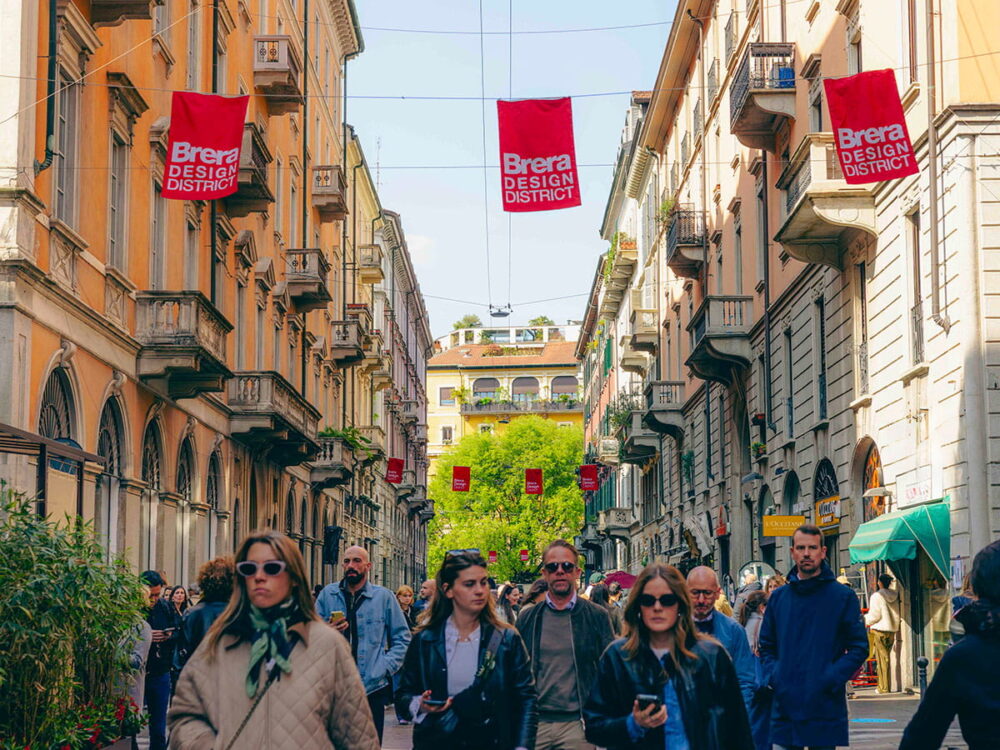
For the 64th Salone del Mobile and Fuorisalone, this year’s theme, “A Matter of Salone,” showed up in how designers and architects transformed Milan into immersive experiences — Milan’s iconic streets and neighborhoods became, in many cases, living museums and alternative realities. In the Brera District, on the edge of the Quadrilatero della Moda and upscale shopping on Via Montenapoleone, among the cobbled streets and 18th-century Neoclassical buildings, we found a never-before-opened-to-the-public post-war home, a distant country, and an imaginary garden.
Palazzo Citterio becomes “When Apricots Blossom” with Uzbekistan Art and Culture Development Foundation
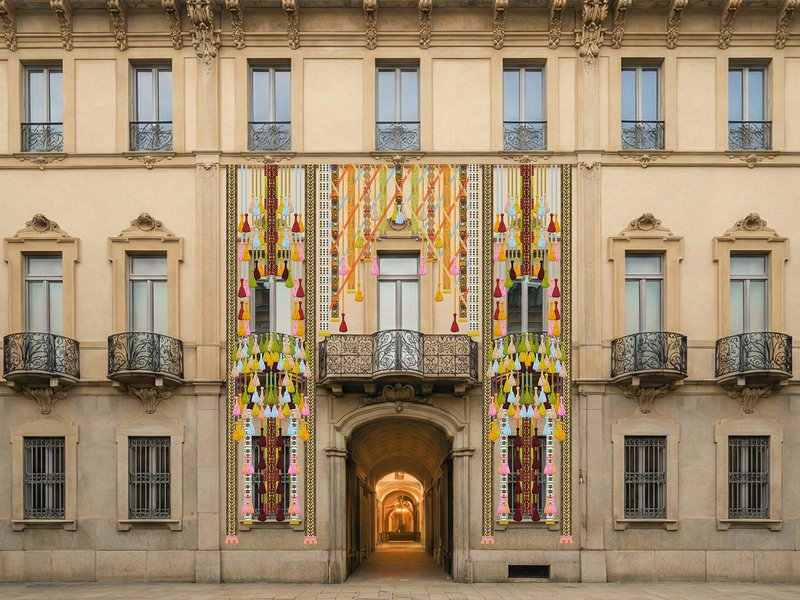
Stepping into the Palazzo Citterio museum on Via Brera, we arrived in Uzbekistan, with its Art and Culture Development Foundation’s multi-faceted installation: “When Apricots Blossom.”
On the 18th-century Barocchetto-style palazzo’s facade, a tassel-bedecked wool tapestry in pink, orange, burgundy, white, and lime by Bethan Laura Wood in collaboration with Uzbek and Karakalpak weavers, was inspired by the decor of nomadic yurts.
As Wood said:
“Tassels are traditionally used to decorate yurts. I wanted to reference those forms while rethinking their movement – introducing a cascading language that nods to water and flows across the architecture. We worked with traditional patterns, knotting techniques and placements, while developing a colour palette that connects past and present.”


Inside, Uzbek floral artist Ruben Saakyan’s interpretation of a flowering apricot tree floated above a circle of wood benches (for this installation, adorned with apricot-colored velvet cushions) designed by Mario Cucinella Architects (MCA) for the Palazzo Citterio and its 2024 “La Grande Brera” remodeling project. The apricot tree, one of Uzbekistan’s significant exports, also gave the exhibit its name through a poem: “In front of my window a sole apricot tree blossomed pure white,” wrote Hamid Olimjon in 1937.
In the museum’s subterranean gallery, exhibit curator Kulapat Yantrasast, of WHY Architecture, used undulating reed-like forms to evoke Karakalpakstan, an autonomous republic of Uzbekistan. Inside was a collection of bread stamps and trays in clay, rope, cotton, wool, ceramic, and even one tray in glass, water, and salt, all from 12 contemporary designers in collaboration with Uzbek artisans, showing breadmaking as craft and ritual. The collection was a time capsule of design and culture, as Yantrasast said:
“Uzbekistan is such a rich and diverse country. When I travelled there, what I found fascinating was that the craft traditions are ongoing, and almost uninterrupted by industrialisation. People still make bread and still embroider the way they did centuries ago.”
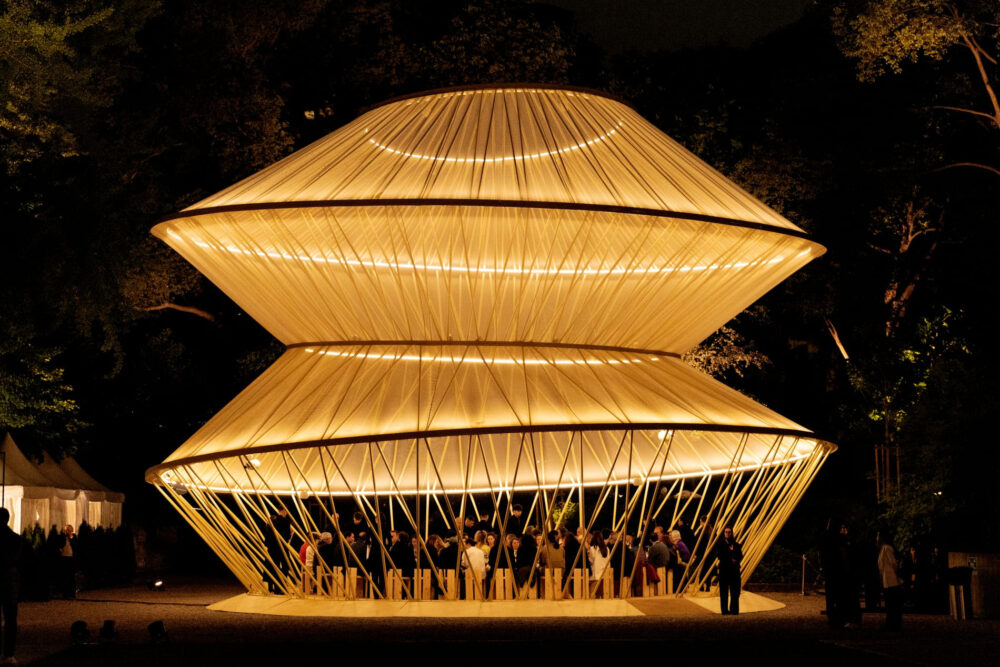
Leaving the exhibit to return to Brera and the Palazzo’s garden, a ‘deconstructed yurt’ by WHY — a 15m-wide lattice framework of 500 steel elements, encased in translucent, fibre gauze — encouraged visitors to linger in an imagined Uzbekistan.
Interni Materiae turns Orto Botanico di Brera into an Edenic garden
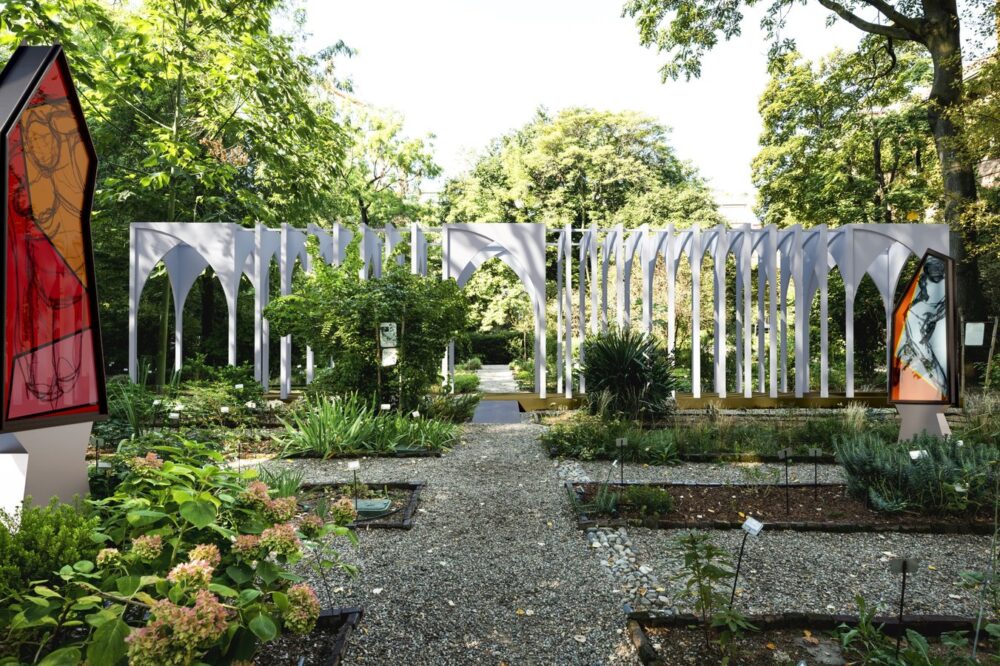
Interni, a Milan-based magazine dedicated to interior design and furnishings since 1954, had installations in five locations across Milan this year for Design Week, featuring the theme Materiae: investigating the experimental and innovative value of materials. In Brera, architect Annabel Karim Kassar turned the Orto Botanico di Brera into a “Garden of the Hesperides” guarded by nymphs.
“Our inspiration for this project,” said Kassar, “is the Garden itself, with its history, its precious flora, and the wonderful team who works there.”
Visitors were invited to read the stories of the nymphs by scanning a QR code as they traveled through a portico of wood beams and laminated wood panels by Rubner Haus, a design that is both easily dismantled and reusable.
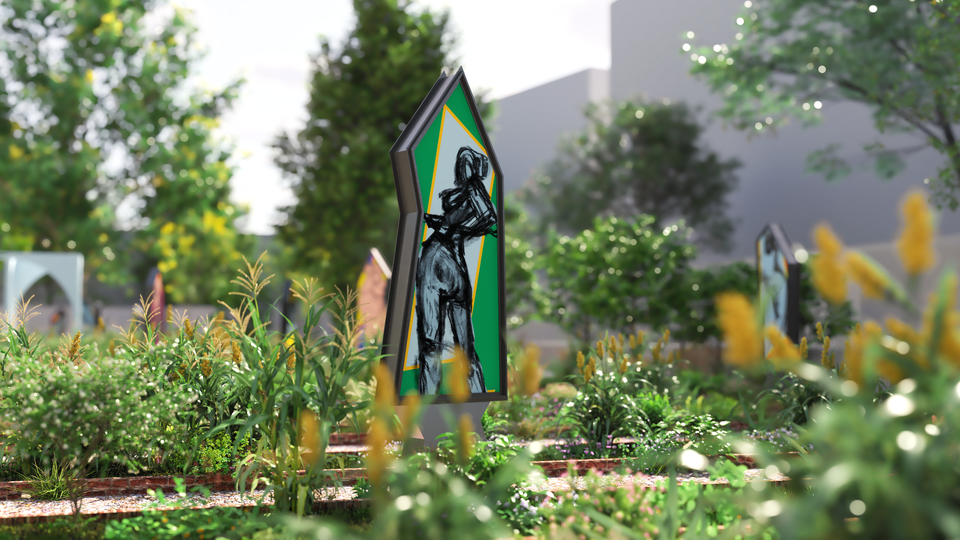
The nymphs in self-supporting steel display cases and arranged in two large circles, followed the design of a Roman garden. Meant to be visited from day to night, battery-powered lights illuminated the portico and garden, while a series of spotlights and seating by Dàmeda encouraged visitors to take time to read about the nymphs, and added to the whimsical experience of the Orto Botanico’s transformation.
Interni Venosta Turns an Osvaldo Borsani Post-War Home Into a Temporary Museum
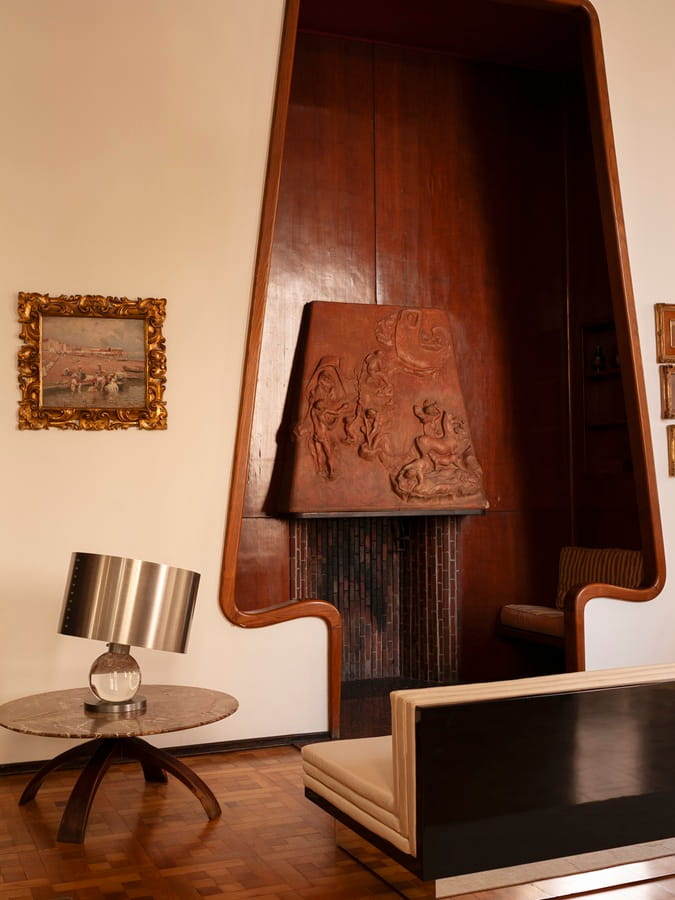
Interni Venosta founded in 2024, presented its new furniture collection, Interno Italiano, with a takeover of a private (and still inhabited) home designed by Osvaldo Borsani in 1947 in the heart of the Quadrilatero della Moda.
Borsani founded the furniture company Tecno S.p.A. in 1953, and his key pieces in the museum-home’s living room and dining room, merged effortlessly with new pieces from Interni Venosta.
There were lamps and vases in burnished brass and polished steel for light and reflection, while black lacquered wood and burl echoed the apartment’s wooden surfaces, including a relief-work fireplace.
Seating and sofas, upholstered in neutral shades of champagne and black leather, echoed Borsani’s original leather furnishings.
Interni Venosta invited visitors to explore the house as if it were a small museum: an immersive experience where history, architecture, and contemporary design intersected.