


By Christa Jansen, HKS Principal and Regional Design Director of Interiors
Across the world, the corporate office as we know it continues to undergo dramatic shifts. Hybrid work models, rising energy costs and increasing demands for wellness for both planet and people continue to reshape expectations of what an office provides. Today’s design solutions are, by necessity, becoming dynamic environments that grow smarter, contribute more to their surroundings, and get healthier each year. To support this, a wave of innovative technologies and products, from self-learning tools to products that actively foster ecological and human well-being, are helping shift workplaces from functional space to adaptive ecosystems.
From Automation to Adaptation with AI and Intelligent Business Systems
The future of workplace isn’t just smart, it’s self-learning. Smart building systems are moving beyond energy dashboards and occupancy sensors and toward predictive, adaptive environments that can directly address industry challenges such as underutilized space in hybrid work models, escalating energy costs and more demand for measurable performance data. For workplace design, this shifts the architect and designer’s role because space is no longer static, it’s responsive.
Take, for example, AI-driven building management systems and platforms that can optimize HVAC, lighting and energy use in real time. Innovators like Johnson Controls OpenBlue, which uses AI to predict maintenance and energy optimization. In addition, digital twins and sensor platforms like Density.io and Vergesense are enabling real-time optimization around occupancy patterns or fluctuating energy demands with increasing precision and real-time analytics.
For example, HKS is currently collaborating with Innerspace, a workspace analytics platform, to analyze a client’s campuses in order to optimize their real estate portfolio. Innerspace’s technology works with existing WiFi systems to collect granular occupancy and movement patterns, showing how people behave, collaborate, and interact without the use of sensors.
From Do Less Harm to Net Positive
Clients continue to ask for quantified embodied carbon and operational emissions, and it is increasingly clear that sustainability is no longer a feature, it is the framework. Now another major shift is underway, moving from focusing on reduction—reducing energy consumption, embodied carbon, water use and waste—to asking deeper questions about how office spaces can give more than they take. Can they not “do less harm,” but also enhance human, community and ecological health or resilience?
For example, HKS recently completed our new Houston office and it included a focus on minimizing the use of virgin plastics. One product that caught our attention was Ekoa from National Solutions, eco-veneers and panels for wall protection and covering that is made of flax fibers and bio-resins that offer the look and feel of wood.
Material innovation abounds here, from mass timber systems and low-carbon concrete like CarbonCure, which injects captured CO2 into concrete to reduce embodied carbon, to bio-based flooring like Duracryl Flooring’s Durabell Biopolymer Terrazzo and furniture lines like Knoll ReGeneration and Herman Miller OE1, which are designed with circularity and disassembly in mind. Platforms like Mindful Materials, founded at HKS in 2014, also continue to bring transparency to the product market, enabling more-informed specification decisions.
Technology-Enabled Human Well-being
Today’s office occupants expect more than functional environments: they want dynamic spaces that merge physical and virtual worlds while also supporting mental and physical wellbeing.
Lighting products such as Lutron Athena or Signify Interact Office from Philips Lighting shift color temperatures throughout the day to better regulate circadian rhythms. Acoustic zoning technologies and sound-absorptive systems like Kirei PET acoustic panels (made of recycled material, to boot), Turf Design acoustic systems, and Framery pods help carve out quieter spaces for heads down work or to help reduce sensory overload.
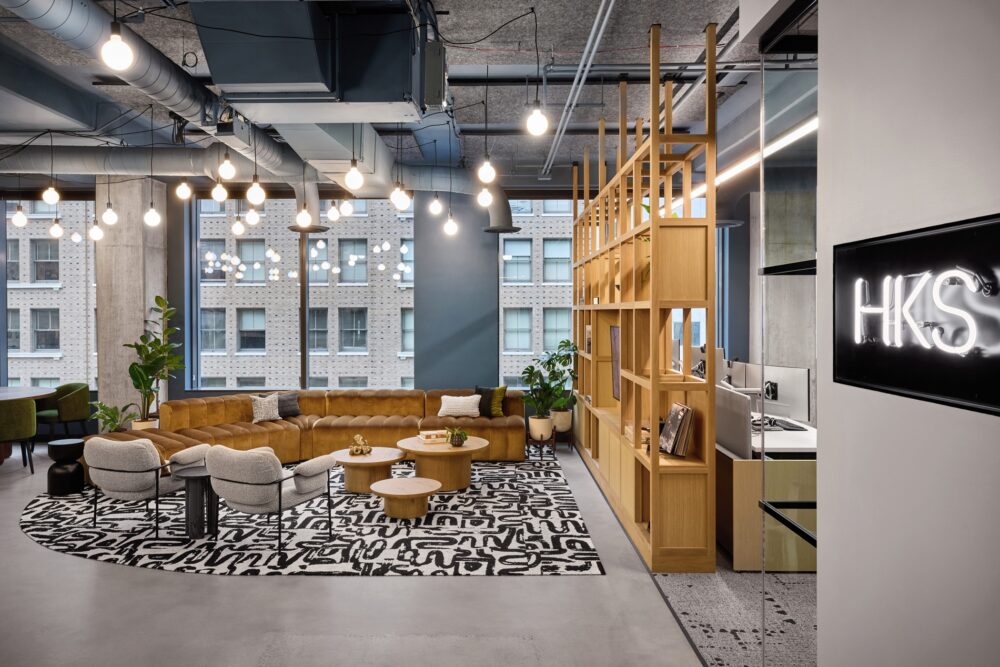
For many, the office must now also justify the commute and the post-pandemic workforce demands more than desks and conference rooms. For Bank OZK in Dallas, Texas, a retail bank branch on the first floor of the company’s offices focused on reimaging everyday banking through a hospitality lens, resulting in a welcoming atmosphere that encourages socializing, more like a hotel lobby than a corporate entryway. In our own office in Seattle, HKS swapped a traditional reception desk for a lounge space that welcomes visitors directly into the heat of the studio, more like an arrival experience at a fine hotel. In other projects, the in-person experience is boosted by direct connections to nature to boost a sense of well-being, whether it’s through the integration of a rooftop patio or inclusion of restorative outdoor spaces.
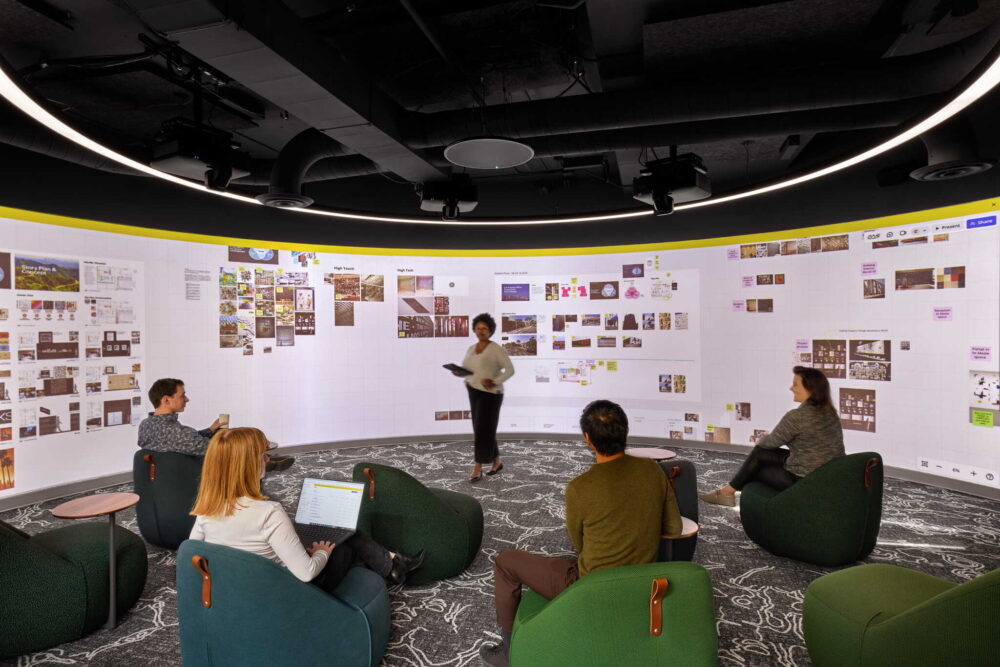
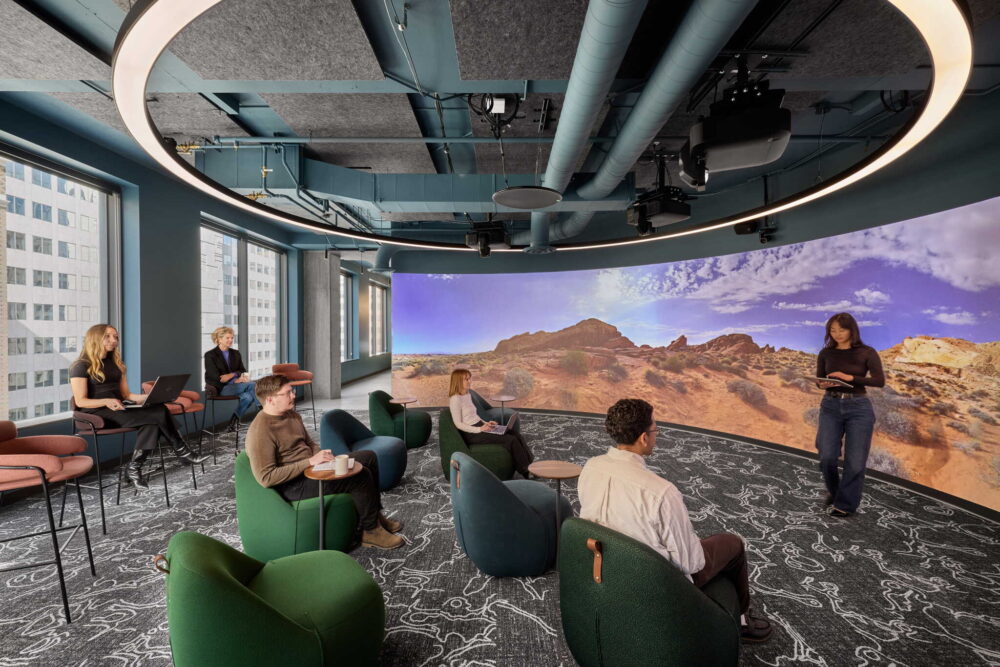
Whether in person, remote or hybrid, it’s clear that the integration of technology must be seamless, supporting hybrid teams without compromising experience. This can lead to more immersive spaces. In HKS’ Seattle office, for example, we used Igloo’s immersive projection technology to create a gathering space called the Showbox that can be used as a prototyping tool to display real-time, life-size digital building models and walkthroughs, enabling our clients to envision their projects without using VR headsets
Bold Solutions Wanted
Every design decision must now consider more than aesthetics and it’s clear architects and designers are no longer simply creating spaces. By embracing intelligent building systems, regenerative design principles, and wellness-forward technologies and strategies, workspaces can not only answer today’s challenges but also set the foundation for smarter, healthier and more sustainable workplaces for decades to come.
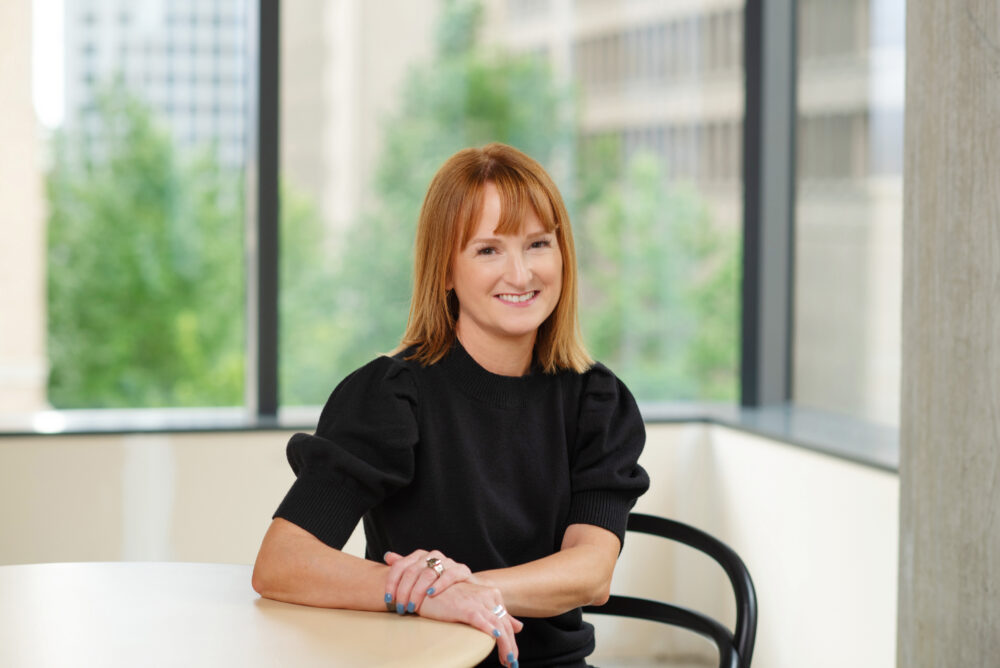
Christa Jansen
Regional Design Director, Interiors Principal
IIDA, LEED AP ID&C, NEWH, NCIDQ
Christa Jansen is a Principal and Regional Design Director, Interiors at HKS. She believes that successful design engages people’s senses, serves their physical and emotional needs and heightens their experience through moments of delight and wonder. Her projects have received accolades from Interior Design Magazine, Architizer, Architect Magazine, Chicago Athenaeum and the American Institute of Architects.