


Forrest Good, AIA, Owner & Architect, discusses the need for an architect in the age of AI design by examining a recent project and the client’s perspective.
The rise of AI in architecture has fundamentally changed how homeowners approach custom projects. Within seconds, anyone can conjure a dream kitchen or living room that looks magazine-ready. But as these tools become more sophisticated, a critical question emerges: If AI can design a home, do you still need an architect?
AI as a Starting Point, Not a Solution
At Studio Good Architects, clients increasingly arrive with AI-generated images in hand. We encourage this. Early visual exploration helps clients clarify what they value and desire. The challenge is that we’re often unable to distinguish what’s real from what’s artificial; the lighting might give it away, or the scale feels slightly off, but everything is suspect.
For our purposes, that’s perfectly fine. We’re less interested in whether an image is real than in understanding what clients are trying to communicate. What are they responding to? What quality of experience are they seeking? Even a completely artificial image can represent something meaningful, and as architects, we’re responsible for guiding them toward that vision. This is the essence of architecture: to absorb a vision, guide it toward reality, and help it become something meaningful.
Where AI Falls Short
AI is excellent at visualizing possibilities, but it doesn’t understand constraints. AI-generated images can be like fables — meaningful in some ways, but distorted truths that conflict with the realities of budget, site conditions, local codes, and construction sequencing.
Beyond visualization, we see clients sharing AI research that provides technically correct information but lacks critical context. A client might research a mechanical system and return with a highly specific solution that, while valid in isolation, introduces unnecessary complexity and cost when applied to their particular project.
When an AI-generated idea doesn’t align with cost or feasibility, the architect’s role is to identify the client’s true priorities and translate their needs into something both desirable and achievable.


When More Options Create Less Clarity
There is another subtle consequence of AI-driven design: the seduction of endless possibility.
These tools offer infinite variations of materials, layouts, lighting, furnishings. It can feel empowering. But without a clear framework for decision-making, more options rarely lead to better outcomes. They often lead to uncertainty.
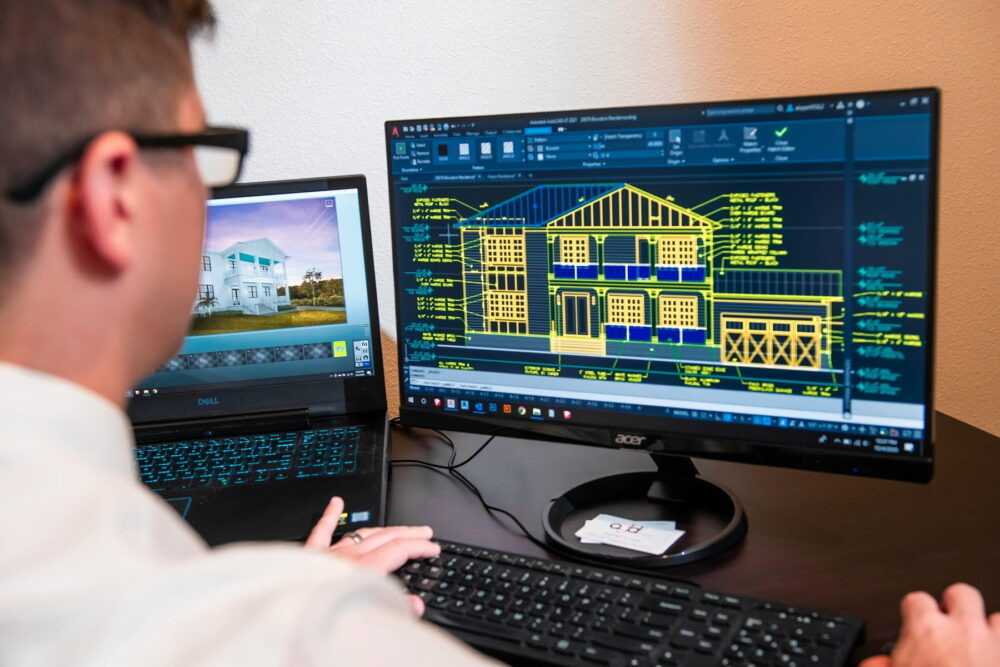
We’re seeing clients spend months exploring AI-generated designs using ChatGPT and VisualizeAI, believing they are making meaningful progress. Recently, a client shared that she had devoted six months to developing her home through AI tools. She arrived with dozens of images, yet nothing that could move her project forward in a practical way. There was no alignment with budget, no understanding of feasibility, no clear prioritization of what truly mattered. The missing ingredient wasn’t creativity. It was guidance in decision making.
Architecture is not about generating more ideas. It’s about identifying the right ones, filtering noise from signal, aligning aspirations with reality, and moving confidently toward a cohesive direction. A good example here is the West Bund Convention Center in China in which architects used AI to create over 800 designs but still relied heavily on human input to complete.
For architects in general one of the biggest challenges we face is creative ownership in the age of AI. Teams can protect themselves by using anti-scraping tools, limiting intellectual property transfer when contracting and data auditing.
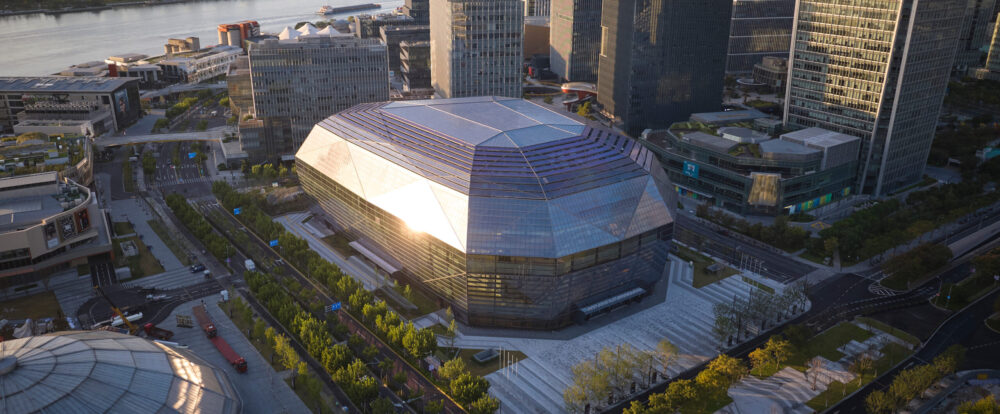

© Jake Parrish
What One Client Learned
Recently, another client used AI to explore interior design options for their custom home. We suggest clients try being specific with prompts here, which allows for better visualization, think specific colors, materials, and design movements. In seconds rather than weeks, they had options for materials, layouts, and furnishings. This reduced anxiety and helped them make aesthetic decisions early in the process.
But they soon discovered that while AI generates compelling images, it can’t account for real-life constraints. AI doesn’t factor in cost implications, code requirements, or how design changes ripple through schedule and budget. It excels at helping owners articulate what they want, but it takes a collaborative team to translate that vision into something buildable and responsible.
The Real Value of Architects
While images and ideas are important, they’re not what clients are paying for when they invest in custom architecture. They’re paying for the process that translates ideas into built reality.
The real value emerges in the middle of the process, where ideas get tested against reality. Aspirations get aligned with budgets. Codes get interpreted and navigated. Structures get engineered. Systems get coordinated. Designs get refined so spaces aren’t just visually appealing but functional.
With Architects, what clients receive is experience, good judgment, accountability and the often unseen work that prevents costly mistakes, delays, and regrets. Architects become both advocate and translator, helping navigate tradeoffs, ensuring design intent survives the pressures of cost and schedule, and keeping everyone aligned when complexity shows up.
Custom architecture is the bridge between imagination and reality. You’re paying for a team that can guide you over that bridge, using every tool available while offering real-world experience, responsibility, and care.
ABOUT:
Studio Good Architects creates thoughtfully designed spaces that balance beauty, functionality, and lasting quality with a distinct Pacific Northwest sensibility. Our world-class team brings exceptional attention to detail and deep expertise to every project. Guided by our commitment to timeless design and considered luxury, we craft architecture that frames life’s experiences rather than overshadowing them. Our collaborative approach ensures that each project reflects both our architectural expertise and our clients’ unique vision, resulting in spaces that feel honest, refined and genuinely livable.
BIO:
Forrest Good, AIA, Owner & Architect
With over fourteen years at the firm, Forrest has guided its evolution from working alongside his father, founder Nathan Good, to now leading the practice as Studio Good Architects. His path to architecture was shaped by both engineering and design. He holds a Bachelor’s degree in Civil Engineering from Oregon State University and a Master of Architecture from the University of Oregon, bringing a blend of structural clarity and creative vision to every project.
Forrest leads design across all phases, from early concept development through detailed coordination with consultants and contractors. His focus is on creating thoughtful, site-responsive architecture rooted in timeless principles: buildings that connect meaningfully to their surroundings and serve the people who inhabit them.
Central to his practice is a philosophy passed down from his father: people support what they help create. Forrest carries this forward by engaging clients deeply in the design process, listening closely, and building clarity and confidence at every step. His goal is architecture that feels personal, intentional, and genuinely connected to the lives it shapes.
A licensed architect in Oregon, Washington and member of the American Institute of Architects, Forrest also leads the firm’s efforts in design, architecture that prioritizes human health and wellbeing and best-practice project delivery. He is committed to mentoring the team and ensuring every client feels supported throughout their journey.