


From luxury residences to elite performance centers, infrared sauna systems are reshaping how architects design for recovery, longevity, and high-performance living.
In a hurry? Here are the key points to know:
- Infrared sauna systems are evolving from spa amenities into core wellness infrastructure in residential and commercial design.
- Proper electrical planning, spatial layout, and material selection are essential for performance and safety.
- Architects are increasingly integrating full-spectrum infrared systems into gyms, wellness centers, and recovery suites as demand for longevity-focused spaces grows.
Wellness architecture is undergoing a shift. For years, the definition of a high-end bathroom or recovery suite included a steam room or traditional dry sauna, features that remain valuable and widely respected. Now, however, a new layer of luxury is moving into focus: infrared light therapy systems that aim to enhance the physiological benefits of these spaces at a cellular level.
Rather than replacing conventional heat bathing, infrared technology is increasingly being integrated alongside it, expanding the functional potential of recovery environments. According to Connie Zack, co-founder of Sunlighten, the distinction lies in how the energy interacts with the body.
“Regular heat heats the air directly,” Zack explains. “With infrared, it heats your body directly. It’s a more gentle source of energy.”
That difference, she says, is not merely experiential—it is biological. Infrared wavelengths penetrate tissue and stimulate cellular processes rather than simply raising ambient air temperature. For architects and designers, this creates an opportunity to elevate recovery spaces from comfort-driven amenities to performance-supportive environments grounded in physiology.
Infrared Wellness: Space Planning and Infrastructure Requirements
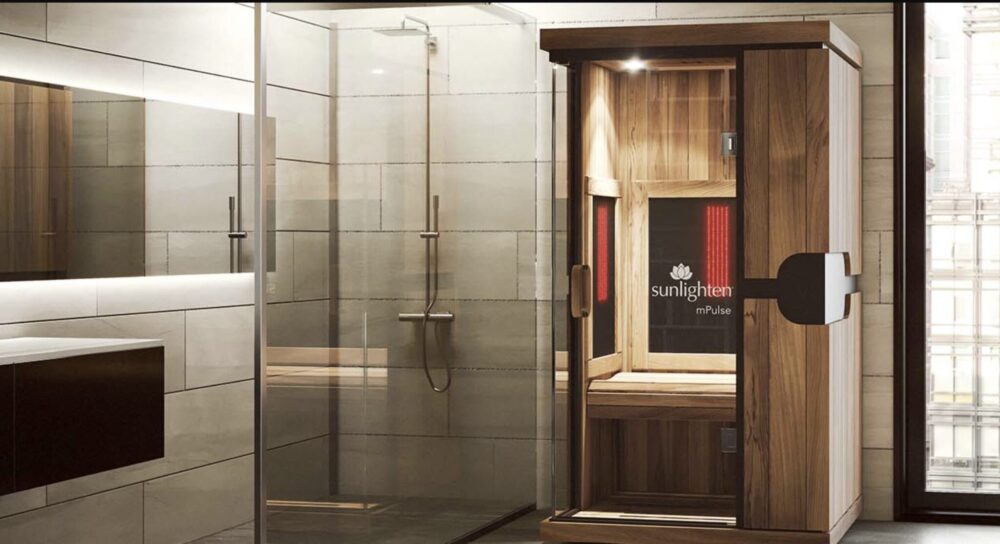
For architects and interior designers, this means early coordination with electrical engineers, particularly in retrofit projects. Full-spectrum systems such as Sunlighten’s mPulse line require stable power delivery to maintain consistent infrared concentration and performance.
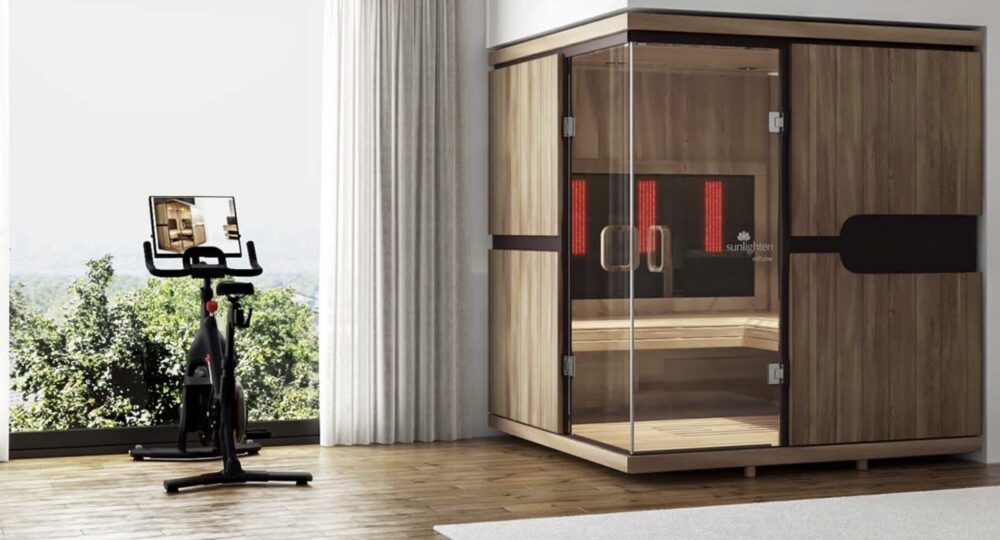
Spatially, designers are moving beyond isolated bathroom installations. Increasingly, infrared cabins are positioned within primary suites, home gyms, and dedicated recovery rooms, reflecting a shift toward integrated daily wellness rituals.
Zack offers a piece of practical advice drawn from years of client feedback:
“If you’re thinking about sharing it with somebody else, go as big as you can fit. I’ve never once had someone say they bought too big.”
In commercial environments, the design conversation becomes even more strategic. At Kelta in Beacon, New York, the Sunlighten mPulse Infrared Sauna has been positioned as a cornerstone of its 2024 wellness expansion. Similarly, Pura Vida Fleming Island promotes the mPulse system as part of its recovery-forward service offerings.
Perhaps the most illustrative example comes from No1 Bootcamp, which announced the addition of the mPulse Infrared Sauna for 2026 at its No1 Norfolk location. In its official statement, the brand emphasized recovery as foundational:
“Transformation isn’t just built in the gym — it’s supported in recovery.”
And, in an email correspondence with ArchiExpo e-Magazine, Deena Reynolds, Founder of No1 Bootcamp, said:
“We have now fully integrated our Sunlighten infrared saunas into our programs, and they have quickly become a key part of our recovery and wellness offering.”
For architects designing performance-driven spaces, infrared systems are no longer decorative. They are functional infrastructure.
Material Integrity, EMF Mitigation, and Wellness Standards
As wellness design becomes more sophisticated, clients are asking deeper questions about materials, emissions, and electromagnetic exposure.
“A lot of people want to make sure they have safe saunas when it comes to the wood and EMF,” Zack notes. “We use hypoallergenic wood… no gassy odors, no fragrances. And our saunas are extremely safe as far as EMF. We’ve done third-party testing.”
For designers working within frameworks like biophilic design or WELL-aligned projects, these material considerations are critical. Infrared cabins must align with broader non-toxic material palettes and indoor air quality standards.
Unlike steam rooms, infrared cabins do not introduce persistent moisture into wall assemblies, reducing long-term structural concerns. This makes them appealing in multifamily residential projects and hospitality environments where durability and maintenance cycles matter.
Infrared’s energy profile also fits within the larger narrative of circadian lighting and natural-spectrum design. Zack frequently reminds audiences that the majority of sunlight—over half of its spectrum—is infrared.
“The majority of sunlight… is the infrared wavelength,” she says. “Our bodies must receive light energy to survive.”
For architects, that statement reinforces a growing design principle: buildings are not merely shelters; they are biological environments.
From Spa Amenity to Performance Architecture: The Future of Infrared Design
Infrared’s rise parallels the broader expansion of recovery culture—contrast therapy suites, red light therapy rooms, and biohacking lounges are increasingly common in high-end residential and commercial builds. Sunlighten itself has expanded into complementary modalities, including red light therapy and cold immersion, following its acquisition of Ice Barrel Inc.. The integration of heat and cold reflects a growing demand for contrast therapy environments.
For wellness centers, this trend positions infrared as a central feature rather than a peripheral luxury.
“If there was a drug that would do all of that,” Zack says of infrared’s cardiovascular, anti-inflammatory, and recovery benefits, “people would be taking it every day.”
Architects are responding accordingly. Dedicated recovery suites are appearing in luxury homes. Boutique fitness studios are marketing infrared access as a differentiator. Retreat centers and performance camps are integrating full-spectrum systems into structured programming.
The design implication is clear: wellness is becoming spatially embedded.
As clients prioritize longevity, resilience, and performance, infrared integration represents a convergence of engineering, aesthetics, and physiology. For architects and designers, the opportunity is not simply to install equipment, but to design environments that support the body’s recovery systems as seamlessly as they support daily living.
Infrared, once considered a niche technology, is now shaping the blueprint of wellness architecture.