


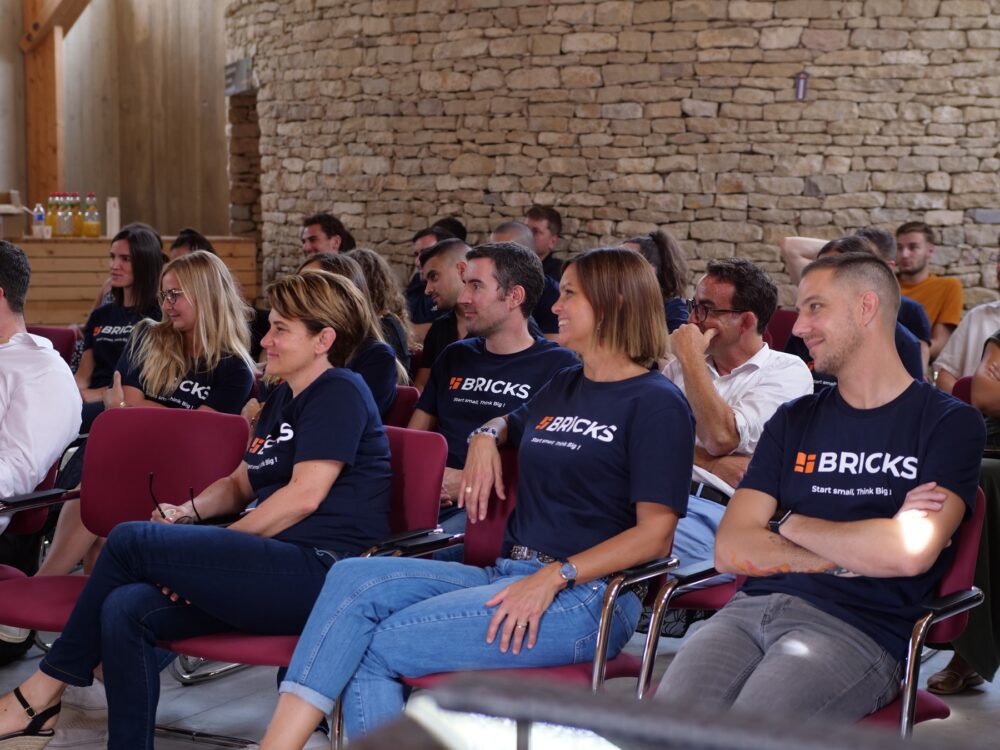

As investor communities professionalize through platforms like Bricks.co, architects and designers face a new era where financial performance, regulatory compliance, and spatial quality are increasingly inseparable.
In a hurry? Here are the key takeaways:
- Investor sophistication is rising:Structured education models such as Bricks Academy are creating more financially literate, data-driven clients who expect design decisions to align with ROI, tax strategy, and regulatory constraints.
- Design is moving upstream:Architects are being involved earlier — during feasibility and underwriting phases — and must position their work as a strategic lever for risk management, adaptability, and long-term asset value.
- Retrofit and performance will dominate: As regulation tightens in cities like Paris, value creation is shifting from speculative short-term rental gains to energy upgrades, compliance-driven renovation, and flexible layouts.
Two years ago, we explored how crowdfunded real estate and the rise of short-term rentals were reshaping property investment in Paris. At the time, platforms were lowering financial barriers, allowing individuals to invest in real estate from as little as €10. The model was disruptive, fast-moving, and, in many cases, opportunistic—particularly in dense urban markets driven by short-term rental profitability.
In 2026, the conversation has shifted. Democratization is no longer the headline. Structuring, education, and professionalization are.
The transformation of Ownrs Club into Bricks Academy, now fully integrated into the ecosystem of Bricks.co, marks a turning point. With more than 2,000 members advised, tens of millions of euros in represented assets, and over 3,000 questions generating more than 200,000 community messages, the initiative signals the maturation of a sector that is beginning to formalize its practices.
For architects, interior designers, and urban planners, this evolution is not peripheral. It reshapes client expectations, project timelines, and even the way design value is articulated.
Crowdfunded Real Estate 2.0: From Access to Education and Structured Investment
When crowdfunded property platforms first gained traction, the focus was on accessibility. By lowering the entry threshold, companies like Bricks.co opened participation in real estate to a broader demographic.
But as the market expanded, so did its complexity.
Videos: Set the captions and translate to the language of your choice.
Bricks Academy — the successor to Ownrs Club — positions itself not merely as a community but as a structured learning environment. Members access weekly live project analyses covering profitability, taxation, and strategy. They engage with experts in financing, construction, legal frameworks, and fiscal optimization. They use simulators, case studies, and analytical templates designed to support informed decision-making.
The underlying message is clear: investors no longer want to proceed “blind.” They seek method, benchmarks, and peer validation.
This shift toward collective intelligence has two direct implications for design professionals.
First, clients are becoming more literate in financial modeling. Yield projections, cost breakdowns, and tax impacts are no longer abstract discussions handled exclusively by advisors. They increasingly shape the design brief itself.
Second, feasibility is being evaluated earlier. Before acquisition, properties are dissected through the lens of regulatory risk, renovation scope, and potential return. Architects may be consulted upstream, during underwriting phases, rather than after purchase.
Design is therefore migrating from a downstream embellishment to an upstream strategic tool.


Informed Investors, Higher Expectations: What This Means for Architects and Designers
As investor communities professionalize, so do their expectations of design teams.
In markets like Paris, where short-term rentals once promised high yields but now face tightening regulation, performance metrics dominate conversations. Energy performance certificates (DPE), rental caps, and fiscal adjustments all influence asset value.
Architects are no longer engaged solely to enhance aesthetics or optimize circulation. They are increasingly expected to act as:
- Risk mitigators.
- Regulatory interpreters.
- Value-creation strategists.
An investor trained through Bricks Academy’s analytical frameworks is likely to ask sharper questions:
- How does this layout improve rental flexibility?
- Can the property pivot from short-term to long-term leasing if regulations change?
- What renovation strategy maximizes both compliance and profitability?
This dynamic introduces what might be called the standardization–differentiation paradox.
On one hand, crowdfunded and portfolio-driven investment encourages repeatable, optimized typologies. Standard renovation packages, cost control, and scalable design systems make financial sense. On the other, in competitive urban environments, differentiation remains a decisive lever. Interior quality, spatial experience, and perceived brand value influence occupancy rates and pricing power. Architectural firms must navigate this tension. They may develop modular design frameworks adaptable across multiple units while preserving enough distinctiveness to command premium positioning.
Moreover, as collective ownership structures become more common, projects may involve multiple stakeholders rather than a single decision-maker. Transparent communication tools — detailed cost breakdowns, scenario modeling, 3D visualizations — become critical to maintaining alignment within investor communities.
Design literacy among clients is rising. The era of the passive investor delegating entirely to consultants appears to be fading.

The Future of Real Estate and Design: Retrofit, Regulation, and Platform-Driven Development
The maturation of crowdfunded investment coincides with broader structural pressures in European real estate. Short-term rental models, once perceived as a straightforward yield enhancer, now operate under increasing scrutiny. Regulatory tightening in major cities has limited flexibility, while energy performance requirements accelerate the need for retrofitting aging building stock. In this context, value creation shifts from speculative arbitrage toward transformation and compliance.
Bricks Academy’s emphasis on regulatory updates, including its announced “Marché 2026” session, underscores how central policy awareness has become to investment strategy. For architects, this reinforces a trajectory already underway: technical expertise and sustainability are no longer niche competencies but core drivers of market relevance.
Retrofitting for energy efficiency, optimizing building envelopes, integrating low-carbon materials, and planning reversible layouts are no longer optional enhancements. They are prerequisites for maintaining asset viability.
At the same time, platform-based ecosystems hint at new modes of development. As communities coordinate acquisitions and analyze opportunities collectively, we may see:
- Data-informed neighborhood targeting.
- Collective acquisition of entire buildings.
- Standardized renovation pipelines implemented across portfolios.
In such a scenario, architectural firms could evolve into long-term partners of investment platforms rather than project-by-project service providers. Repeat collaboration would favor firms capable of aligning design methodologies with financial frameworks.
The convergence of real estate, education, and community-building also suggests the emergence of hybrid investor profiles: tech-savvy, regulation-aware, and performance-driven. These actors may demand integrated services, combining design, cost control, and strategic planning within unified proposals.
For the profession, this signals a redefinition of value.
Architecture is increasingly measured not only in spatial quality but in its capacity to enhance resilience, adaptability, and financial sustainability.
From Democratization to Professionalization
The initial wave of real estate crowdfunding was defined by access. The transformation of Ownrs Club into Bricks Academy within the Bricks.co ecosystem suggests the sector has entered a second phase — one characterized by structure, expertise, and collective intelligence.
For architects and designers, the implications are significant.
Clients are more informed. Briefs are more performance-driven. Regulatory awareness is embedded in early decision-making. Retrofit and adaptability are central to value creation. And digital platforms are shaping how projects are evaluated before they are even acquired.
In this evolving landscape, the most competitive design professionals will be those who fluently integrate aesthetics, compliance, and financial logic. The boundary between architecture and asset strategy is thinning.
If the past decade was about democratizing investment, the next may be about professionalizing it with design positioned not as an afterthought, but as a core instrument of risk management and return generation.