


By Chelsea Rowe, Creative Director at TPG Architecture
With 61% of U.S. companies enforcing formal return-to-office policies, the workplace has reemerged as a critical driver of productivity, culture, and client experience. For organizations operating in legacy commercial buildings or those that have called them home for decades, this renewed emphasis brings both opportunity and responsibility. Renovating within a historic footprint requires a thoughtful and highly strategic approach, one that respects architectural heritage while adapting to the evolving expectations around collaboration, flexibility, and experience. In these settings, the office is more than a place of work; it becomes an extension of institutional identity and brand story, balancing modern functionality with a strong sense of place.
Instead of relocating, many companies are choosing to reinvest in their existing location—in part due to the cost of relocation and lack of available space—leveraging the history and brand equity embedded in long-held leases and landmark buildings. This is particularly true for the U.S. legal sector, where renewals are surpassing new leases in most major markets. In some cases, the location itself is the main draw—a prime address, central to popular amenities, close to major transit for commuting employees, etc. In others, the finances favor renovating-in-place. Committing to the continuity and character of an older building, however, often comes with real constraints: aging infrastructure, compartmentalized layouts, and outdated technology that fall short of supporting today’s hybrid workflows and digital demands.
Balancing Modern Needs with Aging Infrastructure & Reinforcing Culture
Within these settings, design challenges quickly become spatial and technical. The layout is often constrained by fixed floorplates—which in Manhattan can range from about 8,000–20,000 RSF in older stock and 20,000–30,000+ RSF in post-war and modern buildings—making it difficult to integrate additional private rooms, collaboration zones, and amenities without reorganizing the plan. Oftentimes, this leads architects to layer flexibility into these footprints, integrating multipurpose rooms, shared resource areas, and adaptable settings that can evolve alongside shifting operational needs.
At the same time, legacy buildings often require substantial behind-the-scenes upgrades. Mechanical, electrical, and safety systems, such as fire alarms, must be modernised to meet building codes and overall safety standards. High-speed connectivity, climate control, and other infrastructure improvements need careful integration to avoid compromising architectural elements. To better understand these considerations, preservationists are often consulted to protect fragile or significant features, ensuring that original materials, millwork, or finishes are respected.
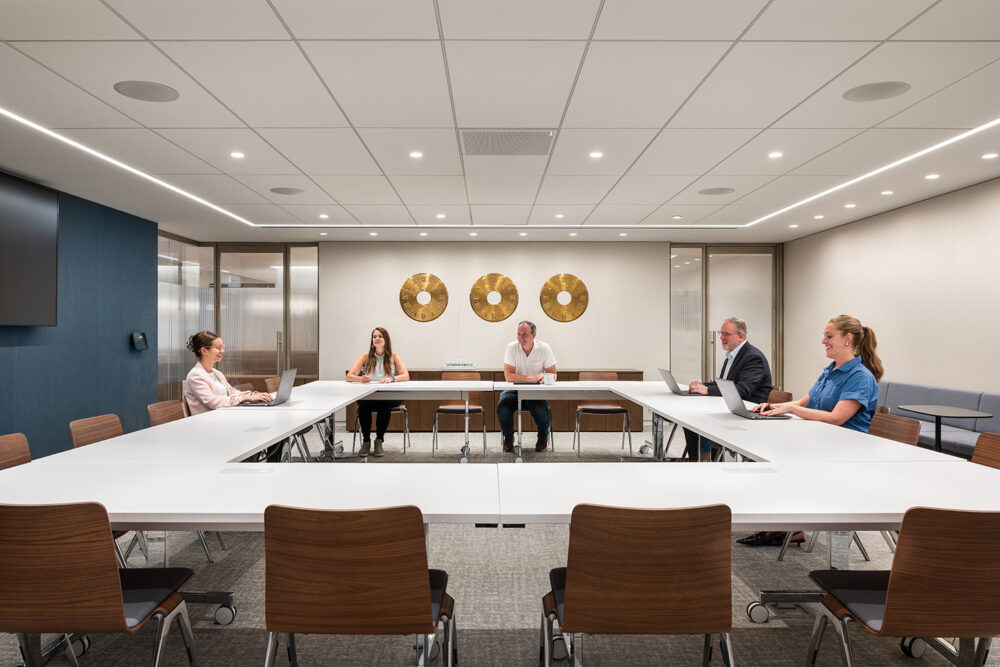
While these renovations can be complex, they also present opportunities to strengthen team dynamics through place. When thoughtfully integrated, original materials, archival documents, and brand artifacts depicting New York’s architectural legacy, from early transit relics to elements of iconic landmarks, become more than decorative features; they act as storytelling devices that connect employees to an organization’s heritage and mission. For organizations with art collections, showcasing pieces prominently in the entry, conference rooms, and other high-traffic zones, offers workers a daily reminder of what they are part of and who they represent in their professional lives.
This connection can have a measurable impact on overall employee experience. A clearly defined company ethos, visible in the built framework, can resonate deeply with prospective talent or influence current workers seeking similar values. It can also serve as a code of conduct or corporate ethos. In this way, historic renovations become not only an exercise in preservation and modernization but a strategic tool for reinforcing values, shaping experience, and supporting long-term success.
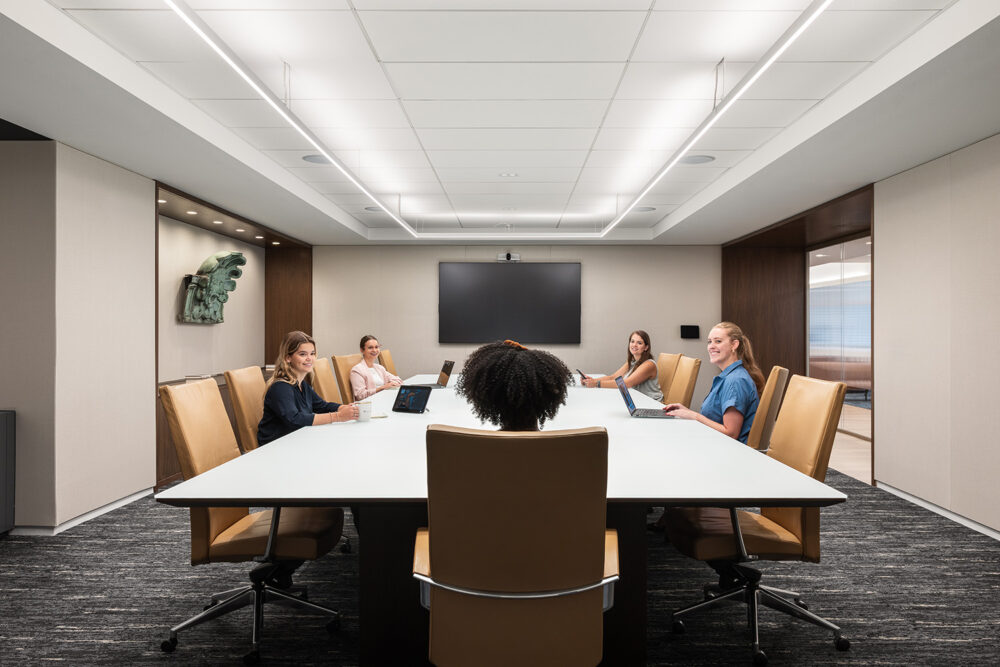
Case Study: Herrick, Feinstein, LLP
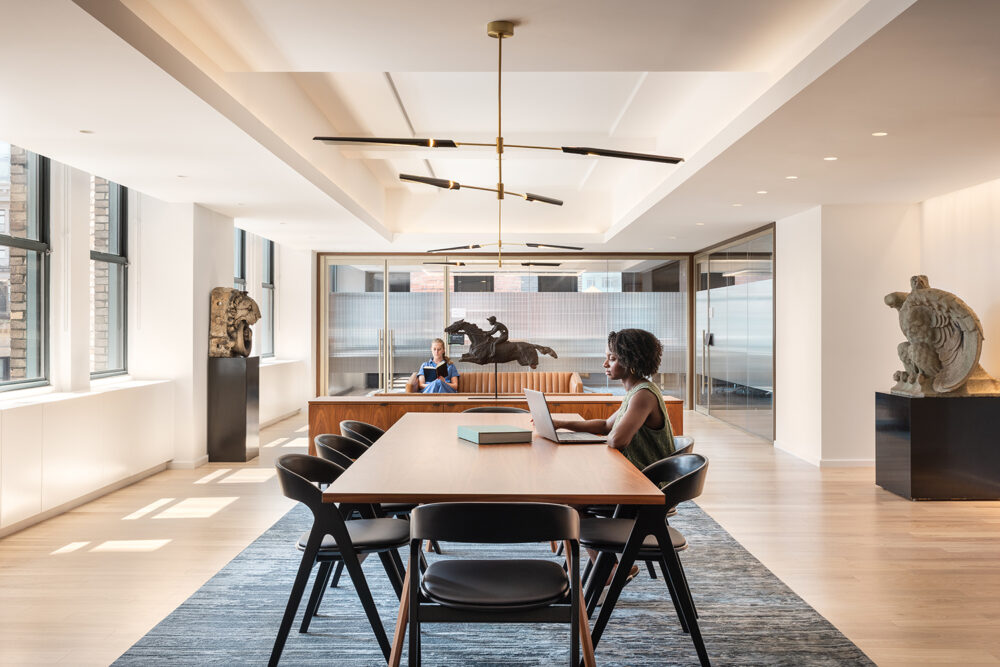
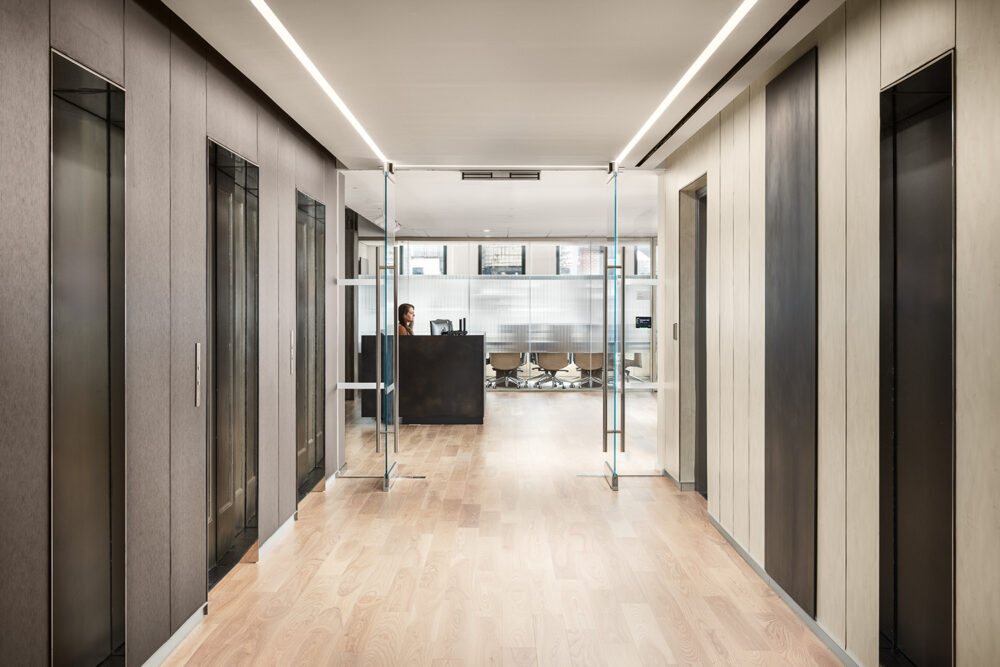
One project that gave our team a firsthand look at the complexities of renovating a historic workplace was Herrick, Feinstein, LLP’s headquarters in New York City. Herrick is a prominent multidisciplinary law firm with deep roots in New York’s real estate and development community dating back to 1928. When the firm renewed its lease at 2 Park Avenue, our team was brought on to transform the space into a modern, human-centered corporate hub that serves the firm’s spatial needs within the existing pre-war footprint.
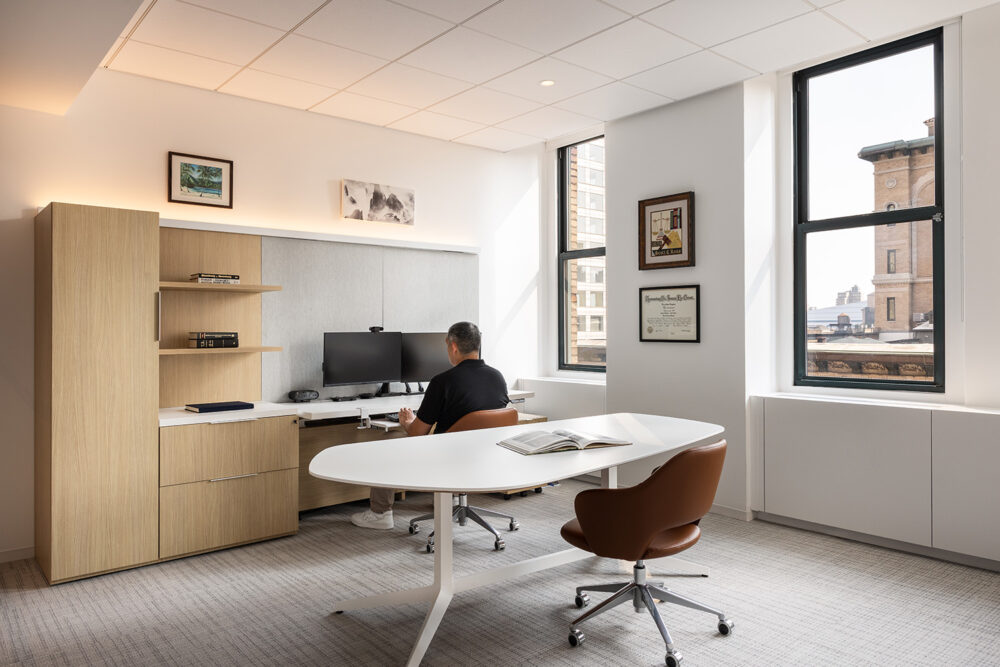
Renovating within a prewar building had several logistical challenges, including irregular perimeter modules, uneven window placements, and variable ventilation, which required a holistic approach that unified these elements while preserving the overall design integrity. To address these challenges, our team decided to incorporate clean, streamlined forms, high-contrast finishes, and a careful balance between raw and polished materials to redesign the workplace for better functionality.
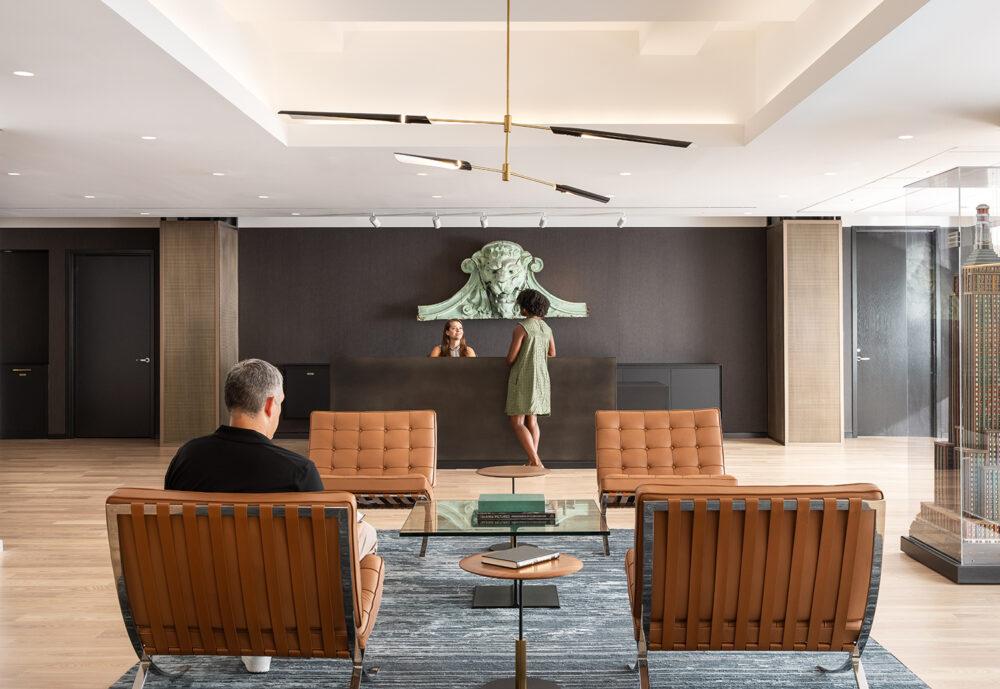
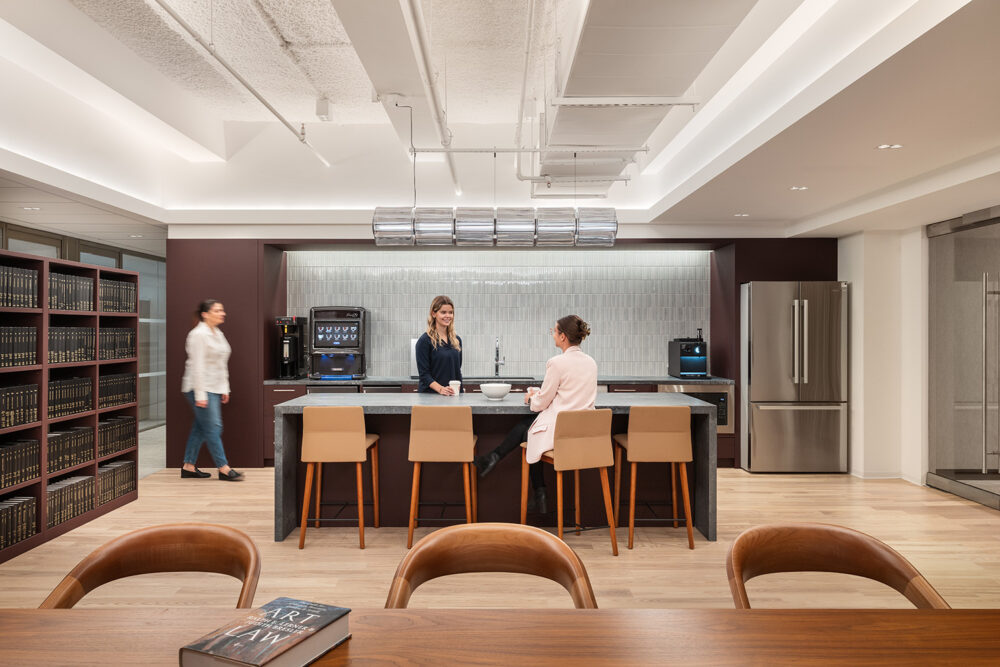
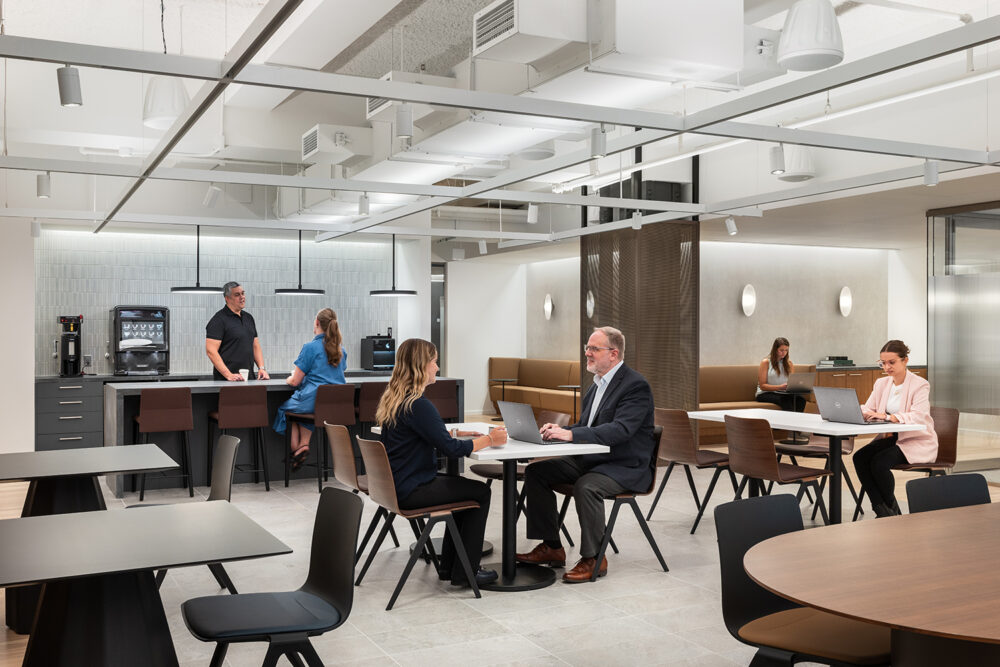
We also integrated several new amenities within the office. Working within approximately the same footprint, our team decided to scale back the dedicated conference and meeting areas to focus on creating intimate, engaging experiences in the reception and café between client-facing and attorney-only zones. By doing so, we created a space that still feels purposeful and intentional, while also adding almost 30 new offices.
It was also important to the firm to include Herrick’s art and artifact collection, which informed the aesthetic and storytelling. Some of the artifacts include architectural etchings, photographs, original cornices, and sculptural pieces. To maintain and preserve the architecture, we worked closely with Herrick to curate and arrange these artifacts to create a “gallery walk” from the reception to the café.
Herrick’s redesign illustrates how thoughtful interventions can honor architectural heritage, support modern functionality, and reinforce organizational culture, turning the workspace into a meaningful extension of the firm’s legacy and identity.
Designing for Legacy and the Future
Renovating historic offices requires more than technical upgrades; it demands a careful balance between preserving architectural character, enhancing functionality, and reinforcing company principles. When thoughtfully executed, these spaces do more than accommodate work; they tell a story, strengthen identity, and create meaningful experiences for employees and clients alike.