


By: Jacob Martinson, Design Studio Manager, Americas at Interface
Design is always evolving. But one constant in recent years? The need for flexibility and adaptability has become a baseline for commercial interiors. And it’s no wonder why: a 2024 study by Zoom and Reworked Insights shows 64% of organizations worldwide have adopted hybrid work. In Europe, flexible workspace use is high, with the UK and France at over 90% according to Cushman & Wakefield.
This shift is rewriting the rules—not just for offices, but for schools, hospitals, and virtually every kind of commercial space. The best environments today are designed to change and designed to last. Adaptability without disruption is everything—whether it’s redesigning the layout of a space, changing how it functions, or refreshing its look.
What’s driving the design trend?
Today’s workforce needs are reshaping design priorities. What began as a response to hybrid work has become a blueprint for lasting design.
Spaces now need to support multiple work styles without costly rebuilds. Why? Because flexibility is the ultimate ROI driver. And the payoff goes beyond convenience. In practice, modular layouts and reconfigurable zones help to:
- Extend material life through adapting instead of replacing
- Reduce renovation cycles and minimize disruptions
- Save on long-term project costs
As remote work continues, companies that have downsized their office spaces have to do more with less. Every square foot needs to be flexible, multifunctional, and justify its ROI.
By designing for adaptability, organizations can protect their investment, lower long-term costs, and align with sustainability goals—keeping environments relevant for longer.
What does flexibility in interior design look like?
In today’s commercial interiors, flexible design comes to life through modular flooring, adaptable furniture systems, and multi-purpose rooms. At Interface, we approach modular flooring as a system and design our products with the understanding that spaces often change and must evolve over time without disruption.
Combine these elements, and you get spaces that pivot from one use to another with minimal effort.
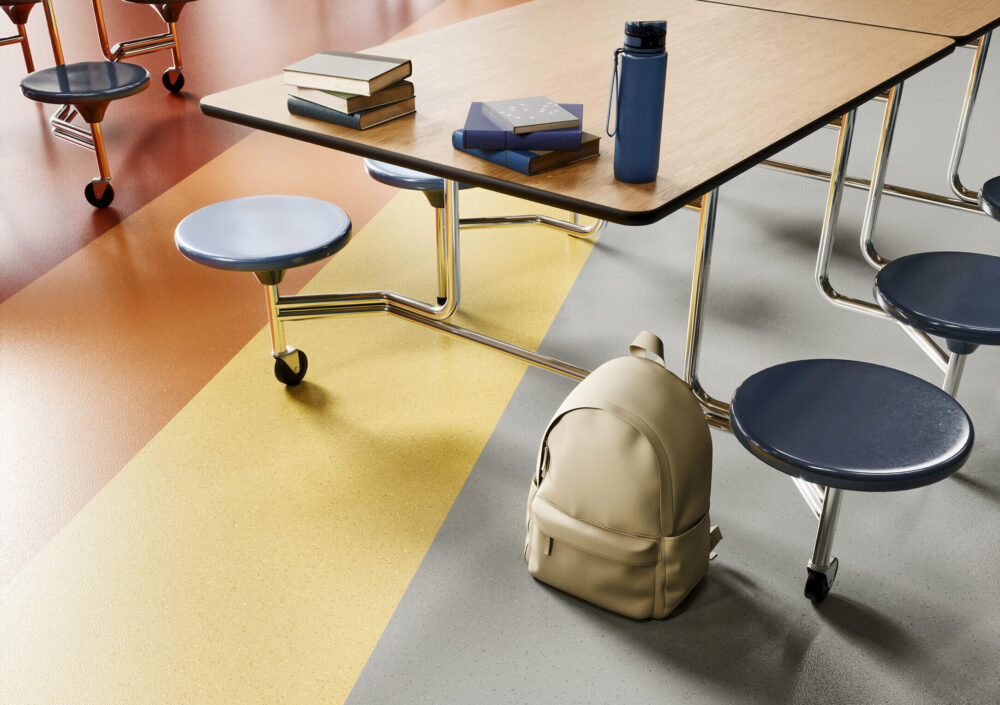
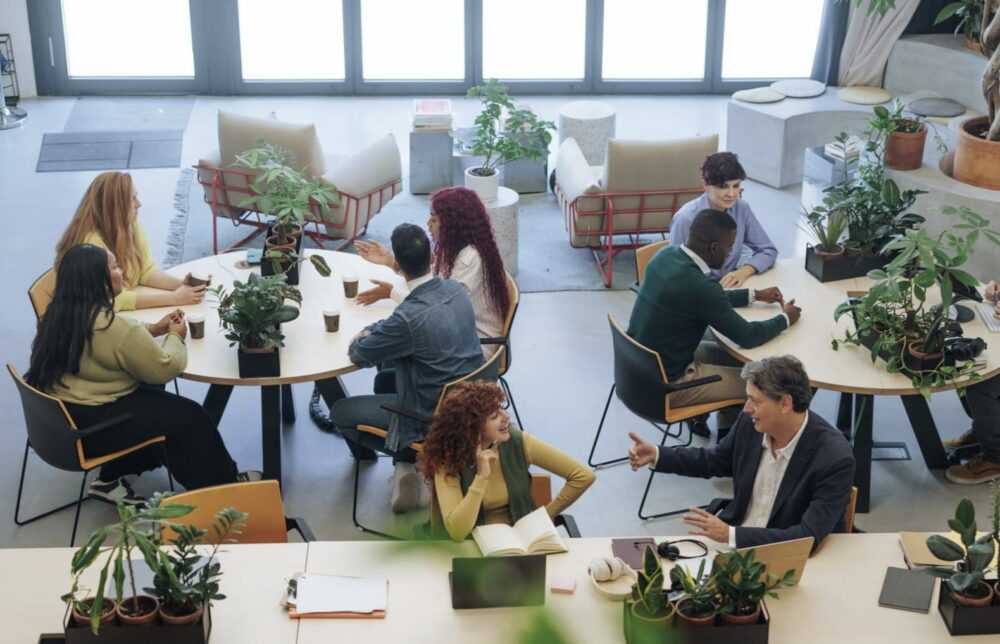
This is becoming increasingly popular in offices today. Common examples include:
- Modular tables let conference rooms easily transition from board meetings to collaborative training sessions.
- Mobile partitions create private zones or open layouts on demand.
- Portable privacy pods offer flexible, on-demand focus spaces—an alternative to built-in focus rooms.
- Sheer or open weave curtains on ceiling tracks are a cost-effective, light-filled way to delineate space that feels softer than glass.
Beyond corporate, other sectors are rethinking static spaces, too.
In Healthcare:
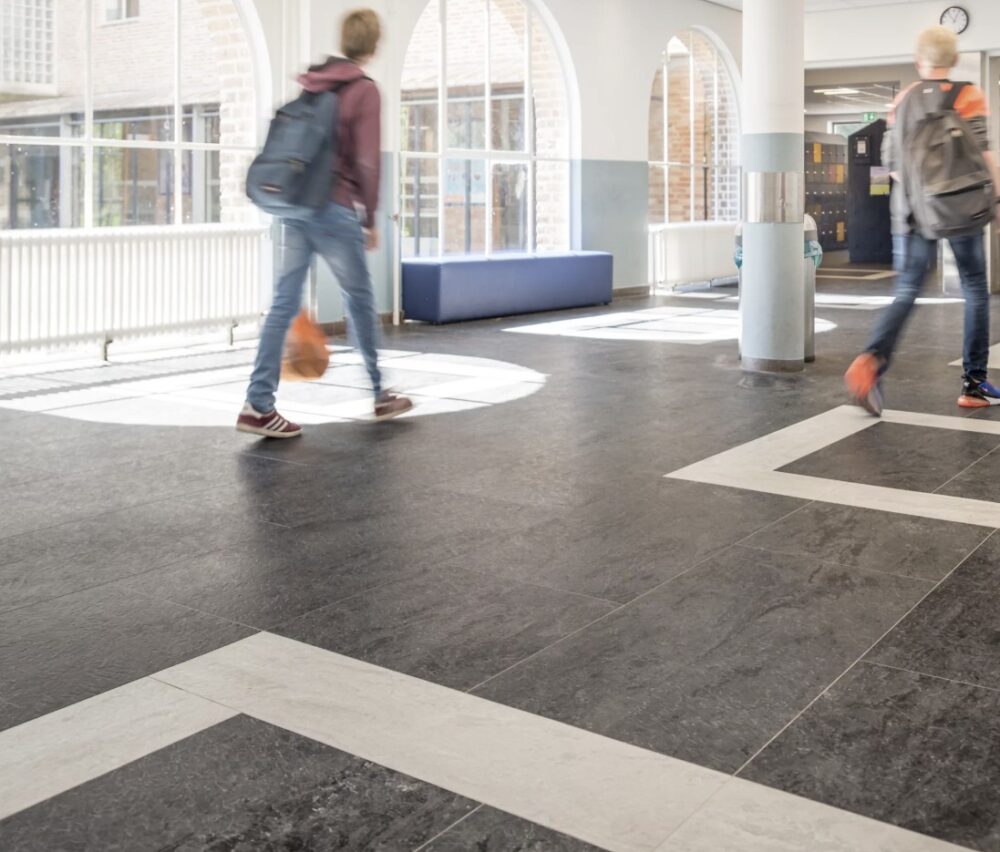
- Hospitals can swap out floor tiles individually with products like norament® rubber flooring—avoiding full replacements and minimizing downtime in critical care areas.
- Mobile nursing stations can replace fixed units, adapting as care models progress.
In Education:
- Modular flooring enables quick replacement and layout changes without shutting down classrooms.
- Combined with mobile furniture and adaptable zones, schools can flex from lecture setups to collaborative hubs or testing environments in minutes.
The ultimate goal? Occupancy efficiency. This means designing adaptable, high-use spaces to meet diverse needs across all commercial environments.
How does this affect material and design choices?
Homogenous layouts, transitional flooring, mobile furniture, neutral palettes—adaptability is in the details. Design choices need to foster flexibility, durability, and well-being for everyone who uses the space, now and in the future.
At Interface, we’re evolving with this shift by producing modular flooring made to mix, match, and adapt across environments. How? Through complementary colorways, non‑directional patterns that support selective replacement, coordinated transitions between soft and hard surfaces, and much more. Our modular flooring helps visually define space—supporting multiple uses without prescribing it to a single function.
We also offer customers floor design support at no additional cost. Through the Interface Design Studio (IDS), we partner with architects and designers at any stage of the design process to develop project-specific flooring solutions. IDS can advise customers on product selection across Interface’s portfolio and create custom floor designs that consider long-term flexibility. Our IDS team includes flooring design experts that are adept at bringing performance, aesthetics, and adaptability together into cohesive flooring strategies.
Here are some considerations to keep top of mind when designing spaces for future flexibility.
Flooring as a foundation
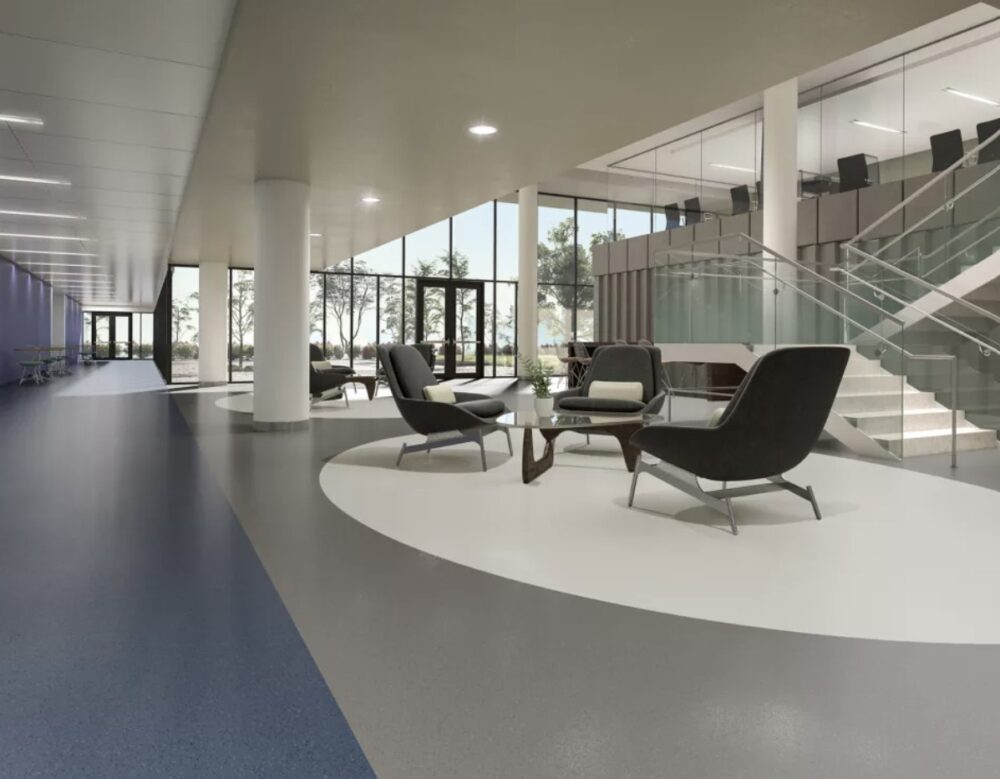
- Connect spaces seamlessly: Large-scale flooring designs can connect open and enclosed areas, guiding people through zones without hard barriers. Open Air™ Transitions and Accents is a great example of how carpet tile can accomplish this.
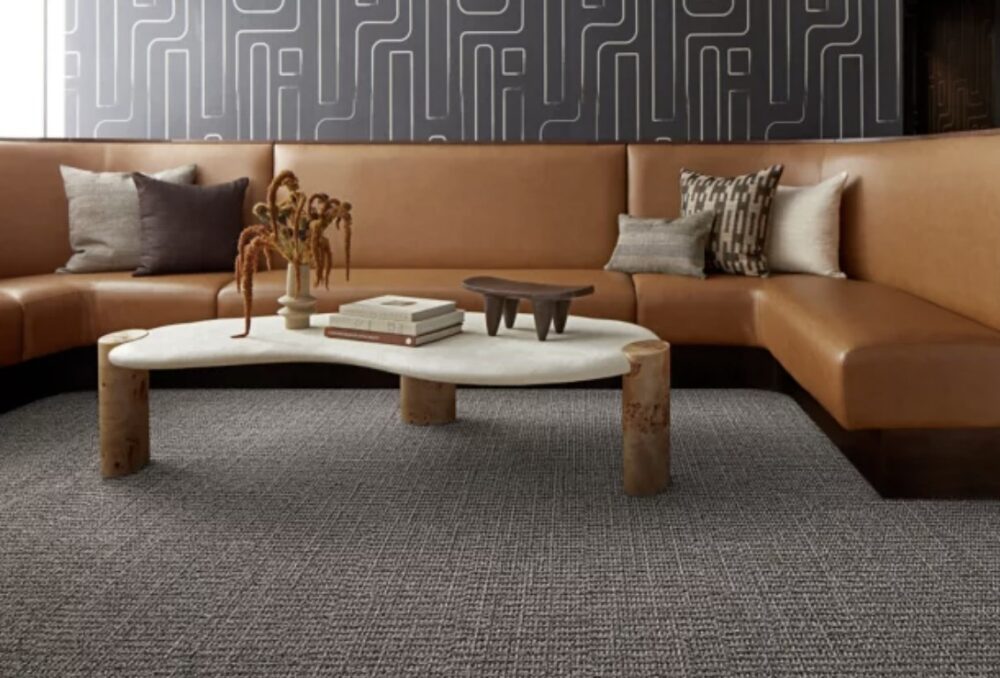
- Signal transitions subtly: Use gradual shifts, such as those found in Woven Gradience™ carpet tile, to indicate a change in function while keeping the space cohesive.
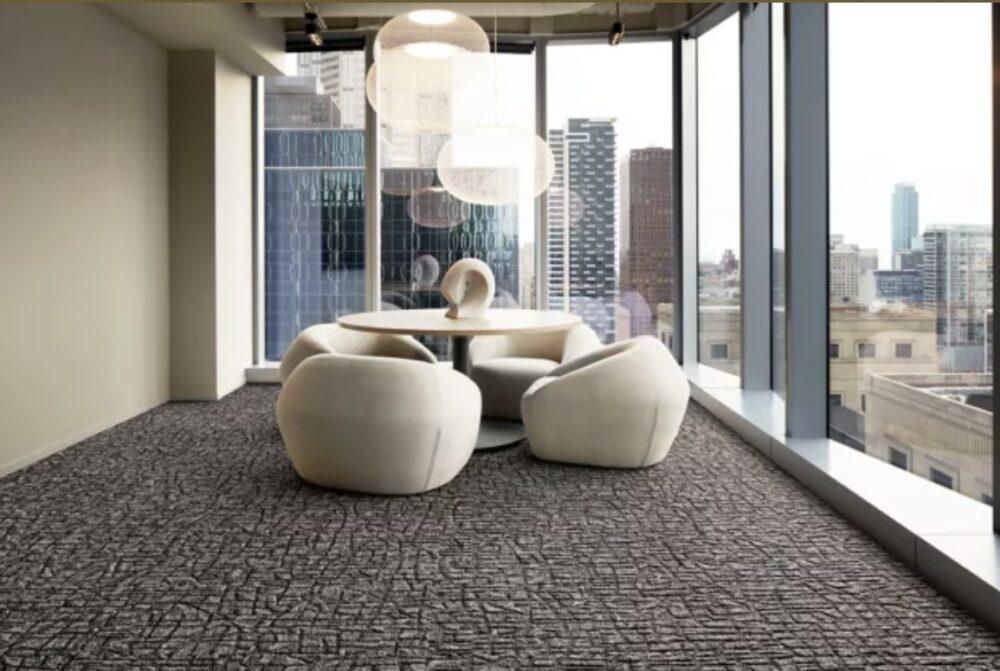
- Balance flexibility and aesthetics: Big floorscapes—achieved through smart product selection and patterning—deliver flexibility without sacrificing design or cost efficiency. Another great way to maximize ROI and longevity is to pair a neutral hard surface floor like Earthen Forms™ LVT with a high-style accent rug made of carpet tiles, like those found in the Etched & Threaded™ collection by Interface.
Furniture and technology
- Prioritize mobility: Modular seating, mobile desks, and rolling whiteboards let teams reconfigure layouts quickly and easily.
- Keep tech accessible: Integrated power tracks and plug-and-play systems reduce complexity and avoid costly rewiring.
- Plan for adaptability: Advanced building management systems enable entire zones to shift as needs transform over time.
Color and finishes
- Choose versatile tones: Bold, fixed colors can limit future use, while neutrals create a flexible foundation.
- Focus neutrals on major surfaces: Warm neutral palettes dominate floors and walls today because they create backdrops that adapt to any function. Carpet tile and LVT collections that feature timeless patterns and colorways, like Dressed Lines™ and Lasting impressions™, were designed with this versatility in mind.
- Add personality with accents: Incorporate vivid colors and patterns via easy-to-update elements (e.g. pillows, drapes, artwork, etc.). This approach reduces refresh costs and supports multi-use flexibility.
A New Standard for Commercial Design
As commercial design continues to evolve, technology is driving new opportunities to support flexibility earlier in the process. Experimentation in AI and digital visualization is already underway, with firms using AI tools to explore options more efficiently, generate ideas faster, and better understand long‑term implications of layout decisions and material impacts.
Regardless of the tools used, one principle is clear: spaces should adapt to people, not the other way around. Adaptability now equals longevity, durability, and sustainability, with flexible spaces translating to minimized waste, reduced costs, and increased relevance over time.
Making thoughtful choices upfront ensures spaces can transform for tomorrow. And embracing this approach is essential to creating timeless environments that support shifting needs and ongoing occupant wellbeing.
Today, flexibility and adaptability are no longer design features—they are the foundation of future-ready spaces.