

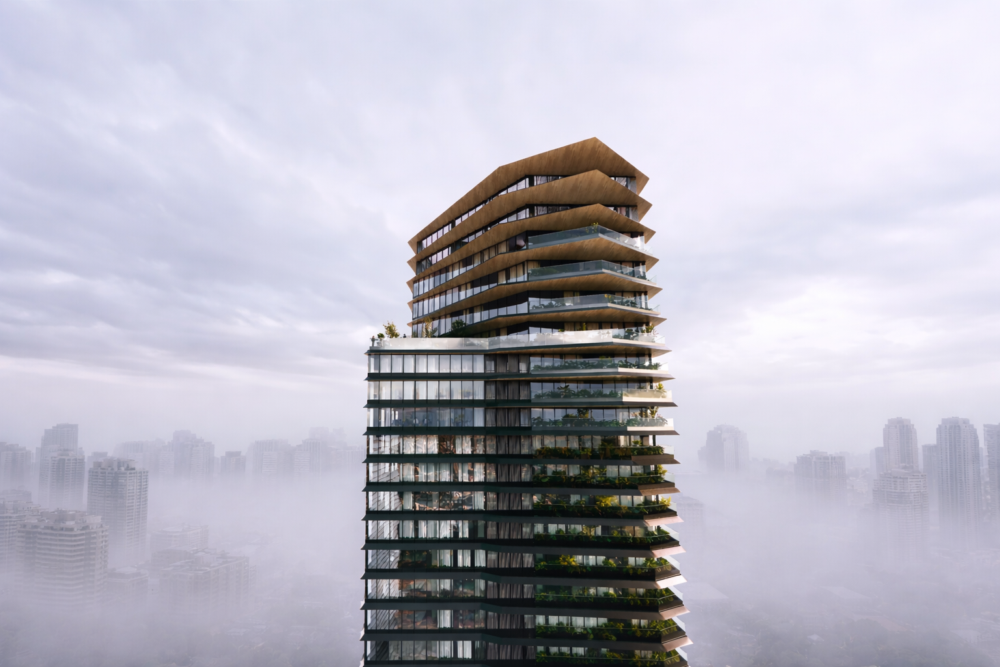

As construction continues on Taichung’s Kuma Tower, the innovative tower already stands out visibly from the cityscape.
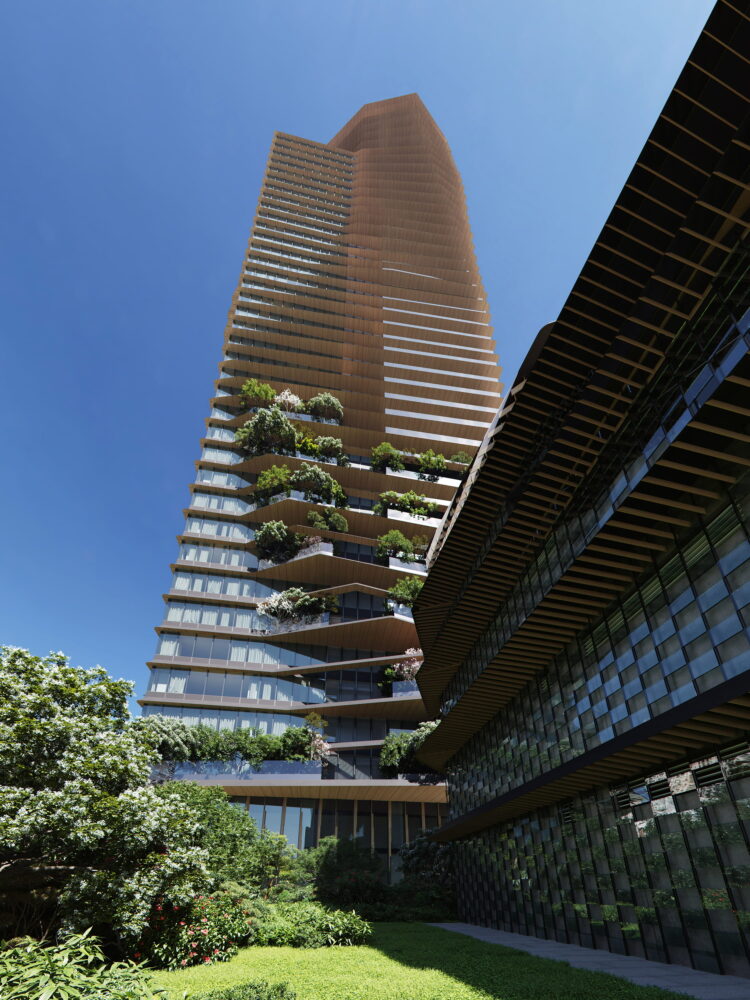
Kengo Kuma and Lien Jade Real Estate are designing a striking new landmark for the Taiwanese city of Taichung: The residential high-rise features layered wooden eaves and invites nature into the surrounding urban architecture.
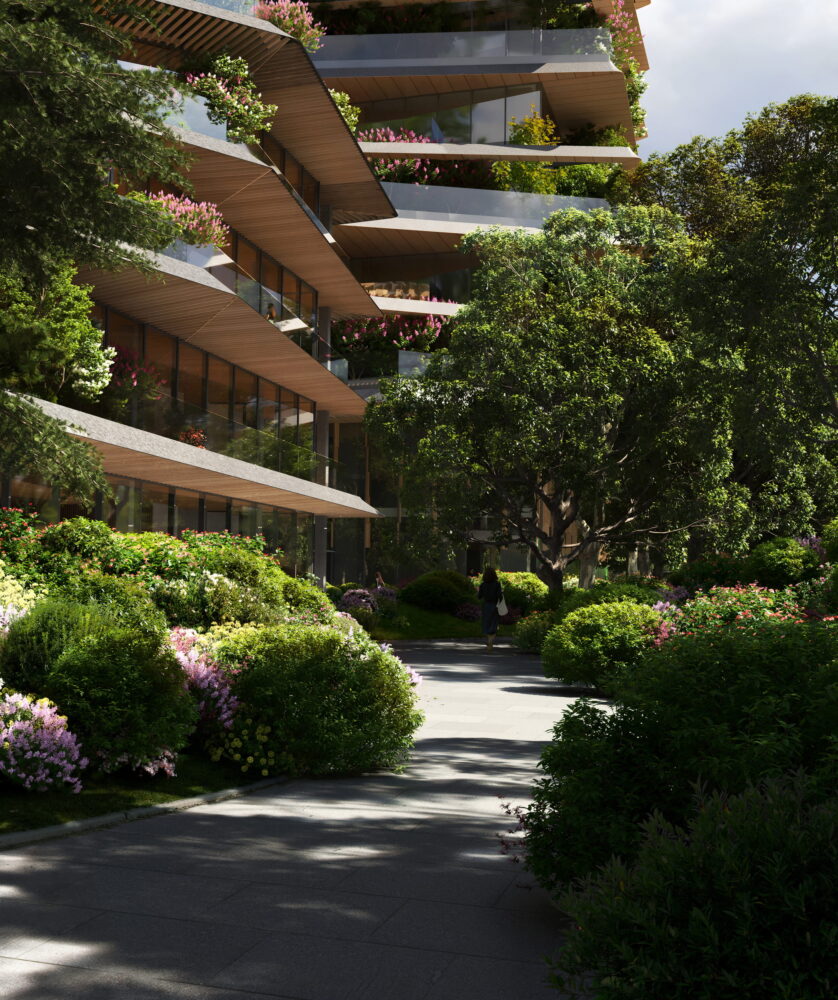
“While being higher up, we aimed for the residents to make greenery feel close, considering how to capture and bring nature into the building,” comments Japanese star architect Kengo Kuma on his current project Kuma Tower (隈研吾).
The residential high-rise is currently being built in Xitun District in Taichung, now Taiwan’s second-largest city, located on the northwest coast. The tower is still under construction, and its completion is scheduled for summer 2028. Kengo Kuma and his project partner Lien Jade Real Estate have already envisioned how the new landmark is set to not only enhance the cityscape as one of its highest buildings, but also connect Taichung to the world by focusing on sustainability in high-rise construction.
Integrating the Human Need for Nature
In particular, the incorporation of natural elements is playing a significant role in the urban architectural design process:
“The generous use of wood in a city full of concrete and metal creates an urban space where people can feel an organic warmth and an element of nature,” Kengo said in an earlier interview.
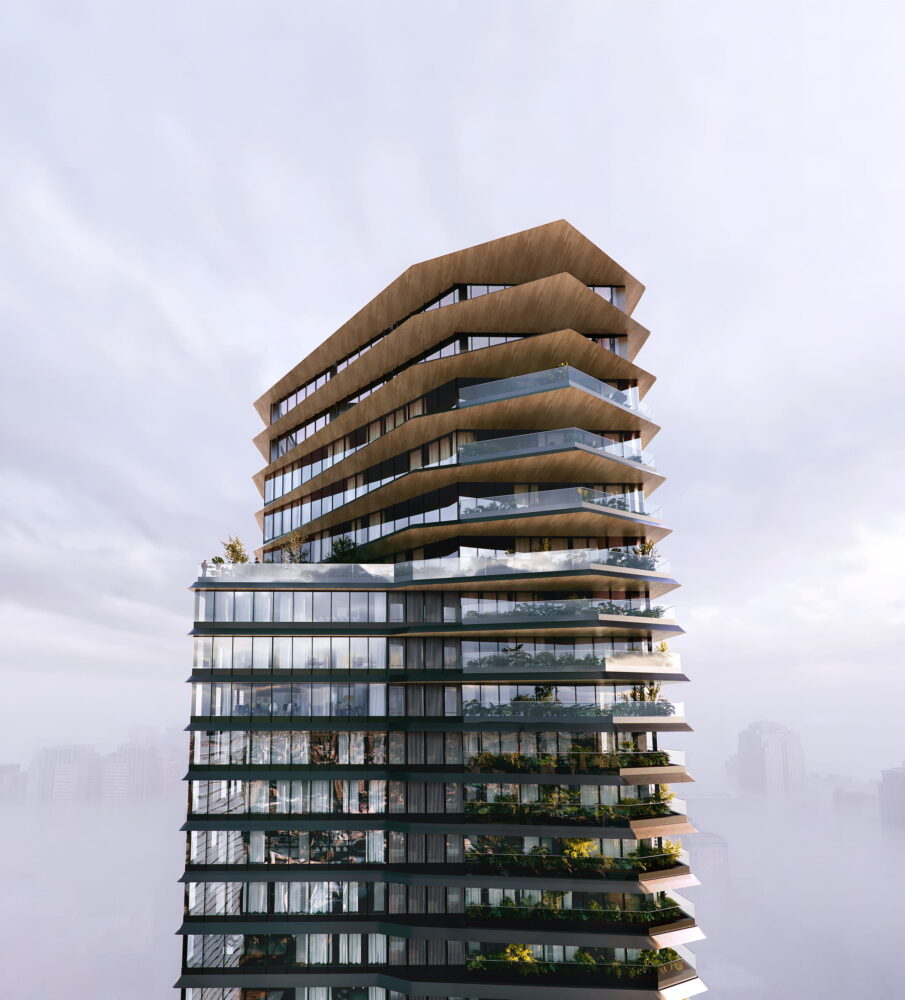
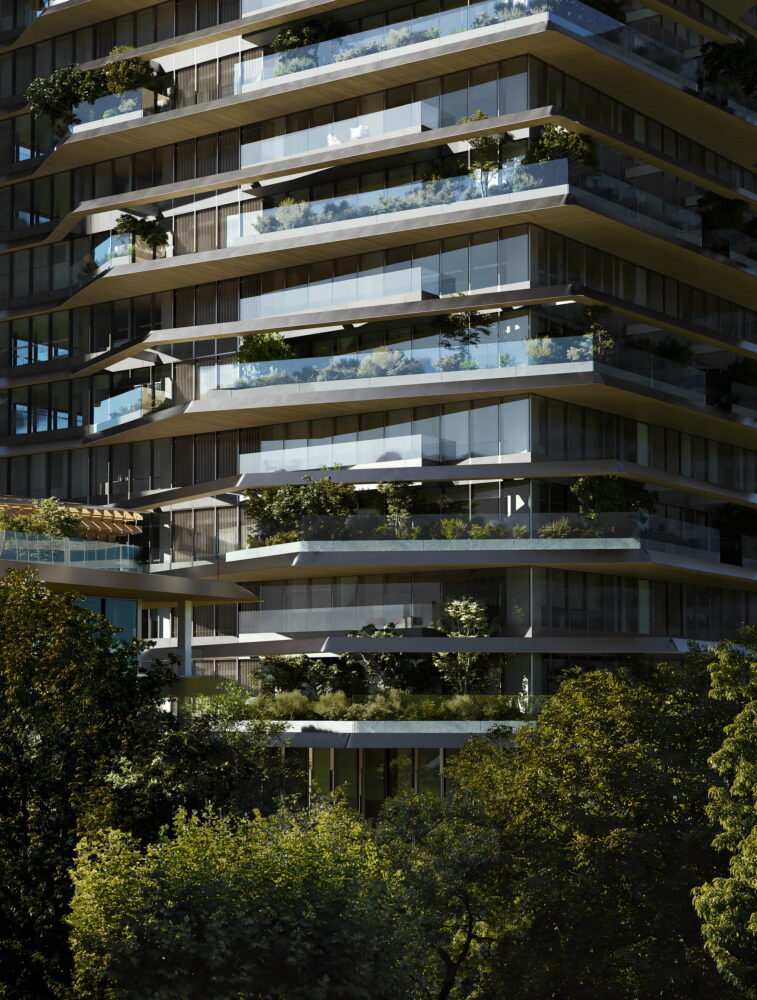
So, instead of designing the new high-rise as a rigid glass box, the designers went for large windows, a multitude of terraces, and layered rotating eaves of different depths wrapping the entire building structure, creating a dynamic silhouette. This way, visitors immediately experience a sense of nature, comfort, and relaxation from inside, particularly when stepping out to the front balconies.
Wood and Layered Eaves: Material-conscious Design
“Eaves create shade that protects people from direct sunlight and enhances the environmental performance of a building. In this tower, the cross-sectional design makes use of the eaves’ function to the full,” Kuma told ArchiExpo e-Magazine this February.
Wood, natural stone, bamboo, and translucent facades illustrate his design language, known for its sustainable approach, sensitivity to materials, and connection to nature. By carefully designing details such as floor edges and handrails, the international star architect chooses a distinctive Asia-inspired approach that makes Kuma Tower truly unique in its design:
“It will be a residence completely different from any tower apartment so far,” he emphasized.
The Future of Living: Reframing Urban Density in Taiwan
Even though Kuma Tower will be a mixed-use tower, housing a number of offices as well, it is primarily designed for residents. As a residential project, it sets a new standard for future living:
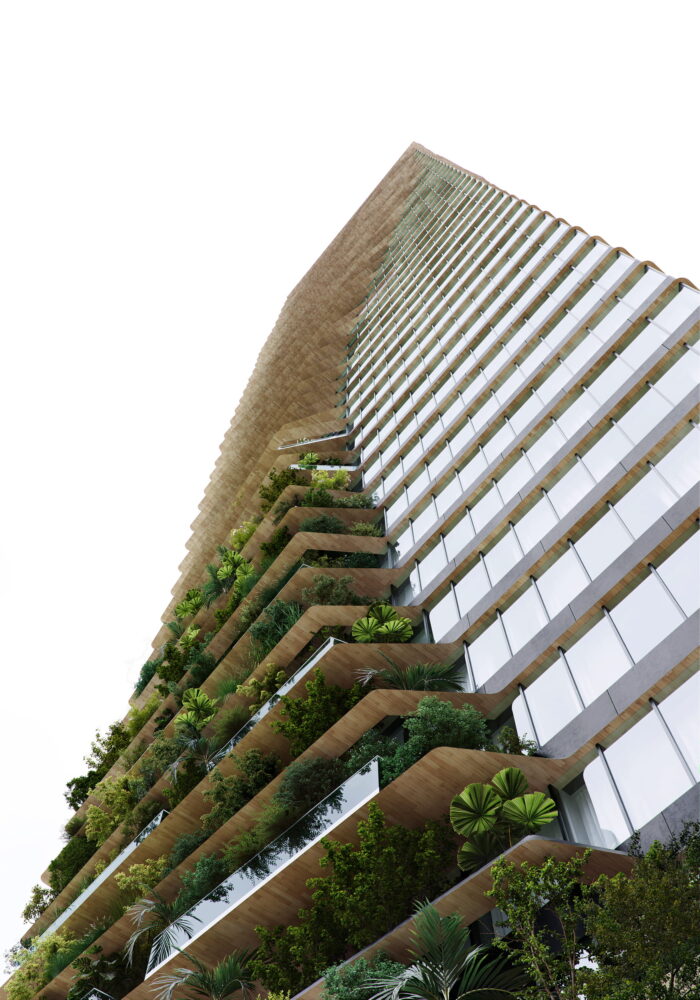
“Tower apartments are likely to become the main type of residence,” as the architect outlined for ArchiExpo e-Magazine: “If so, even living high up, you should be in an environment where the changes of natural light and a sense of the ground can be felt close. In this residence, the upper floors offer a sense of abundant nature, while on the lower floors you’d feel a tangible presence of the ground.”
In that sense, Kengo Kuma and his team hope that the tower will play a central part in Taichung, make the most of its charm, attract visitors and foster a deeper understanding of the city, and reinforce its urban identity. Located on Shizheng North 1st Road, Kuma Tower rises in one of the city’s new central areas for urban redevelopment, and it is expected to become part of a new urban green belt.
Kuma Tower in Figures
Already this January, the innovative tower, still under construction, stood out visibly from the cityscape. Once finalized, the new skyscraper will have a total height of 208 m resp. 682 feet, including 42 floors and seven basement levels. With these dimensions, Kuma Tower is going to be the second-tallest building in Taichung.
Its designer, Kengo Kuma, is one of Japan’s most renowned contemporary architects who achieved the most international recognition with the Japan National Stadium in Tokyo for the 2021 Olympics as well as with numerous museums, hotels, and cultural buildings worldwide. The fact that he is now designing the Kuma Tower in Taichung highlights how Taiwan attracts top-class international architects and demonstrates that Taiwan’s skyline is undergoing dynamic change in the face of urban densification.