


Architect Maxime d’Angeac provided insights into the Orient Express luxury project during Maison&Objet Paris.
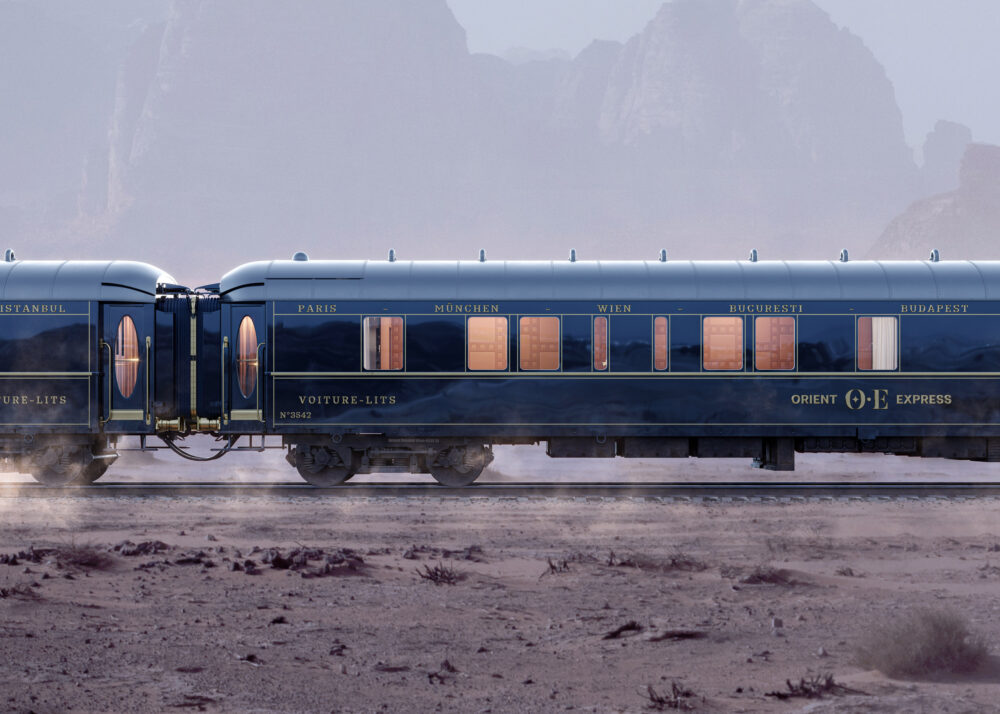
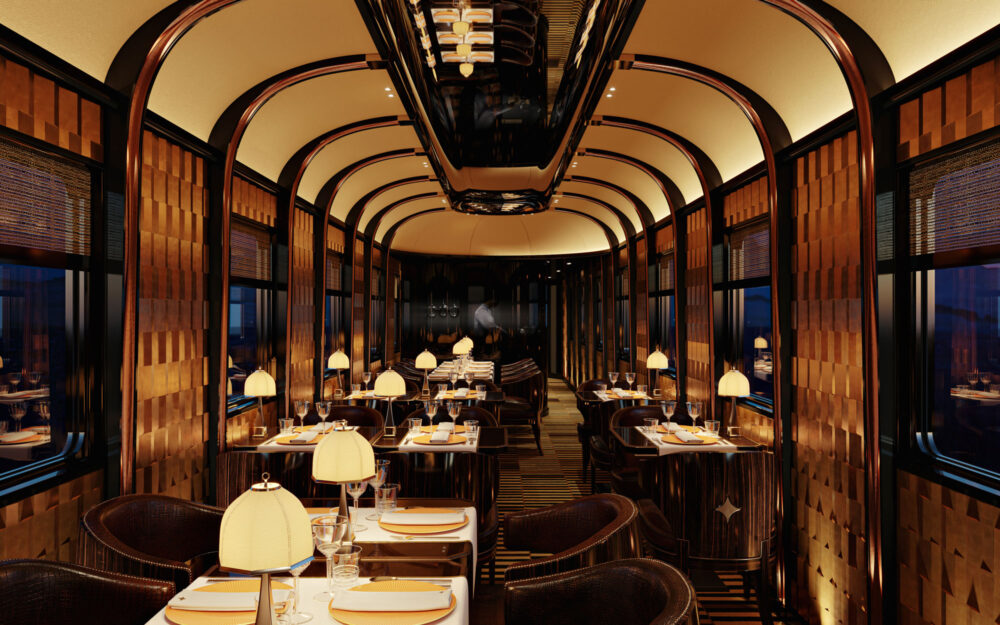
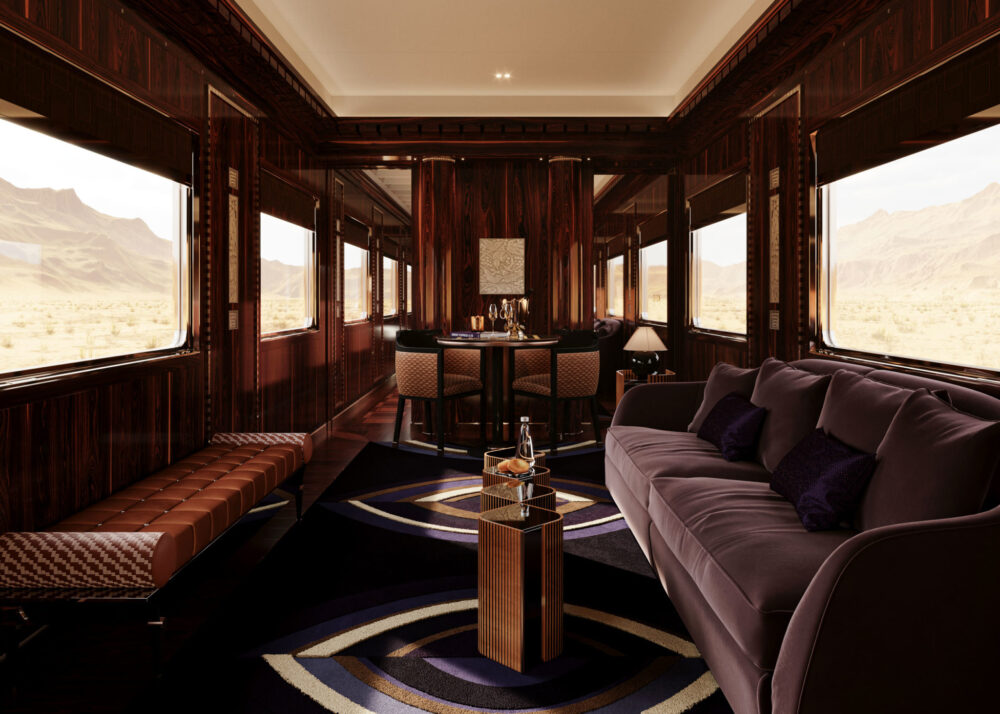
The rebirth of Orient Express is not a nostalgic exercise but a radical act of contemporary design. What began with the rediscovery of the 17 original Orient Express carriages evolved into one of the most ambitious luxury projects of the past decade, spanning rail, maritime, and land-based hospitality. Maxime d’Angeac describes arriving at the project almost accidentally, “par un échec,” after a failed hotel competition that nonetheless caught the attention of Accor CEO Sébastien Bazin. From that moment, the question became existential: What can be reinvented after such a myth?
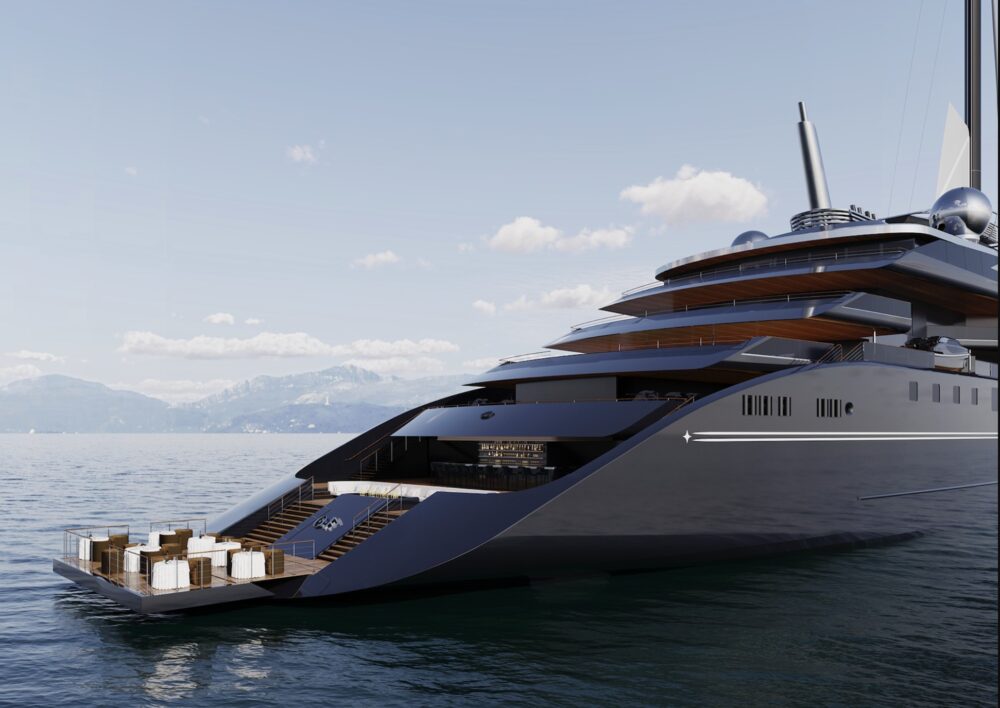
Beyond the train and the two 220-meter sailing yachts currently under construction at Chantiers de l’Atlantique, Orient Express has expanded its hotels and land-based destinations, stretching its identity into permanent architectural forms. Can a single design language truly operate coherently across moving objects, ships, and buildings? This question now sits at the heart of the Orient Express ecosystem—and challenges architects to rethink what a “brand” really means at this scale.
A Controlled Vision at Industrial Scale
At the core of the Orient Express revival lies a paradox: extreme creative ambition paired with absolute control. The project was developed at extraordinary speed—less than four years from January 2022 to the Corinthian launch—by what d’Angeac describes as a near-startup team.
“The people who designed this project can be counted on one hand,” he explains, emphasizing a lean structure built to avoid dilution of intent.
This precision was non-negotiable. Working with Accor, a CAC 40–listed group, meant that romanticism alone was insufficient.

“It required tremendous precision,” he states plainly.
The response was radical: drawing everything. Every object, from architectural elements to tableware, followed the same methodology used by the historic Orient Express, which once maintained 14,000 meticulously designed product references.
“We’re going to do the same thing,” d’Angeac recalls telling Bazin.
For architects and design professionals, the question arises: Is such exhaustive authorship still feasible in today’s fragmented production environments? Orient Express suggests that it is—if authority, trust, and cultural legitimacy are aligned. D’Angeac shielded his collaborators from political and financial turbulence, absorbing the pressure himself so teams could focus on execution.
Crucially, this was not about spectacle for its own sake. The train’s modular length—typically 17 wagons, sometimes more depending on European platforms—required spatial adaptability without compromising identity. Meanwhile, the ships involve over 1,200 workers on site, operating under naval constraints of vibration, weight, fire safety, and stability. Can architectural intent survive such conditions without compromise? Orient Express answers with discipline rather than decoration.
Craft, Legitimacy, and the Refusal of Trend
One of the most striking aspects of the Orient Express project is its deliberate rejection of trend-driven design culture.
“There is no dropping name,” d’Angeac insists.
Craftspeople were selected not for visibility or followers but for historical and technical legitimacy. This approach reconnects luxury design with lineage rather than hype. A key example is the collaboration with Maison de Sèvres and Haviland, rooted in the historic work of Suzanne Lalique.
“While conducting this research, the Royal Manufactory of Sèvres came to see us,” d’Angeac explains, illustrating how research itself became a catalyst for new partnerships.
Should more contemporary projects allow historical inquiry to actively shape procurement and collaboration strategies?
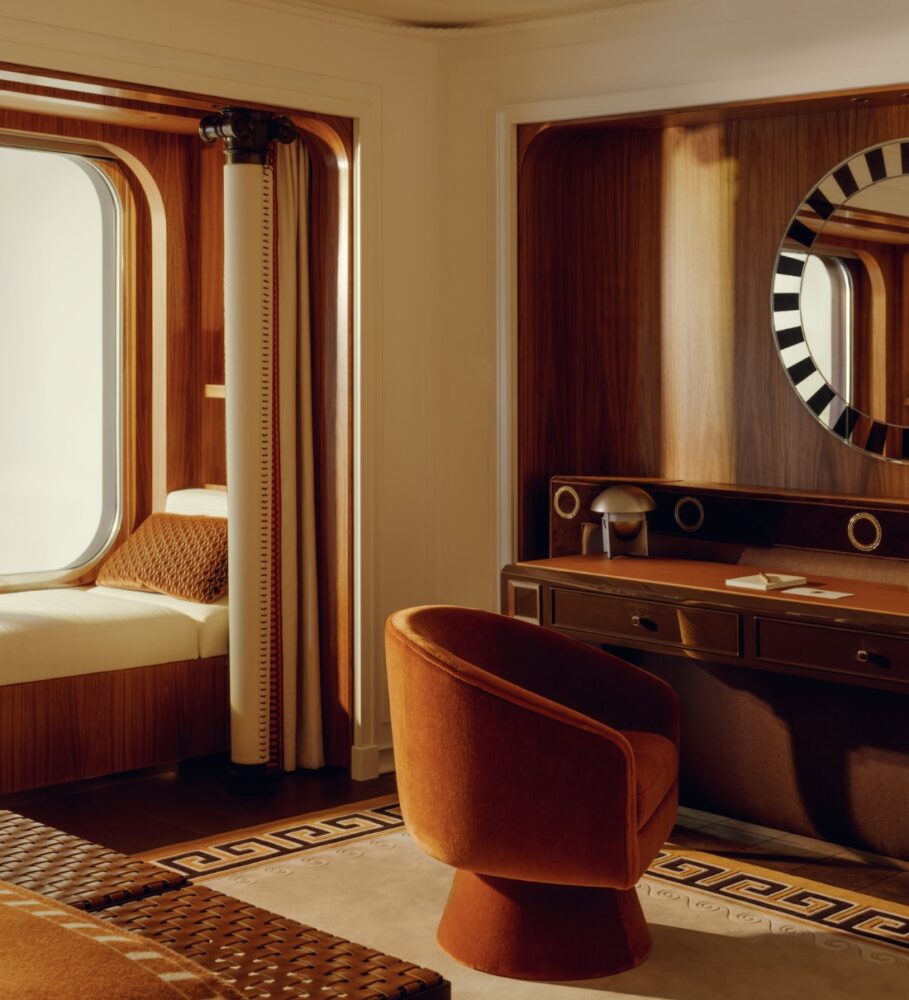
Perhaps the most emblematic gesture is the now-famous embroidered wood headboards. Inspired by a chance encounter with artisan Jean-Brieuc Chevalier, the concept evolved from a 6×10 cm prototype into full-scale elements nearly two meters wide, each pierced with 70,000 holes and hand-sewn with 35,000 Japanese beads.
“I had never seen anything so precise before,” says d’Angeac. Executed in Angers—not offshore—each piece requires up to 220 hours of labor.
Yet this was not romantic craftsmanship detached from reality. Technical constraints—adhesives, thickness tolerances, vibration on rail—pushed the project to the limits of material science.
“There, you’ve reached the bottom of technicality,” he notes.
The implicit question for designers is clear: how often do we abandon radical ideas too early, assuming they are unbuildable? Orient Express demonstrates that innovation often lies in persistence rather than compromise.
Art Deco as a Living Grammar
Rather than treating Art Deco as a style to be replicated, d’Angeac approaches it as a language system. He speaks of vocabulary, grammar, and punctuation like a framework flexible enough to generate contemporary expression without pastiche, according to Maxime d’Angeac. This is why ornament is restrained, geometry is paramount, and materials carry meaning rather than nostalgia.
“Art Deco is a great idea,” he explains, emphasizing its structural clarity and resistance to decorative excess.
Modern constraints—banned materials like ivory or nacre, evolving finishes and fixations—become opportunities rather than limitations. Patterns replace motifs; repetition replaces illustration. The result is a visual identity that feels timeless yet unmistakably current.
This approach culminates in what d’Angeac calls a dialogue between romanticism and combat. The solitude of conception gives way to confrontation with engineers, budgets, and reality.
“The construction site and execution are still the key to a result you can be proud of,” he states.
For architects and design leaders, Orient Express raises lasting questions: Can total design still exist in an age of specialization? Can heritage be a forward-looking tool rather than a constraint? And how far are we willing to go to protect an idea until it is fully realized?
Orient Express suggests that excellence is neither accidental nor nostalgic. It is designed, drawn, and fought for.