


From a valley-inspired office carved open by daylight, to an off-grid island home rooted in vernacular geometry, and a Kyoto machiya reimagined in deep Mexican hues, Japan’s latest projects reveal a design culture redefining tradition through climate intelligence, adaptive reuse and cross-cultural craft.
Japanese architecture has long been defined by a deep respect for context, craftsmanship and the relationship between interior and landscape. Historically rooted in vernacular forms that respond to climate, material availability and cultural practice, contemporary Japanese design continues to evolve, blending age-old principles with modern sustainability, adaptive reuse and cross-cultural dialogue. Today’s architects are reinterpreting tradition through innovative use of space, light and materiality, while pushing boundaries to challenge what it means to build in both urban and rural Japan. From reinvented workplaces to resilient homes and culturally hybrid cafes, this new wave reflects Japan’s ongoing architectural evolution, one that marries history with a forward-looking vision.
Office Design in Japan: From Function to Experience
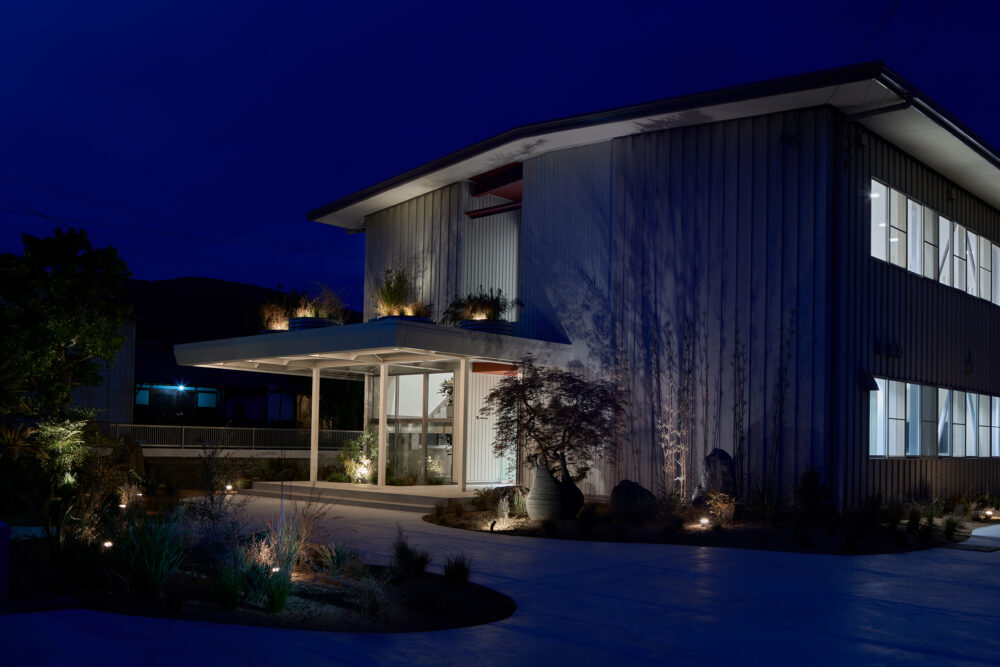
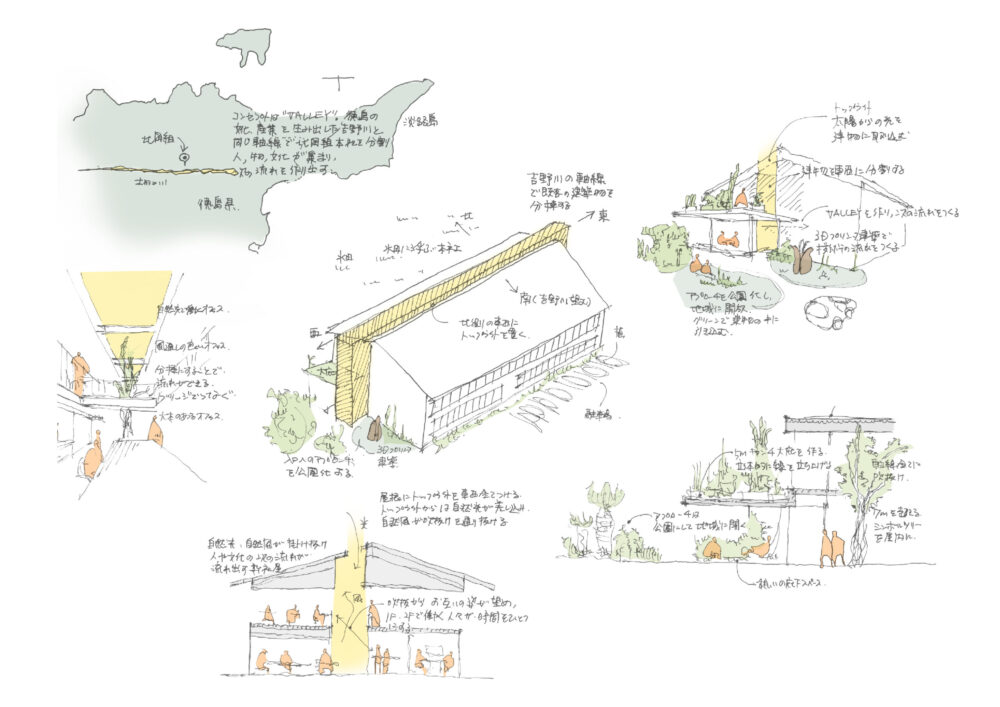
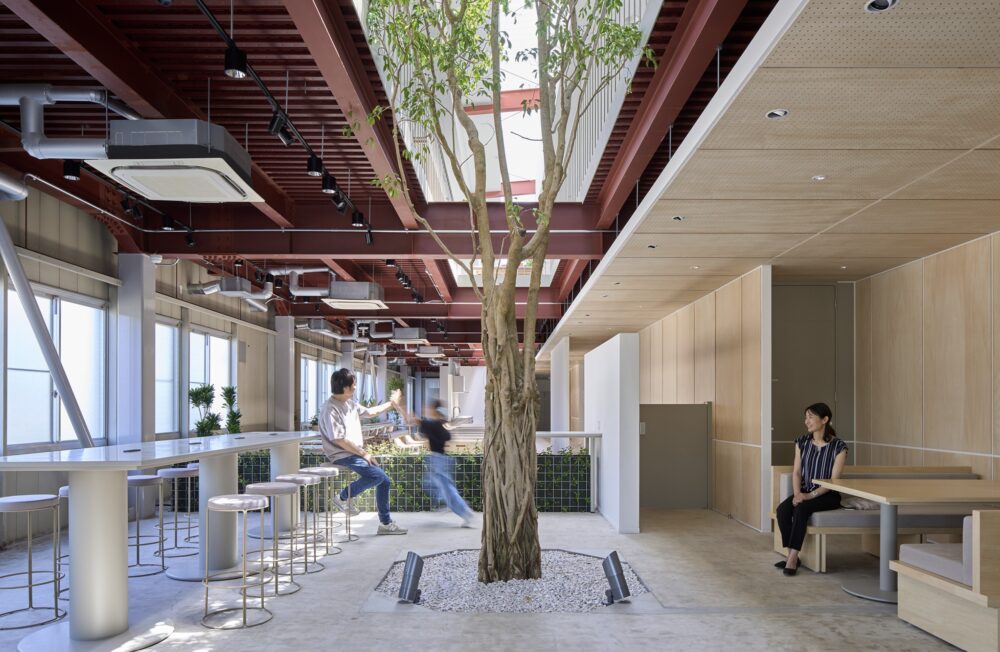
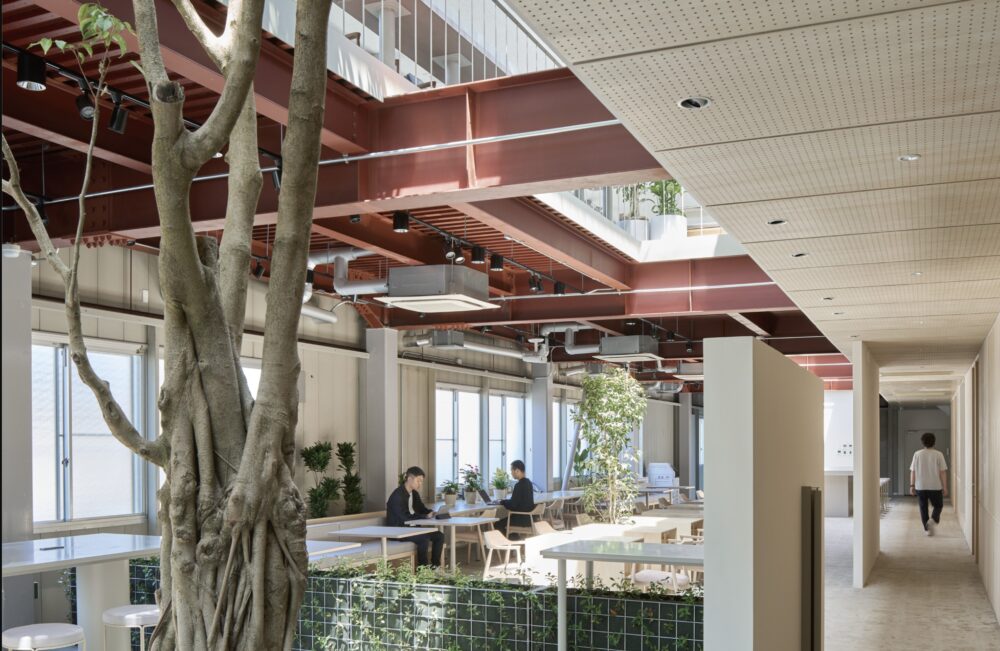
Japanese office architecture has increasingly shifted from purely functional workspace to environments that enhance well-being, community and sensory connection. A compelling example is the renovation of the Kitaoka Group Office in Mima City, where Wataru Architects transformed a 40-year-old headquarters into a luminous, flexible workplace that integrates nature, light and community interaction. The design splits the original structure into two elongated volumes inspired by the nearby valley, with a continuous skylight cutting through the center to flood the interior with daylight. A seven-metre central tree becomes both a visual anchor and a symbol of biophilic integration, emphasising wellness and connection to the natural world. Daylight-driven circulation paths, glass partitions and exposed timber create a spatial clarity that enhances productivity while supporting informal interaction and visual connectivity. Importantly, the office redesign also opens parts of the ground floor to families and local residents, positioning the workspace not just as a locus of labor but as a community hub, reflecting a broader trend in workplace design that values inclusivity and adaptive reuse for long-lasting architecture.
Residential Architecture: Sustainability and Spatial Poetry
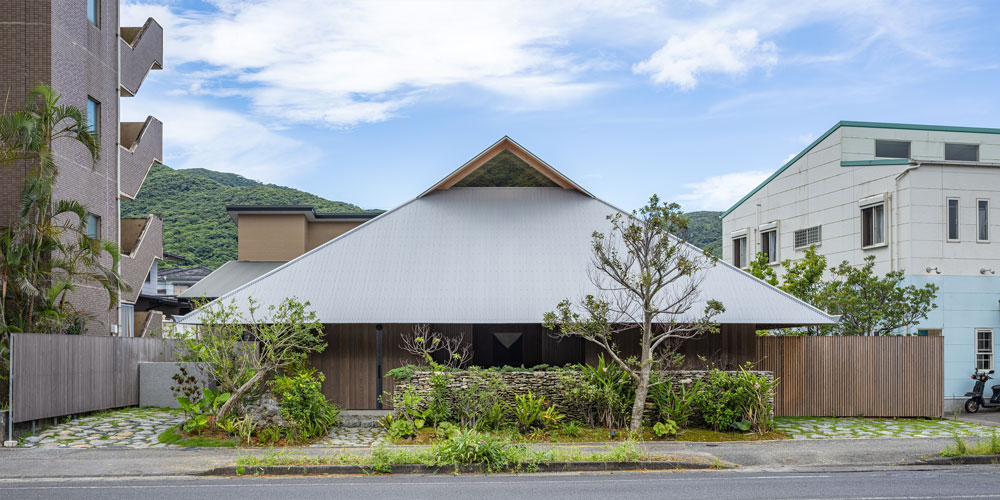
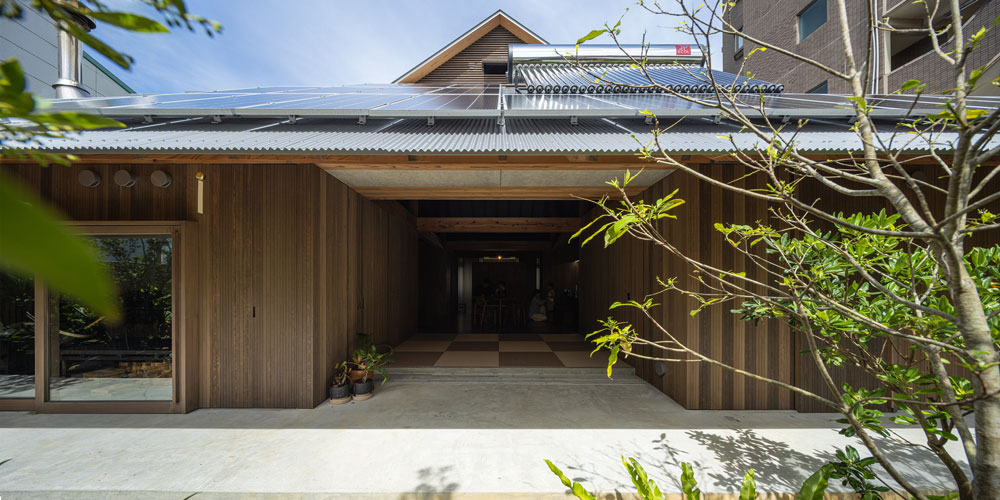
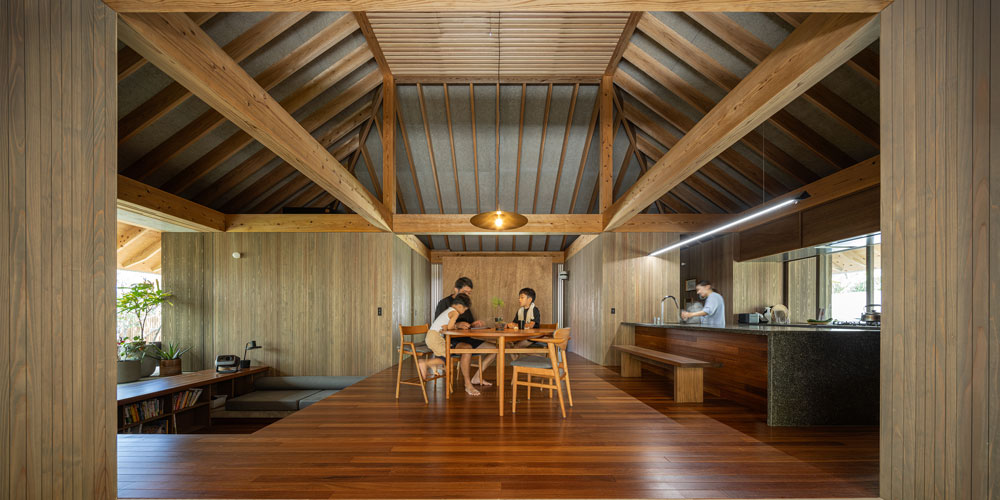
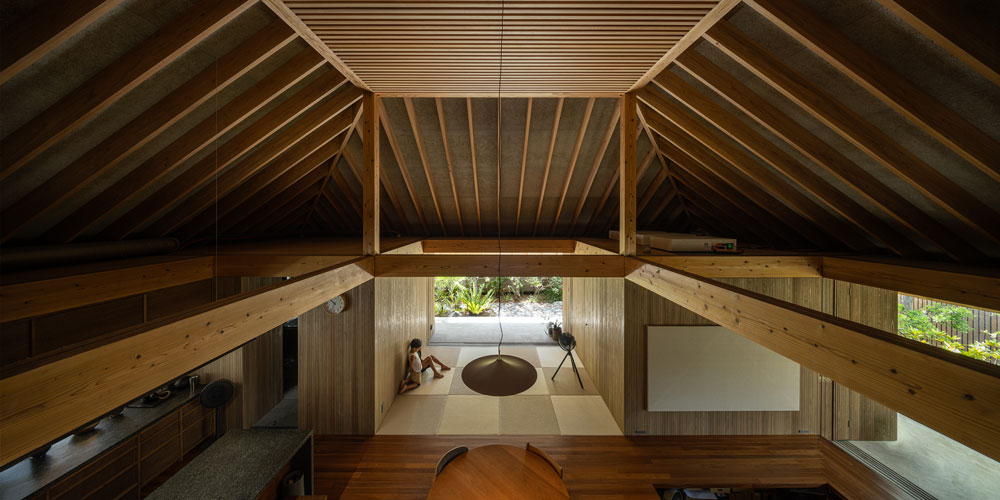
Traditionally, Japanese homes emphasize harmony with nature, adaptability and thoughtful simplicity. Contemporary residential design continues this ethos while tackling pressing environmental challenges. Amami House, designed by Sakai Architects, exemplifies this evolution. Situated on Amami Island in Kagoshima, the off-grid residence redefines sustainable living in a subtropical climate, a region marked by high humidity and limited sunlight. Instead of relying on external electricity or conventional cooling, the house functions autonomously, harnessing passive design strategies and renewable energy to maintain comfort for a family of four. Its geometry is inspired by the island’s historical buntō layout, arranging five independent volumes around shared spaces that dissolve boundaries between inside and outside. Deep eaves manage solar gain and downpours, while cross-ventilation and vernacular roof profiles respond to climatic demands. Amami House reconnects modern habitation with local traditions, not merely as aesthetic reference points, but as active systems that support community rituals and environmental resilience.
Cross-Cultural Fusion: Japanese and Mexican Architectural Dialogue
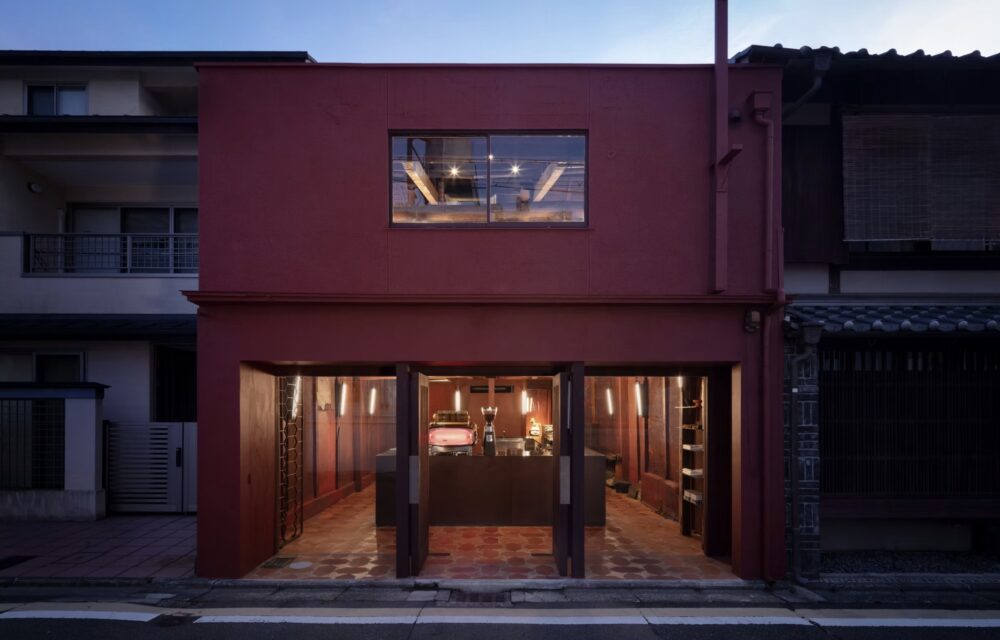
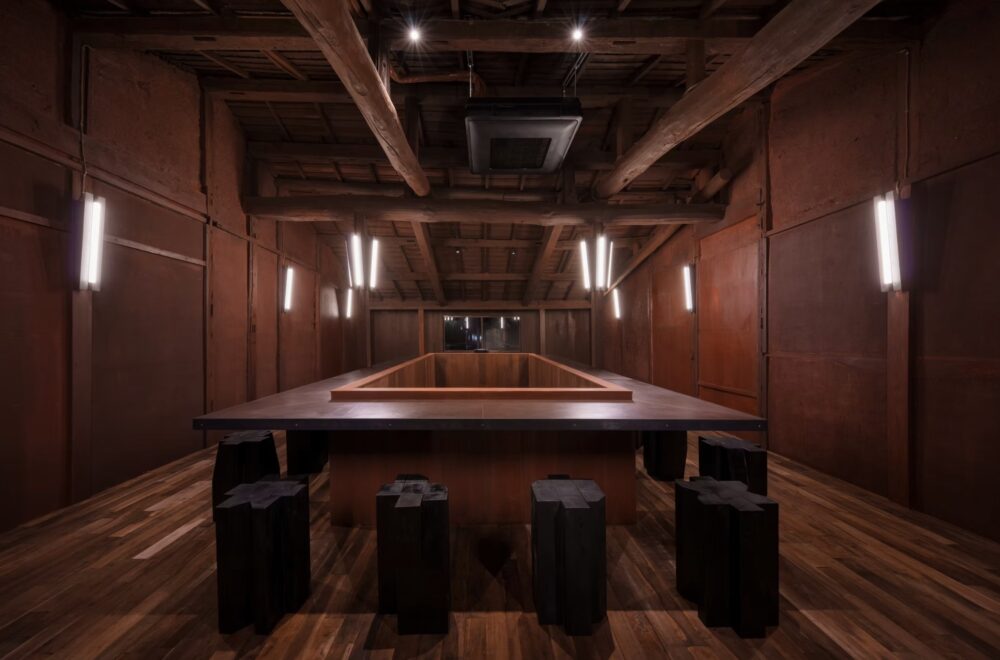
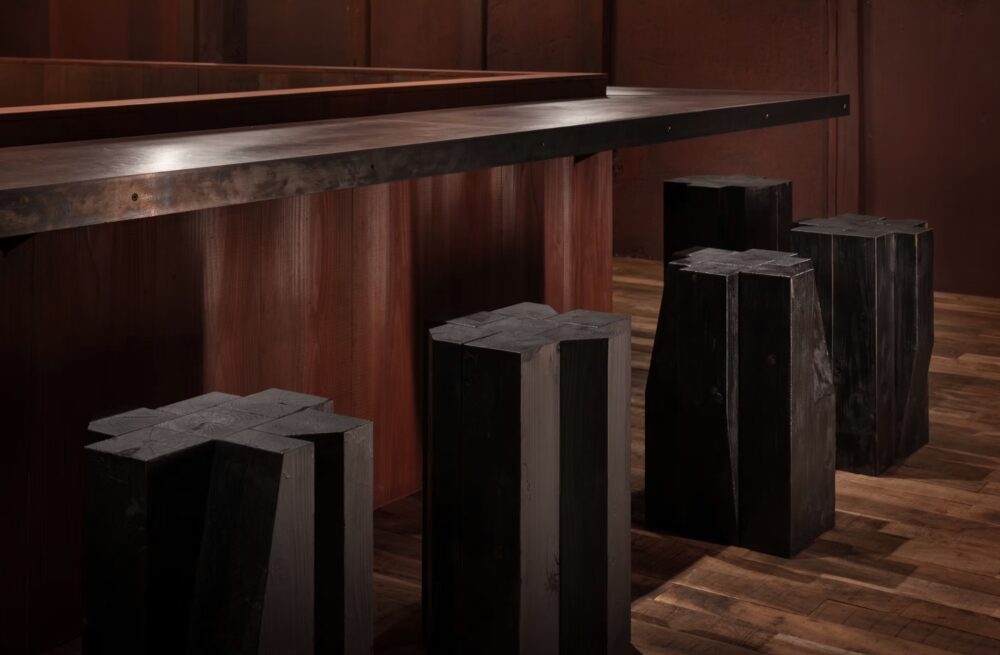
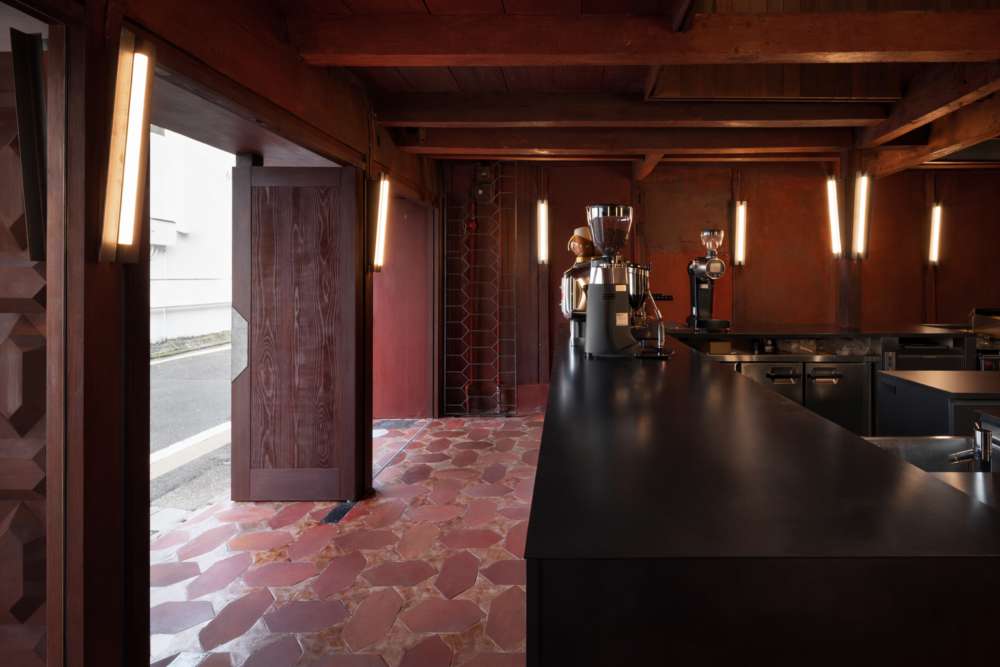
The globalisation of architectural thought has encouraged designers to explore new visual languages by blending cultural aesthetics. The Challe Cafe Kyoto project illustrates how such fusion can deepen spatial experience while honouring heritage. In this renovation of a traditional machiya townhouse in Kyoto, UNC Studio merges Japanese structural authenticity with Mexican colour and atmosphere. The cafe’s interior is enveloped in a deep, persimmon-tannin red, eliciting warmth and visual intensity that contrasts with the restrained palette typically associated with historical Japanese architecture. Rather than imposing a generic foreign style, the design creates a nuanced dialogue where materials such as reclaimed timber, yakisugi-treated stools and custom ceramic tiles celebrate craftsmanship and narrative continuity. A central atrium connects the café’s ground and upper levels, enhancing spatial flow and social interaction. This project not only preserves the historical integrity of the machiya, but reinterprets it through a contemporary, multi-cultural lens, revealing how hybrid architecture can forge new, grounded experiences that are both familiar and refreshingly unexpected.
By engaging tradition through experimental fusion, Japanese architecture continues to evolve, becoming more inclusive, sustainable and globally resonant, yet always deeply rooted in local identity and material wisdom.