



Sloan’s 2026 innovations position connected plumbing systems and integrated sink design as central to data-driven facility management, ESG reporting, and high-performance restroom architecture.
In a hurry? Here are the key takeaways:
- Sloan’s expanded SC Argus® Pro platform now integrates faucets, flushometers, and DropSpot™ bottle fillers into a single dashboard, enabling real-time water monitoring, preventative maintenance, and ESG reporting.
- The FLITE-DEC™ Integrated Sink System combines durability and streamlined design, reducing maintenance complexity while supporting contemporary restroom aesthetics.
- In education and transportation markets, connected and integrated plumbing systems are emerging as essential infrastructure for managing high traffic, minimizing downtime, and documenting sustainability performance.
As commercial buildings continue to evolve into fully networked environments in 2026, the restroom has emerged as a critical node in the broader ecosystem of building intelligence. What was once considered back-of-house infrastructure is now expected to generate actionable data, support ESG reporting, reduce operational costs, and enhance user experience. Sensor-driven plumbing systems, cloud-based monitoring platforms, and integrated fixture design are reshaping how architects and engineers approach one of the most heavily used spaces in any facility.
Against this backdrop, Sloan has announced a major expansion of its SC Argus® Pro smart restroom platform, alongside continued innovation in integrated sink systems and market-focused solutions. The January 2026 release strengthens the platform’s analytics capabilities, expands product connectivity and reinforces the company’s push toward scalable, connected water management across commercial markets.
SC Argus™ Pro Deepens Connectivity and Control
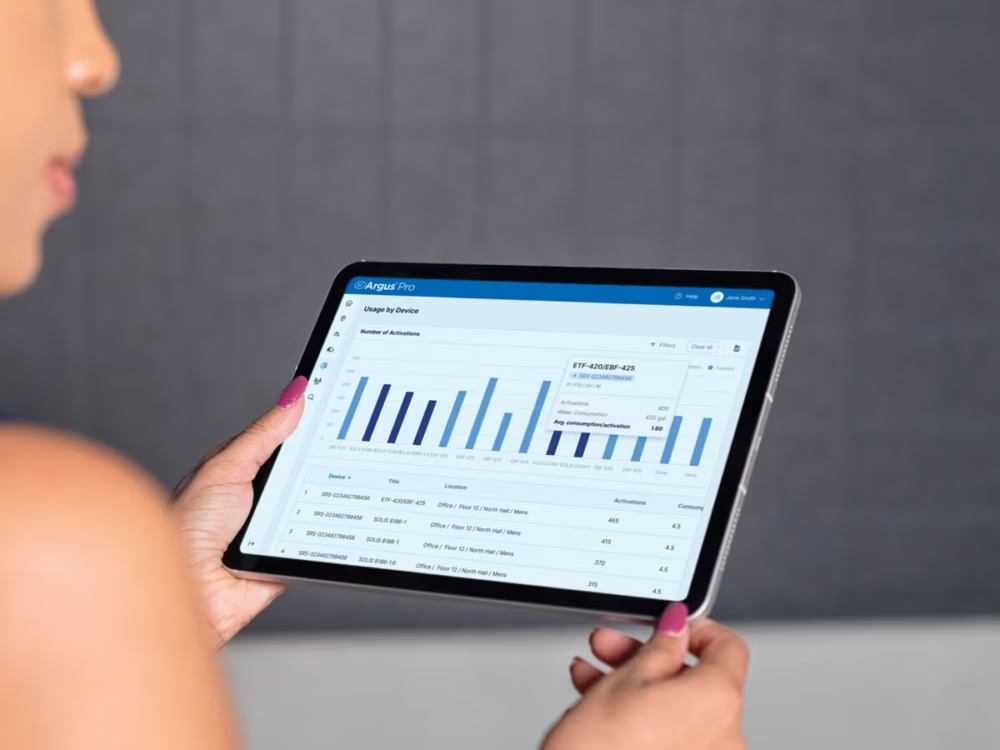
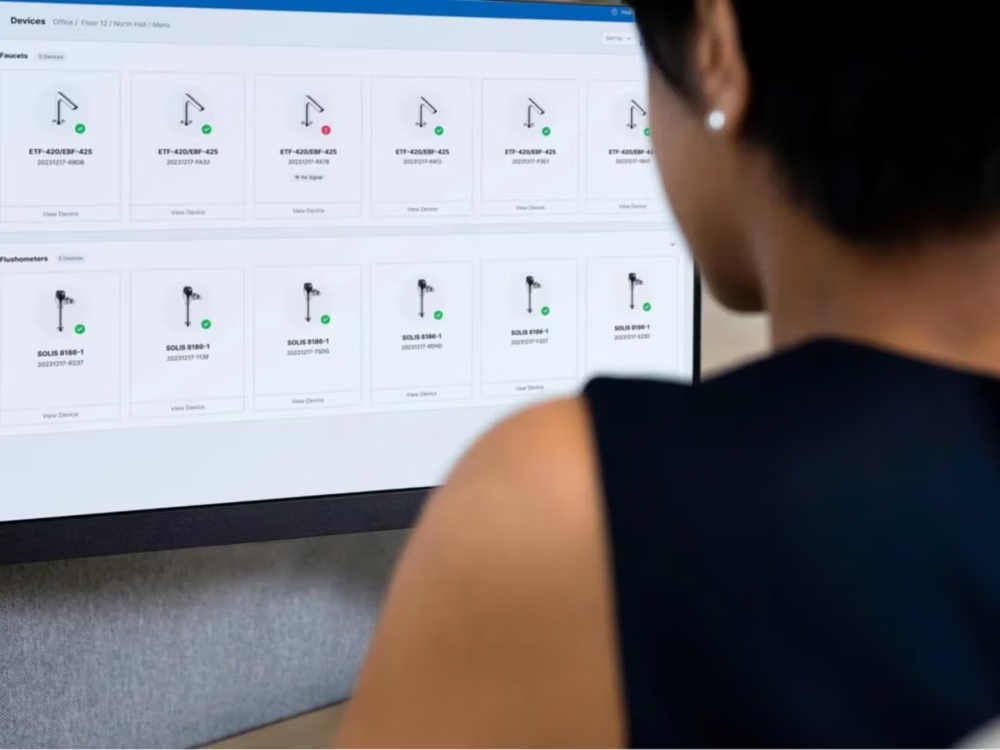
The latest evolution of SC Argus® Pro reflects a growing demand from facility operators for centralized oversight of plumbing assets. Designed as a cloud-based monitoring and control platform, SC Argus® Pro aggregates data from connected fixtures and presents it through an enhanced dashboard that emphasizes usability, security, and scalability.
The upgraded portal introduces improved reporting functions, refined user management tools, and clearer visualization of water usage and device health. For engineers and facility teams managing multi-building portfolios, this level of transparency supports preventative maintenance strategies rather than reactive service calls. Instant alerts tied to fixture performance allow teams to address issues before they escalate into downtime or water waste.
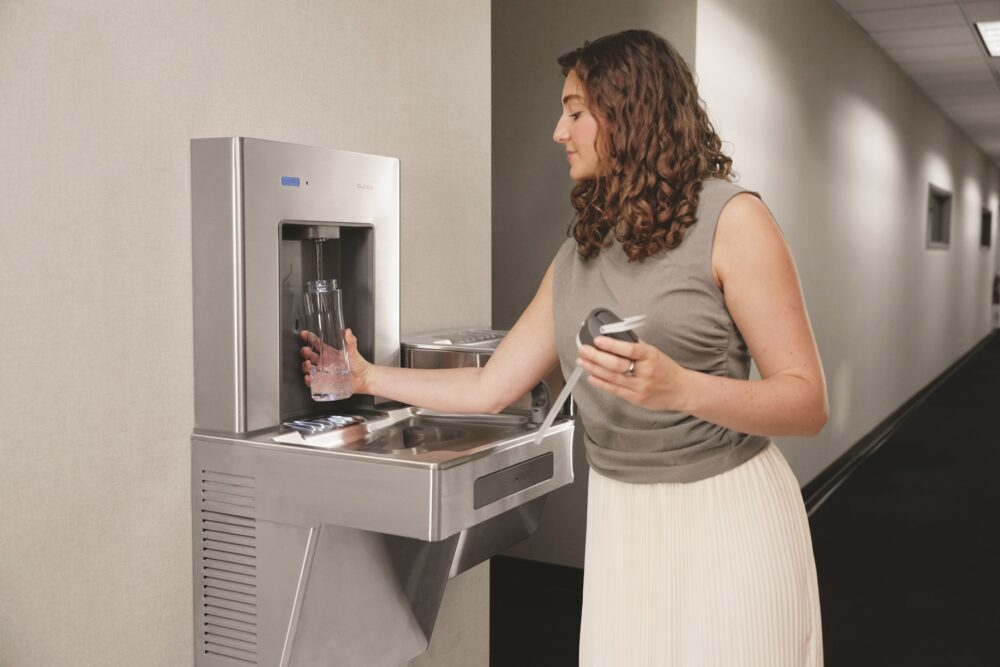
A significant development in the 2026 release is the integration of Sloan’s DropSpot bottle fillers into the SC Argus® Pro ecosystem. Through the platform, operators can remotely monitor filter status, analyze usage patterns, receive automated alerts, and schedule line flushes. In high-traffic environments such as schools, transportation hubs, and sports venues, this connectivity provides assurance of water quality while reducing the labor associated with manual inspections.
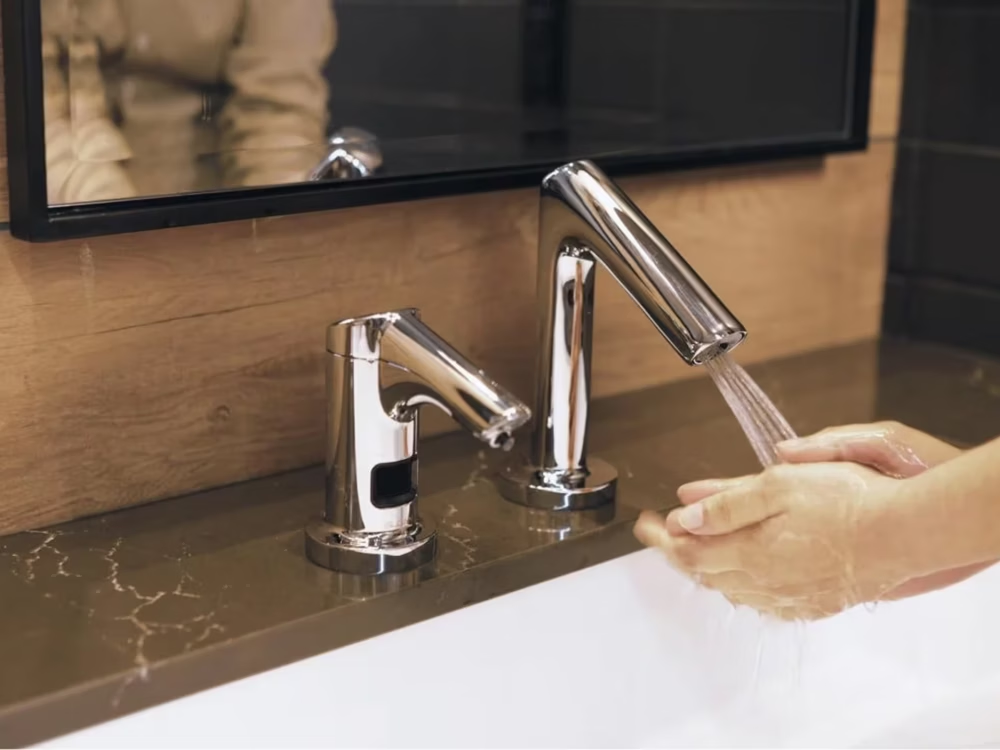
The expansion also includes compatibility with additional battery-powered and above-deck models from the BASYS and Optima faucet lines. This broader connectivity is particularly relevant for retrofit projects or facilities where line-voltage power is limited. By incorporating battery-operated fixtures into the smart network, Sloan lowers the threshold for entry into connected restroom systems without sacrificing data continuity.
For building owners focused on sustainability and ESG targets, SC Argus® Pro’s ability to provide real-time water consumption data and hygiene metrics transforms plumbing infrastructure into a measurable asset. Water savings can be documented, maintenance cycles optimized, and labor resources deployed with greater precision. The result, according to Sloan, is immediate return on investment through improved operational efficiency and reduced downtime.
FLITE-DEC™ Integrated Sink System Balances Durability and Design
While digital connectivity drives operational intelligence, physical design remains equally critical. Sloan’s FLITE-DEC Integrated Sink System addresses the persistent tension between aesthetic refinement and long-term durability in commercial restrooms.
Engineered for heavy use, the integrated system consolidates the sink basin, faucet, and soap dispenser into a unified assembly, with optional hand-drying solutions. By minimizing seams, joints, and surface transitions, FLITE-DEC reduces the maintenance vulnerabilities often associated with multi-component installations. The streamlined geometry supports faster cleaning cycles and improved hygiene outcomes, particularly in environments with continuous occupancy.
For architects, the system offers tighter control over spatial planning and fixture coordination. Rather than specifying and detailing multiple discrete components, designers can integrate a single, cohesive unit that aligns with contemporary restroom aesthetics. The visual impact is defined by cleaner lines and reduced visual clutter, supporting projects where restroom design contributes to overall brand identity.
Durability remains central to the system’s value proposition. Built to withstand the wear associated with educational campuses, transportation terminals, and public venues, FLITE-DEC emphasizes impact-resistant construction and ergonomic fixture placement. The integrated approach also simplifies installation coordination among trades, potentially reducing construction complexity and long-term service demands.

Targeting Education and Transportation Markets
Sloan’s broader innovation strategy highlights the importance of tailoring smart plumbing solutions to the specific operational realities of different markets. In 2026, education and transportation stand out as sectors where data-driven restroom systems deliver measurable impact.
Within educational settings, from K-12 schools to university campuses, restrooms must accommodate sustained daily use while adhering to strict budget and hygiene requirements. Connected platforms such as SC Argus® Pro provide district-wide visibility into fixture performance and water usage, enabling administrators to forecast maintenance needs and document sustainability performance. Integrated bottle filler monitoring ensures filter integrity and water quality, a critical concern in student environments.
Transportation facilities present a different scale of challenge. Airports, rail stations, and transit hubs operate with continuous occupancy and little tolerance for service disruption. In these high-throughput contexts, real-time fixture monitoring becomes essential. Remote alerts tied to faucet, flushometer, and bottle filler performance help prevent outages that could affect thousands of users daily. Durable, integrated systems like FLITE-DEC further reinforce reliability under heavy foot traffic.
For architects and engineers designing large civic infrastructure, the convergence of IoT-enabled plumbing and resilient physical systems reflects a broader shift in building strategy. Restrooms are no longer peripheral amenities; they are performance-driven environments that influence operational continuity, public health outcomes, and environmental stewardship.
By expanding SC Argus® Pro’s connectivity, integrating bottle fillers, and advancing durable sink systems, Sloan positions smart water technology as foundational infrastructure rather than optional enhancement. In 2026, the intelligent restroom has become an essential component of the data-enabled building.