


Shortly before the opening of Danjiang Bridge in May, the renowned architecture studio reveals what makes the 1 km long construction over the Tamsui River estuary in northern Taiwan so special – and explains its asymmetry.
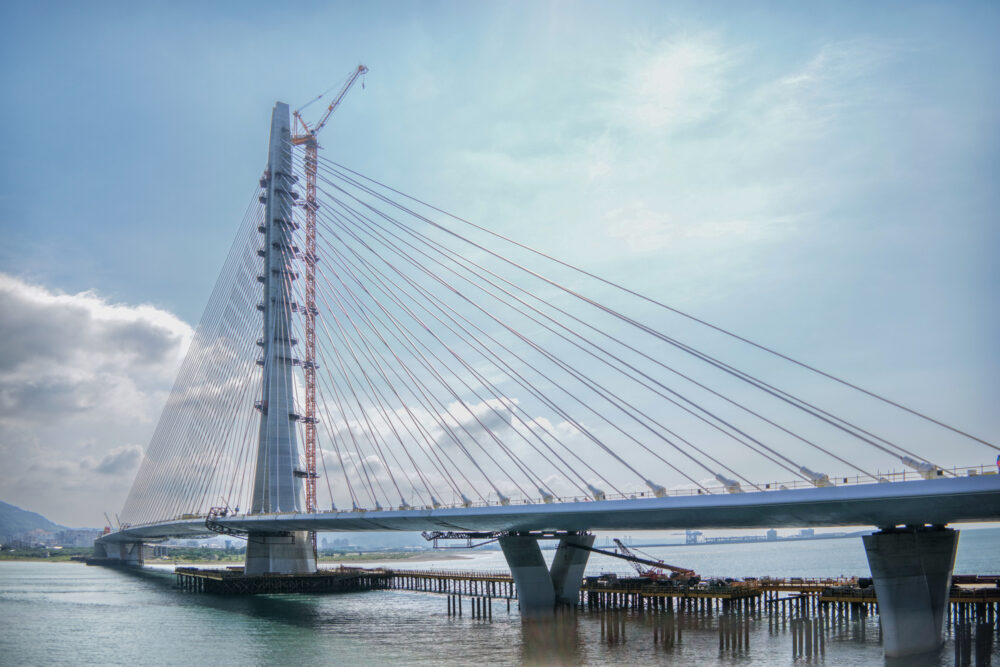
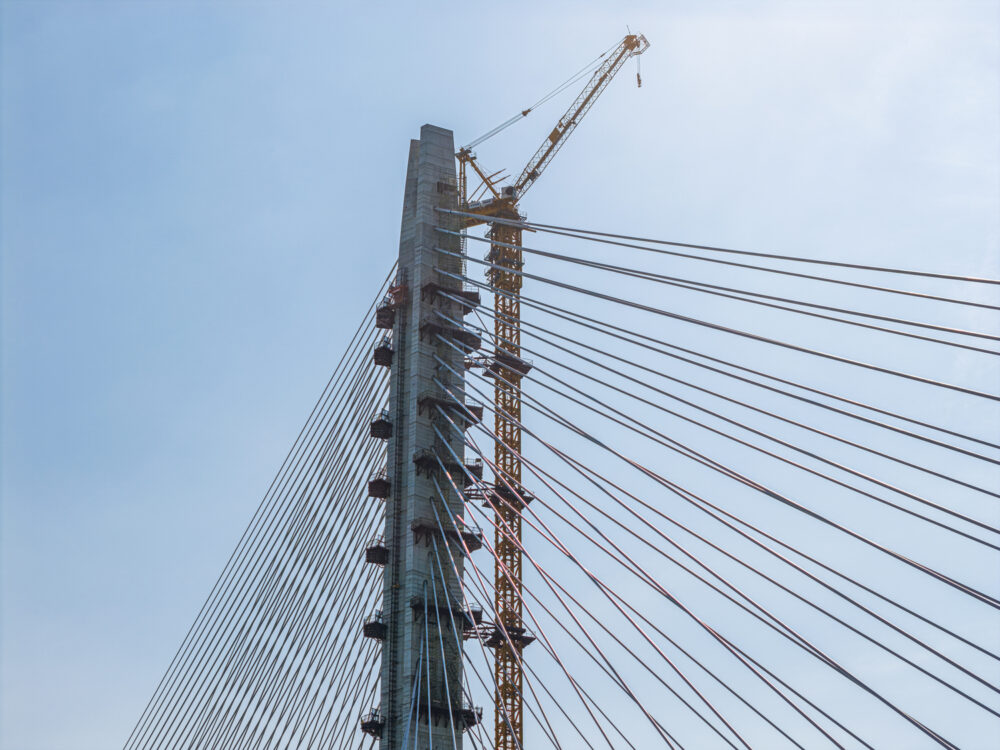
For more than a decade, Zaha Hadid Architects (ZHA), the pioneering global architecture studio, has been busy with the planning, design, and construction of Danjiang Bridge in northern Taiwan. This upcoming May, the novel landmark will finally be opened to the public. Once completed, Danjiang Bridge will be the longest single-mast, asymmetrical cable-stayed bridge in the world – and, as such, a new Taiwanese icon.
Located at the mouth of Tamsui River the slender one-mast bridge is designed to blend into its environment and improve the urban infrastructure of New Taipei City. While connecting Tamsui District and the wider Taipei metropolitan region with Bali District on the other end, Danjiang Bridge’s main purpose is to serve as transition road for cars and light rail transit (LRT), including pedestrian and cycling routes.
Function Meets Iconic Design
“The primary driver was the urgent need to relieve traffic congestion and improve east-west connectivity across the Tamsui River estuary,” Shao-Wei Huang, Associate Director at ZHA and project architect for the Danjiang Bridge told ArchiExpo e-Magazine.
He added that rapid urban growth and port development have placed increasing pressure on existing crossings. With the integration of road and rail Zaha Hadid Architects aim to reshape commuting patterns, reduce travel times, and support sustainable urban expansion.

Redefining Urban Space
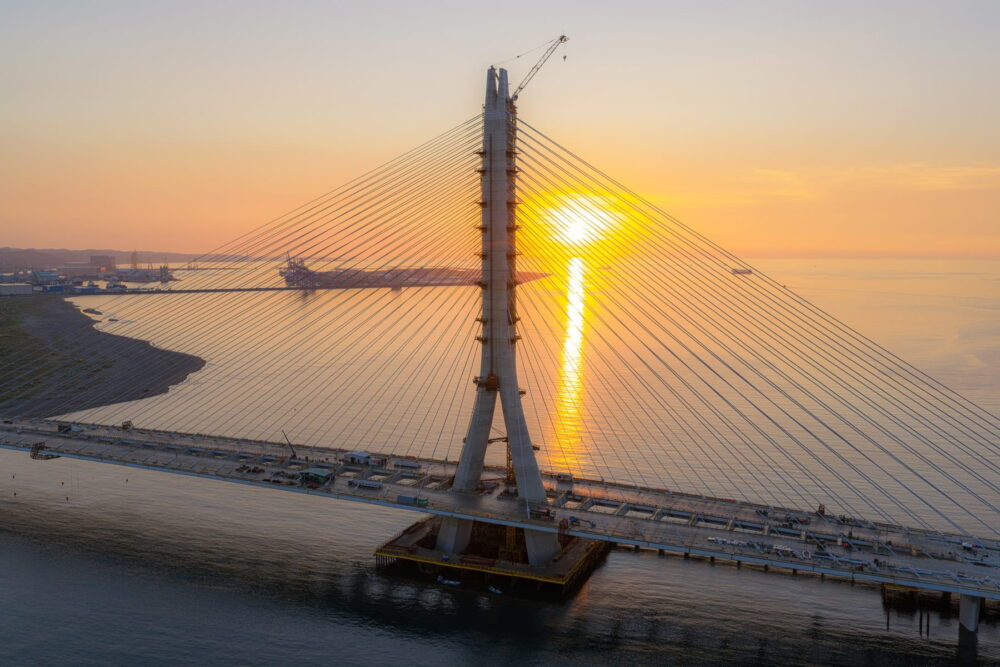
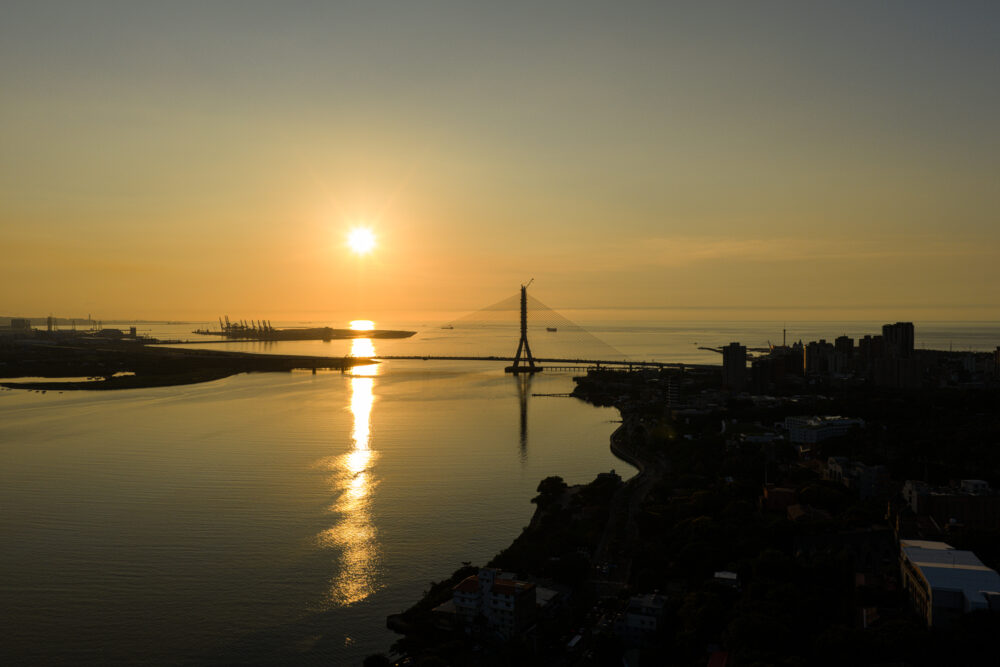
Beyond its function for the local infrastructure, Danjiang Bridge also serves as public urban space: Tamsui is known as a popular weekend spot for local residents and tourists likewise. Now visitors can view and enjoy panoramic views of the bridge in its full dimension from far away, for example for sunset viewing along the riverbanks. To this end, the mast is carefully positioned, allowing the bridge to frame rather than dominate the horizon.
“By providing safe and continuous pathways for non-motorised users, the bridge becomes accessible to a wider range of people, seeking recreational routes across the river,” Huang emphasized pinpointing at waterfront promenades and civic places with similar functions for urban life.
He went on to explain:
“The design, therefore, treats infrastructure as a framework for public experience, where mobility, landscape, and civic identity are interwoven rather than separated.”
A Decade of Digital Planning and Adaptation
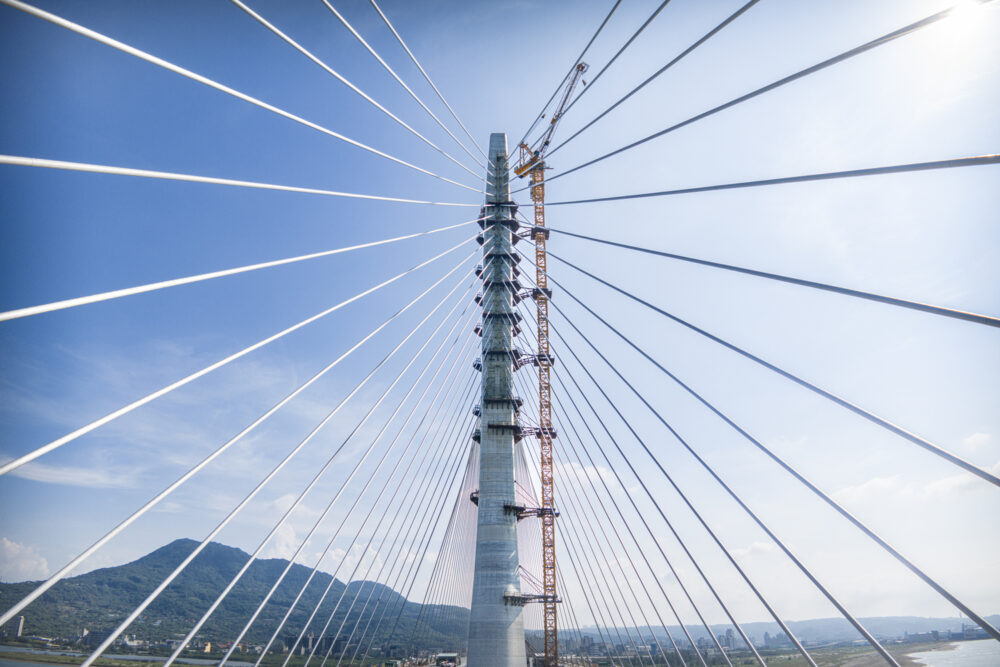
The long timespan spent on Danjiang Bridge over the past decade reflects the complexity of designing and delivering a long-span bridge in a sensitive coastal environment like Northern Taiwan. The project originated from a design competition in 2015. A cloud-based 3D design platform enabled architects and engineers to collaborate internationally within a shared digital model.
During implementation, the team had to comprehensively refine the design in order to meet technical requirements and environmental regulations. In addition, the long-term project also had to comply with regulations from local authorities and challenges posed by the size and location of the bridge.
Challenges During the Construction
“One of the main challenges was the coastal environment: strong winds, tidal variation, navigation requirements, and ecological sensitivity,” stated ZHA project architect Huang.
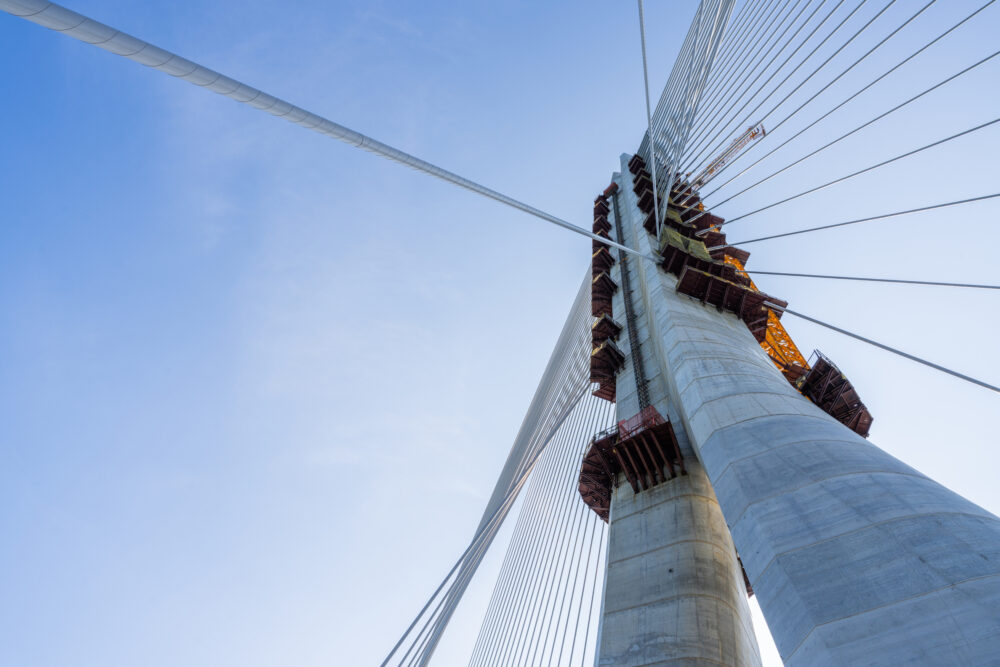
According to the Northern Region Construction Branch Office in New Taipei, the workers faced challenges such as strong vibrations and shaking due to wind exposure, and would temporarily not dare to continue working on the bridge.
In order to withstand those winds, typhoons, and particularly seismic activity common to Taiwan, the engineers came up with the solution of seven massive dampers, each weighing around 750 tons. These can control shaking and absorb energy during stronger earthquakes. According to the engineers, the damping mechanism can even withstand earthquakes of magnitude 7. Much attention was paid to aerodynamic stability and the choice of materials for durability in the marine environment, considering corrosion, humidity, and salt exposure.
Integrating Sustainability into Bridge Design
As the architects at Zaha Hadid explained, the geometry of the bridge responds not only to visual design aspects, view preservation, and physical force balancing, it also has to do with the ecological impact. In fact, the asymmetry serves to minimise the foundations in the riverbed, leading to reduced material consumption and less disturbance to the aquatic ecosystem as well as the nearby wetlands. By integrating light rail and pedestrian paths in addition, the bridge supports low-carbon mobility and promotes the use of public transport.
A Territorial Gesture with Sensitivity to the Environment
The opening of Taiwan’s new landmark shows that bridges are more than just transport routes and that architecture itself can also be infrastructure. Zaha Hadid’s Danjiang Bridge represents a new role model for elegant engineering and design in public buildings. At the same time, it is a territorial gesture of ambition, innovation, and sensitivity to environmental aspects at the waterside.
With its single mast and long span, Danjiang Bridge is setting a new benchmark in bridge engineering. At the same time, the unique landmark stands out by reducing the environmental impact as far as possible and integrating advanced digital design methodology to achieve a highly optimised structural solution tailored to its site.