




As demand for energy-efficient materials grows, a Lyon-based glass broker bets on global sourcing and technical glazing to win business from Europe’s construction industry.
As Europe’s construction sector adjusts to tighter energy-efficiency standards and continuous urban growth, architectural glass has become an increasingly strategic material. According to Glass for Europe, 80% of the continent’s glass production is used in the building sector, supplying applications ranging from façades to insulating glazing systems. The industry employs about 120,000 workers directly and 500,000 indirectly, generating a turnover of 15 billion euros annually.
Within this competitive landscape, wholesaler and broker Noxem Group is positioning itself as an intermediary between glass manufacturers and construction professionals, with a business model centered on sourcing products internationally at competitive prices that are, on average, 30% lower than those in the market—with, it says, no compromise in performance.
The firm was one of the exhibitors at Eurasia Window Fair, which took place in Istanbul, Turkey, between November 15th and 18th. There, it presented smart glass solutions and low-emission/argon-insulated glass, among others.


An Intermediary Model
Founded on a brokerage model, Noxem Group does not manufacture or stock glass. Instead, it sources products from around ten partner factories located across Europe, Asia and the Middle East, purchasing directly from producers and delivering to clients on demand. The company says this approach allows it to offer prices that are, on average, lower than prevailing market levels, while still meeting European technical standards.
Operating from the outskirts of Lyon, the firm works exclusively with business clients, including glaziers, façade contractors, architects, developers and industrial manufacturers that integrate glass into finished products. Deliveries are made across Europe, as well as to the Middle East and North Africa, with response times to inquiries typically within two days.
Certification and compliance are a key selling point. Noxem says all glass it supplies meets CE marking requirements and relevant European norms, including those governing safety, insulation and performance.
Quality control, according to the company, is handled upstream.
“We visit partner factories several times a year and require European EN certification for all the glass we order,” said François Prévost, Noxem Group’s chief marketing and sales officer. “Each complex glass delivery is also analyzed by an independent technical expert to verify compliance.”

A Broad Catalogue, Custom Sourcing, and Advanced Glass Technologies
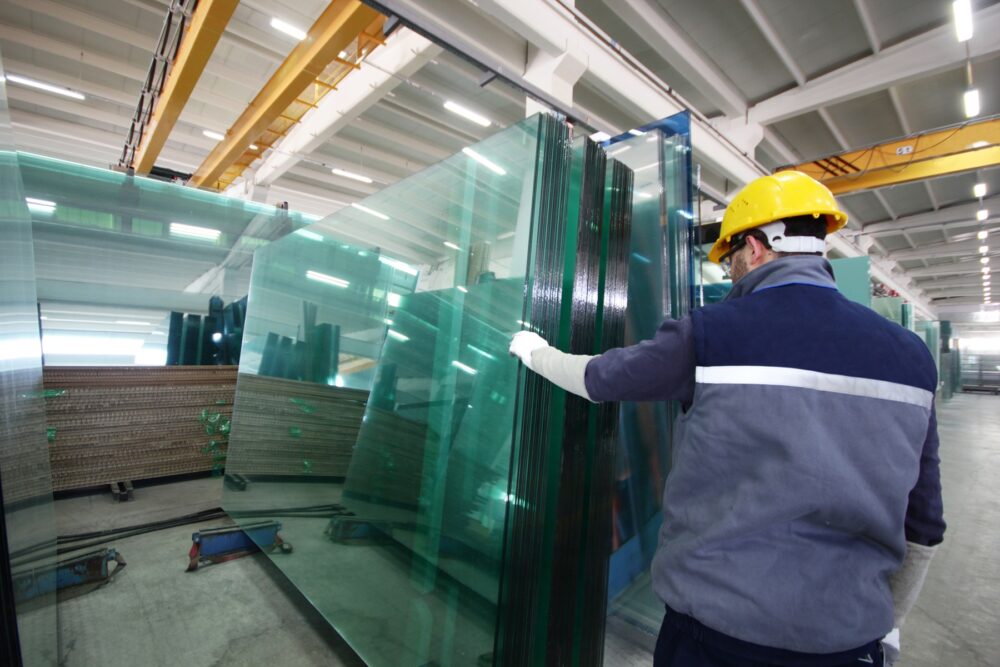
The firm’s catalogue covers a wide range of architectural and technical glass products, including float, laminated, double glazing, triple glazing, silvered, lacquered, frosted, patterned, tinted, reflective, depolluting, tempered, insulating, low-emissivity, photovoltaic, decorative glass, and copper-free and antique mirrors.
When a requested product is not available in its standard offering, the Noxem Group is able to work with its partner factories to develop custom solutions. The finished products are delivered ready for installation, with washing, degreasing, and custom dimensions and finishes, plus protective packaging.
The company’s staff undergoes training through the French Federation of Glass Professionals (FFPV), a credential the Noxem Group highlights as a way to support clients in decision-making.
The Noxem Group is also placing emphasis on newer glass technologies, including smart and responsive glazing systems designed to improve energy performance or user comfort. These include heating glass, self-cleaning glass, switchable privacy glass, and electrochromic solutions.
Prévost argues that the company’s role is shaped by structural imbalances in the industry.
“We noticed an imbalanced situation between big glass producers (who are called the ‘cartel of glass’) and the myriad of smaller transformers with poor negotiation power. Our aim is to strengthen buyers’ access to diversified supply sources,” he says.

Growth Ambitions and Constraints
The Noxem Group’s long-term ambition is to become a major intermediary in Europe’s glass supply chain within the next five years. Prévost acknowledges, however, that scaling operations brings challenges, particularly in recruitment and internal management.
“We want to be the top-notch solution and best-price provider for any B2B glass need, delivering high-quality customer service for our clients. But to be the leading glass hub, we must reach 50% of spontaneous awareness among the professionals of the glass industry. That will set a good basis for business and growth,” he adds.
Prévost believes that glass will be a powerful leverage for climate transition, with technical glasses such as low-emission glass, IR/solar control glass, triple-insulated and vacuum-insulated glass, and electrochromic glass helping to regulate the inner temperature of ambiences and build carbon-neutral buildings.
As demand for energy-efficient construction materials continues to rise, the Noxem Group continues to carve out its space in an industry dominated by large producers. Whether that approach can deliver a sustained growing influence in Europe’s glass market remains an open question.