


By Charlie Bowles, Director at Original BTC
Like every part of society, the design industry is under pressure to perform in a digital landscape defined by constant stimulation, accelerated cycles, and shrinking attention spans. One visible consequence is the pace of product releases. Newness has become a currency: a new material, a new finish, a new silhouette. Even for those of us working inside the industry, the speed can feel relentless.
It raises a simple but important question: what is design for?
Good design doesn’t demand attention. It earns it. It creates a sense of ease, a quiet connection between a person and an object that, by definition, should have no emotional life at all. At its best, design enriches everyday experience not through novelty, but through clarity, material honesty, and longevity.
Craftsmen: A Source of Creative Possibilities
At Original BTC, we have always believed that this connection is strongest when timeless forms are brought to life by skilled craftspeople using real materials. Traditional processes are not a limitation. They are a source of creative possibility. They allow something genuinely new to emerge without severing its link to the past, and they give objects the potential to endure.
Yet in a design culture increasingly driven by image, the story of how something is made often becomes secondary. Provenance is condensed into a line or two. Sustainability is discussed, but rarely in full context. In lighting, especially, globalized supply chains have pushed much of the technical expertise for components far from where products are designed. The result is a physical and intellectual separation between design and making that feels like a quiet loss.
We have always chosen a different model. From the beginning, it felt natural that design and manufacturing should sit close together. When our founder, Peter Bowles, created the Hector table light in the early 1990s, it was made possible by close relationships with local British suppliers. The design was simple and confident enough to let the material speak: a clean-lined bone china shade paired with restrained metal details. Its success came not from visual noise, but from restraint.
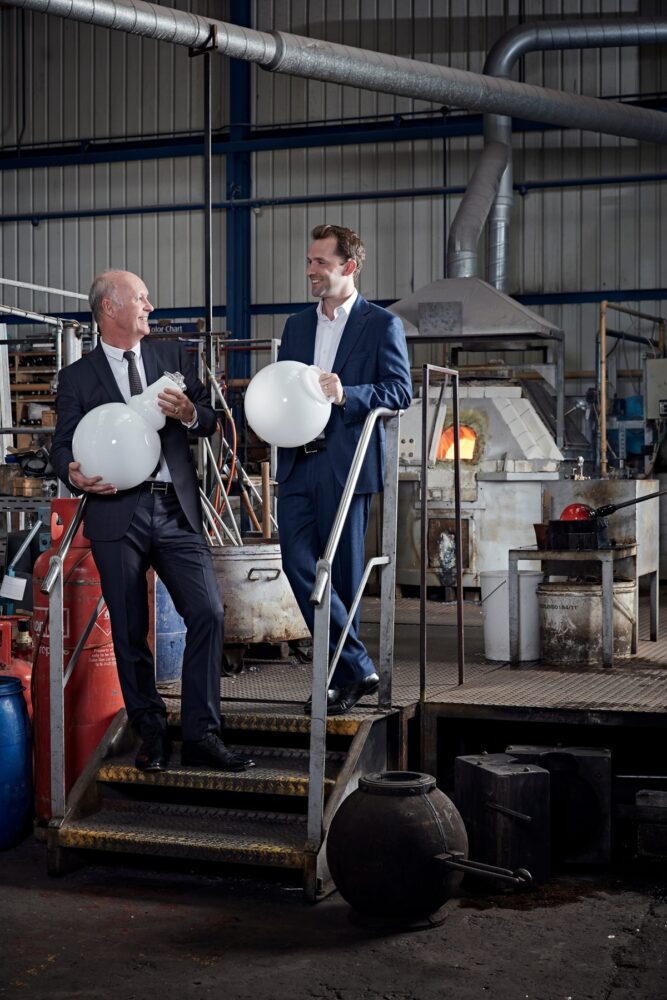
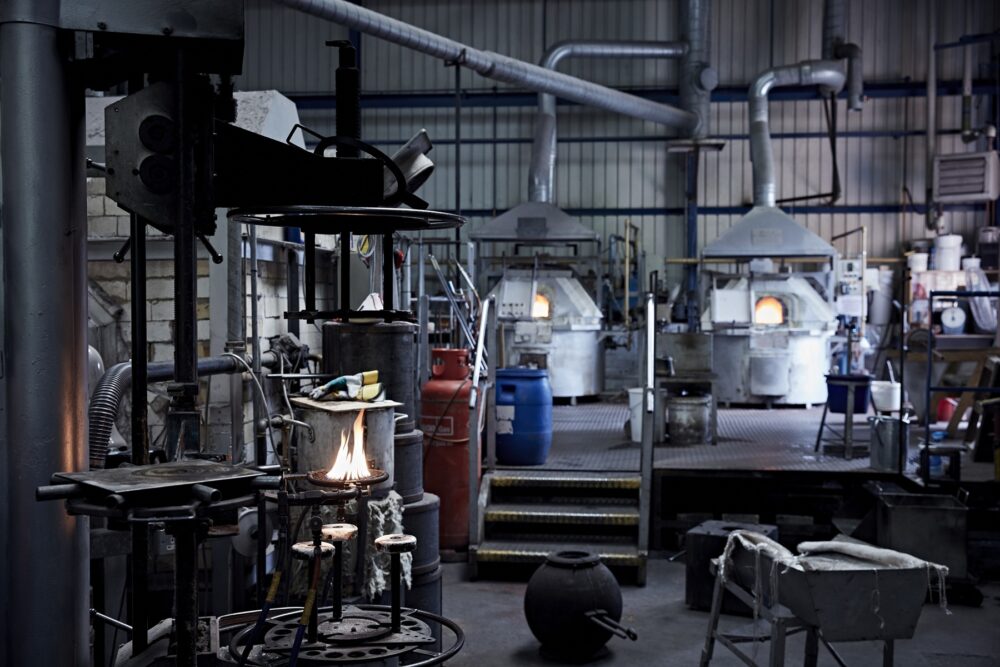
As Hector endured, something else became clear. When suppliers began to struggle in the late 1990s and early 2000s, at a time when many European brands moved production offshore, we found ourselves able to invest in the people and processes we depended on. Bringing those workshops into the business wasn’t about nostalgia. It was about continuity.
That decision became the foundation for future innovation. With bone china production in-house, designers could develop forms in direct dialogue with the makers themselves. The distance between drawing and object collapsed. Ideas could be tested, adjusted, and refined in real time, with material behaviour guiding the outcome as much as intent.
Extending to Glass: Persevering History and Techniques
In 2011, this philosophy extended to glass. We acquired English Antique Glass, the last remaining flat glass factory of its kind in the UK, securing the future of a craft with centuries of history. Preserving that knowledge wasn’t an act of preservation alone. It allowed traditional glassmaking techniques to inform contemporary lighting design in a meaningful way.
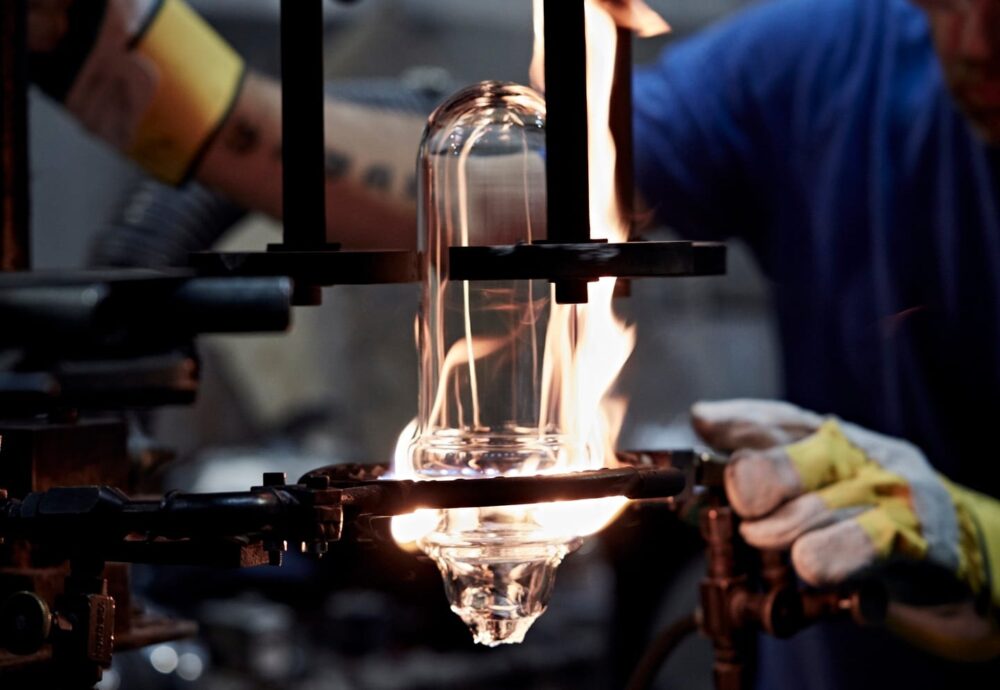
Today, more than three decades into the business, our design team sits one staircase away from production. A short walk from a desk leads to a 1,500-degree furnace where glass is still mouth-blown by hand. That proximity changes how things are made, and why.
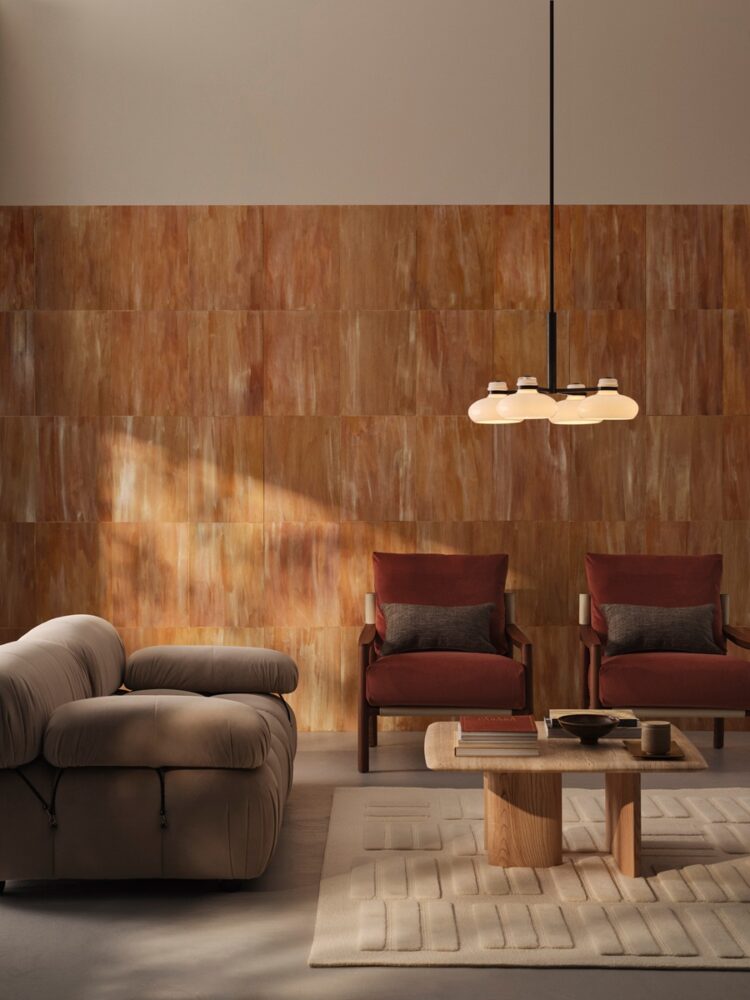
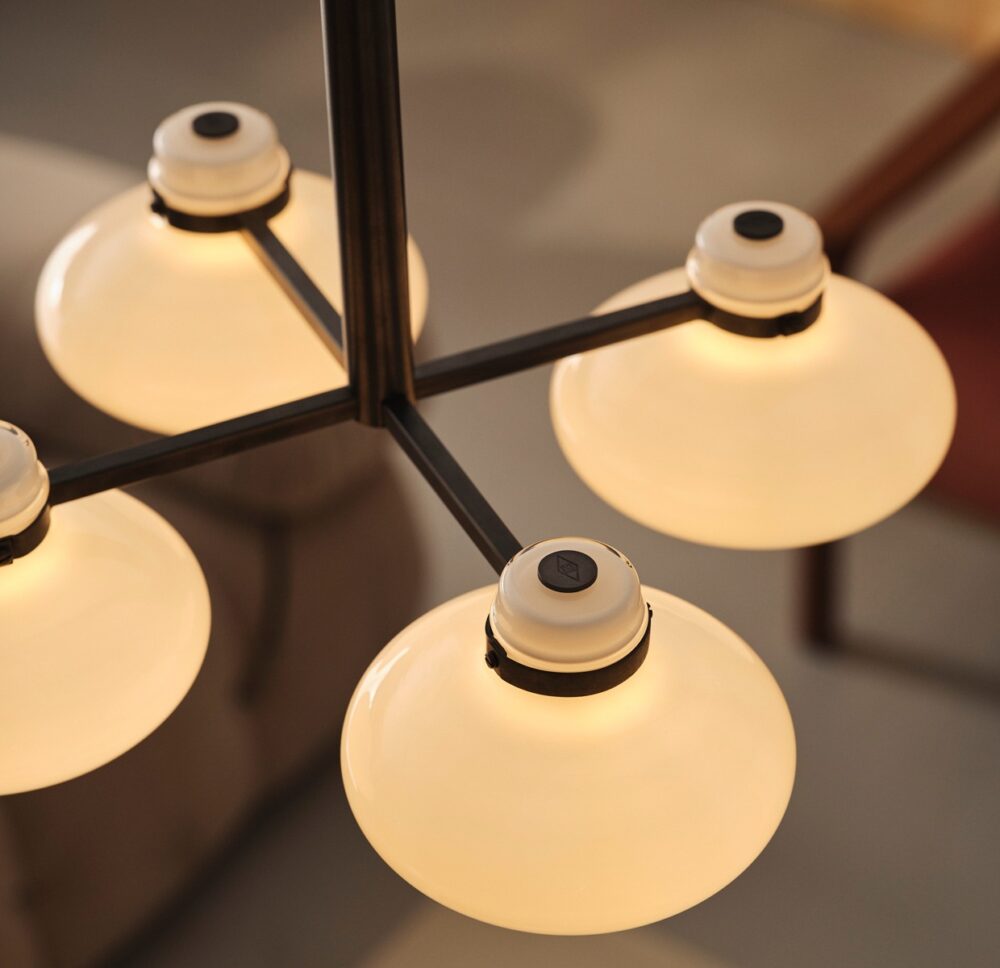
The Magnus range grew directly from this environment. Named after molten magma, the collection draws its character from the behaviour of hot glass as it moves under gravity before settling into a mould. The softly rounded, subtly compressed form is not imposed on the material. It is the record of a process.
Each piece demands technical precision and human judgment. Too much heat and the glass collapses. Too little and it loses its ability to move. The moment of forming cannot be automated or predicted. It depends on the trained eye of the glassmaker, reading material, and temperature in real time. No two pieces are identical, and that variation is not a flaw, but a quiet marker of authenticity in an increasingly standardised world.
Magnus is not a nostalgic object. It is contemporary in both form and intent. It demonstrates that traditional craftsmanship is not at odds with modern design, but essential to it. Handmade glass lighting is not a niche indulgence. It is a viable, relevant approach to making objects that feel considered, human, and lasting.
Investing in craftsmanship is not about looking back. It is about building a future in which design remains connected to the people, materials, and processes that give it meaning.

Charlie Bowles, Director at Original BTC
We design and manufacture lights that enrich spaces with warmth, comfort, and character. Rooted in British heritage, we produce all our designs in Oxfordshire, England. Each Original BTC piece is crafted to last a lifetime, blending artistry with enduring quality.
Our lighting can be found in some of the world’s most respected homes, hotels, restaurants, workspaces, and retail environments specified by leading architects, interior designers, and design-conscious homeowners alike.
With flagship showrooms in London, Paris, New York, Munich, and Taipei, we bring British design to a global audience, offering our customers the opportunity to experience our collections first-hand in inspiring, carefully curated spaces.