


Multiple professionals in the industry provide insights into the fight against moisture and mold in buildings that are making people sick.
In a hurry? Here are the key points to know:
- Mold is primarily a physics problem, not a maintenance problem:Dew-point control, exterior drainage, and material porosity determine success more than cleaning routines.
- Architecture is moving toward predictive systems: Smart membranes, humidity sensors and automatic shut-offs now prevent failures before occupants notice them.
- Regulation is shifting accountability:Laws like the UK’s Awaab’s Law signal a future where unhealthy buildings become legal liabilities, not just renovation projects.
Cities across Europe and North America are facing a quiet but widespread building crisis: apartments that look finished but function biologically. Peeling paint, recurring condensation, and persistent odors are no longer considered maintenance issues. They are indicators of systemic design failure.
A U.S. housing study found roughly 70% of homes contain hidden mold, and in 2022, the Centers for Disease Control reported that one in five people with chronic respiratory illness had unknowingly been exposed. The problem is not ignorance. It is physics — and increasingly, liability.
“Mildew is a surface-level fungus that thrives in warmth, humidity, and stillness. It often shows up on flat, damp areas and is considered an early form of mold,” Lisa Sternfeld, wellness-driven designer and founder of WLLW, said. “While not as invasive as fully developed mold, mildew can still impact your health and home. For those with allergies, asthma, or compromised immunity, exposure to mildew spores may trigger headaches, congestion, or throat irritation. And while the cosmetic damage may start small, untreated mildew can leave behind permanent stains and unpleasant odors.”
The topic is circulating in some of the global news journals, indicating a rise in concern. In October 2025 LA Times Studios published, “Mold Prevention in Home Design: How to Build a Healthy, Mold-Free Home.”
READ our interview with Architect Javier de la Garza on navigating moisture, mold, and the modern building envelope.
The Envelope Never Lies: Moisture Is a Design Failure
Architect Javier de la Garza has spent decades troubleshooting buildings after construction teams believed they were complete.
“You can have the most beautiful design in the world, but if the building can’t breathe and the water can’t leave, the design won’t matter in ten years.”
The misconception, he explains, is that water problems start inside the building. They don’t.
“You can seal it all you want from the interior, but the hydrostatic pressure will eventually find a way through. The best solution is always to address the problem from the outside.”
Urban residential typologies amplify this failure. Basement walls behave like hulls under constant pressure. Multi-family stacks add another dimension, the infamous wet-over-dry scenario, where a leak in one apartment becomes a structural dispute across several floors.
To mitigate this, high-end projects now require redundancy: moisture alarms connected to automatic shut-offs. What was once a luxury upgrade is becoming baseline risk management.
The deeper issue is condensation, not leaks.
Warm humid air hitting a cold surface creates water inside walls, often within insulation cavities. De la Garza bluntly calls it a “mold factory.” The industry’s response is the “Ideal Wall”: exterior insulation that keeps structural cavities warm and shifts the dew point outward. In short, modern architecture is less about keeping water out and more about controlling where it turns into liquid.
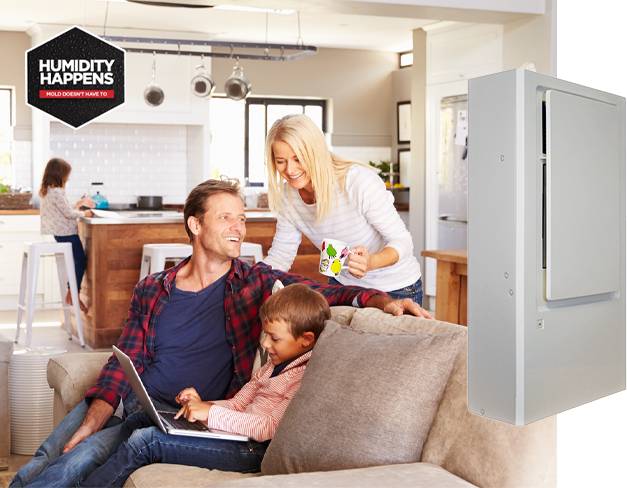
Innovative Dehumidifier Systems pioneered the dehumidification industry with the first in-wall dehumidifier with hands-free, tankless, and easy-to-install built-in systems. Whether you’re looking to prevent mold growth, reduce allergens, or simply create a more comfortable living environment, our dehumidifiers have you covered.
Bathrooms, Materials, and the End of Reactive Maintenance
The bathroom industry has quietly become the frontline of preventive architecture. According to home-improvement expert Rich Kingly, Home Improvement Expert at Driveway King, the discipline has moved from cleaning products to environmental control:
“Professionals are moving away from reacting with cleaning products and toward preventing issues by controlling the amount of moisture in an environment.”
Smart ventilation now automatically runs until humidity normalizes, removing occupant behavior from the equation. Materials are evolving in parallel: antimicrobial grout, mold-resistant drywall, and large porcelain slabs that eliminate joints where colonies begin.
He predicts bathrooms will soon function as integrated systems rather than collections of fixtures. They will become environments designed for longevity, wellness, and reduced maintenance.
“There’s also an increased use of smart ventilation and water management tools. Smart systems adjust based on humidity levels automatically, eliminating the element of human error within a bathroom or kitchen, creating a drier space overall.”
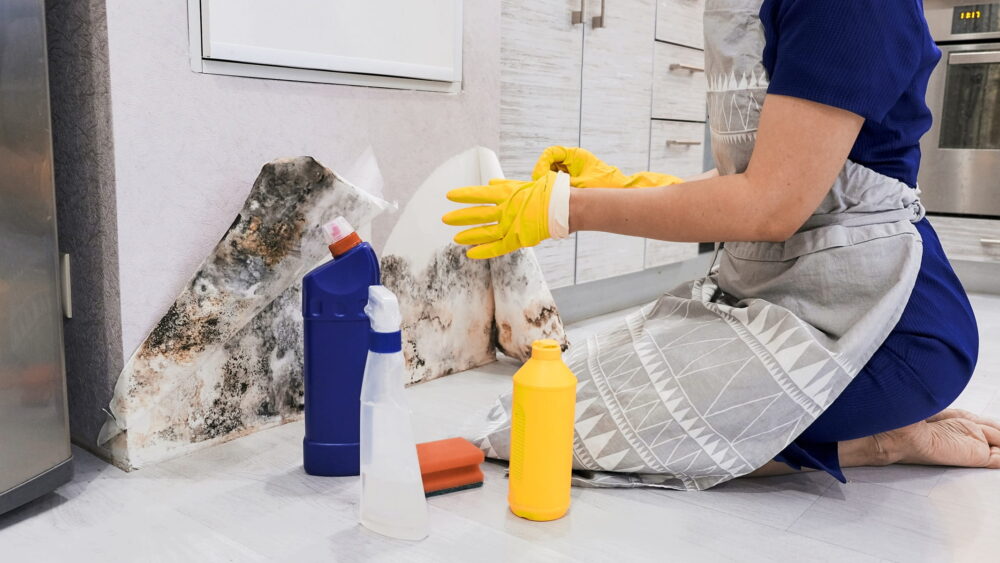
Designer Lisa Sternfeld describes why prevention matters even before full mold develops. Mildew — a precursor fungus — appears flat and pale but signals deeper moisture imbalance. Left untreated, it penetrates porous materials and affects respiratory health. She distinguishes mildew from mold:
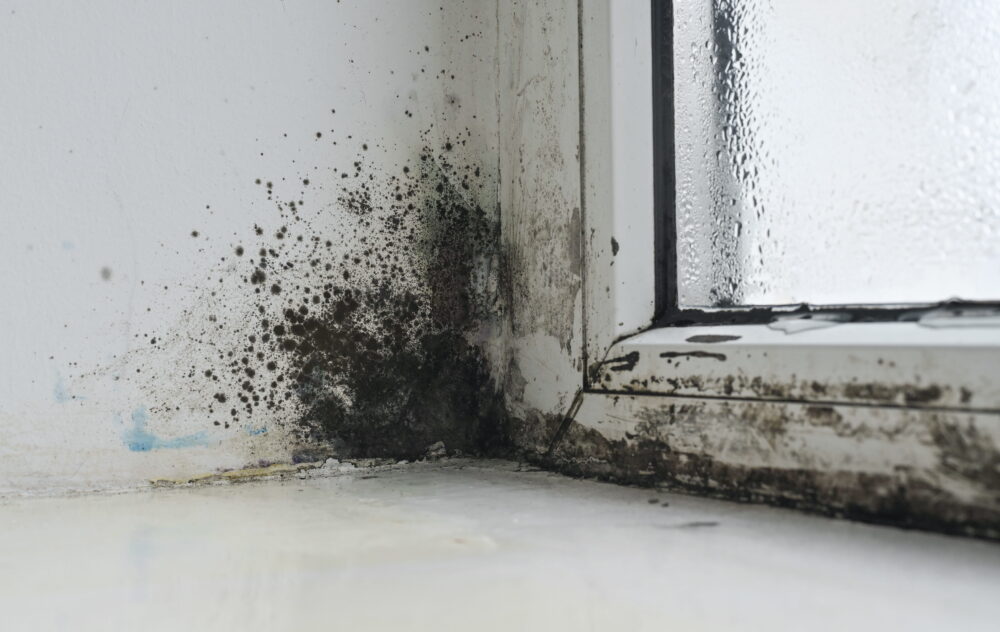
“Mildew usually appears flat, powdery, and pale, often white, gray, or yellow, before deepening into browns or blacks. It is commonly found in places like bathroom grout, shower curtains, and along window sills. Mold, by contrast, shows up darker and fuzzier from the outset. It tends to spread in irregular patterns and sink deeper into porous materials such as drywall, fabrics, and insulation. Mold is also more likely to carry a strong, musty scent and pose greater long-term damage if left unaddressed.”
Her recommended cleaning method is intentionally simple: vinegar, baking soda, and thorough drying. The emphasis is not on chemical strength but on moisture elimination. If growth covers more than ten square feet, she advises professional remediation, a threshold many property managers now incorporate into maintenance protocols.
The message across disciplines is consistent: the best mold treatment is drying the building faster than biology can grow.
LG Ducted Mini Split Review by Mission Air Condition in Texas, USA. This is not a new concept or technology. The video and information provide a reminder of the options professionals can find on the market.
If you’d like details on new refrigerants, installation best practices, which systems work best in what climates, and more, check out the video “Ductless Mini Split in 2026” by The HVAC Dope Show.

The new LG SmartThinQ is a Wi-Fi-equipped device and LG’s exclusive home appliances control app. Courtesy of the brand.
The Rise of Predictive Buildings
The industry’s most significant shift is technological. Buildings are starting to monitor themselves with products like LeakSmart, which uses AI analytics to shut off water before rupture, and SIGA Majrex 200 smart membrane, which adapts permeability to seasonal humidity. Another manufacturer is developing a wall-embedded humidity detector, building on existing crack-analysis technology, effectively turning structural diagnostics into environmental diagnostics. Together, these systems create what engineers call a “belt-and-suspenders” approach: passive design plus active monitoring.
“Humidity sensing exhaust fans, activated by an increase in moisture until the humidity returns to a normal state, are being installed into higher-end renovation projects as well as all new construction projects,” Rich Kingly said.
The Home Performance channel covered home HVAC innovations during the AHR 2026 event, highlighting the best in ventilation, heat pumps, hydrofurnace, and air cleaner chemistry. Quality prospects include Innovative Humidifiers, whose IN and ON Wall Dehumidifiers remove excessive moisture that contributes to poor indoor air quality, property damage, mold, and comfort complaints. Ducted minisplit heat pumps from LG and ventilation components from Goveco are different, equally impressive options.
Regulation is catching up. The United Kingdom’s Awaab’s Law now forces landlords to investigate and repair dampness within strict timelines, marking a cultural shift from complaint-based maintenance to mandatory prevention.
France already has strong housing codes, yet persistent unhealthy apartments reveal a familiar gap: enforcement trails knowledge.
Architecture is therefore entering a new phase. Buildings are no longer inert objects. They are monitored environments.
From Shelter to Health Infrastructure
For decades, architecture focused on energy performance and aesthetics. Moisture was treated as a detailing issue.
That era is ending.
Today’s building envelope must manage vapor diffusion, occupant humidity, exterior water pressure, and digital monitoring simultaneously. Failure is measurable in healthcare outcomes, not just repair costs.
Designers are not only shaping space anymore. They are shaping air quality, microbial growth, and long-term wellness.
“In terms of design, using materials with lower porosity, reducing the amount of grout lines in tile work, and having sufficient airflow around fixtures will greatly reduce the likelihood of mold developing. The longer a surface takes to dry, the greater the chance for mold to grow,” Rich Kingly said.
In the coming decade, the most successful buildings may not be those that look dry, but those that continuously prove they are.
Here are a few additional tips from Lisa Sternfeld when approaching certain surfaces already contaminated. Each material has its own sensitivities, so a one-size-fits-all approach does not work:
- Wood (painted or raw): Use minimal moisture to avoid warping. Lightly mist with vinegar, wipe with a damp cloth, and dry immediately
- Tile and ceramic: Durable and non-porous, these surfaces can handle scrubbing. Vinegar and baking soda are especially effective in grout lines
- Caulk and sealants: These areas trap mildew easily. A paste made from baking soda and water applied with a toothbrush can help lift stains. If mildew persists, replacing the caulk may be the only way forward
- Fabric (curtains, slipcovers): Pre-soak in vinegar before washing in hot water if the fabric allows. Line-drying outdoors adds a natural antibacterial boost from sunlight
These are a few non-toxic, well-crafted options worth trying
- Koala Eco, which uses essential oils like eucalyptus and tea tree known for their antifungal properties
- ECOS, a dependable brand with plant-based all-purpose cleaners that work on a range of surfaces
- Molly’s Suds, which offers biodegradable solutions free from synthetic fragrances or harsh chemicals