


From simple functional elements to icons of outdoor living, showers have become a key part of architectural design. Materials, engineering, and aesthetics now converge to create solutions that enhance both space and experience. Alessandro Vieri, Design & Product Innovation, Outdoor Living at Inxostyle tells more in this article.
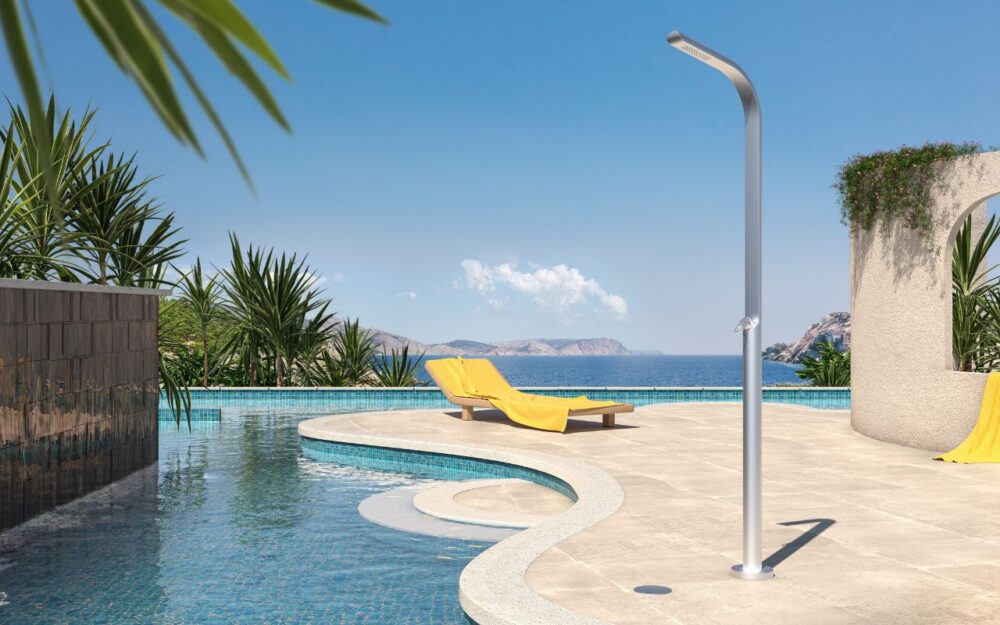
Outdoor showers have evolved far beyond their original purpose. What was once a purely practical installation is now a defining feature in gardens, pool areas, and yacht decks—an element capable of shaping the perception of an entire space. Today, designing an outdoor shower means thinking in architectural terms, where form, material, and function work together to express a clear identity.
Environment
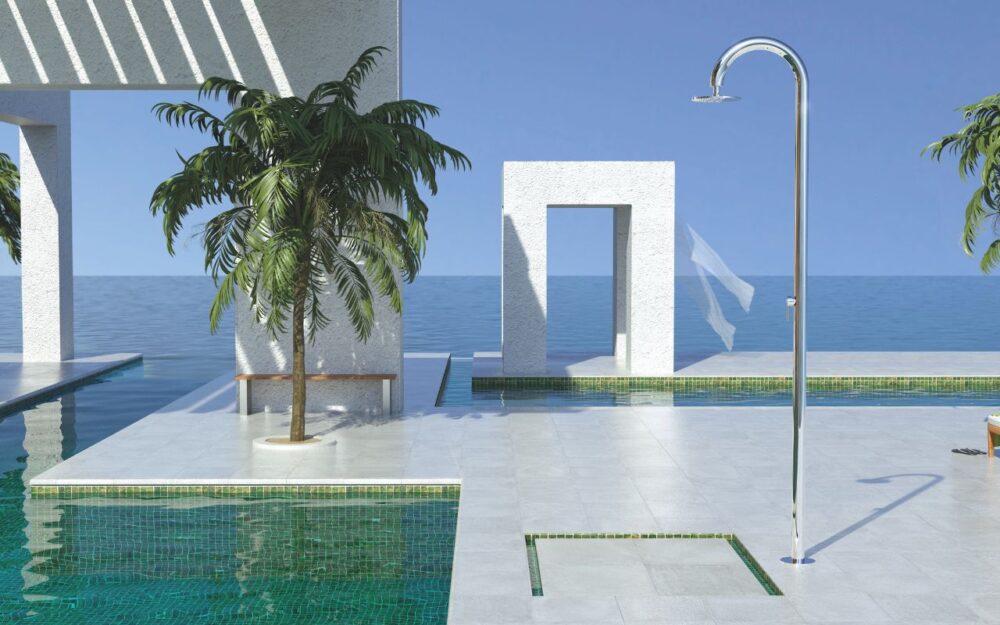
A well-designed outdoor shower must first respond to environmental challenges. Exposure to sun, humidity, chlorine, salt, and temperature changes requires materials that can guarantee long-term durability without compromising appearance. This is where the choice of stainless steel—particularly high-grade alloys suitable for marine environments—becomes essential. Resistance to corrosion is not just a technical requirement, but a prerequisite for preserving the visual integrity of the product over time.
Performance
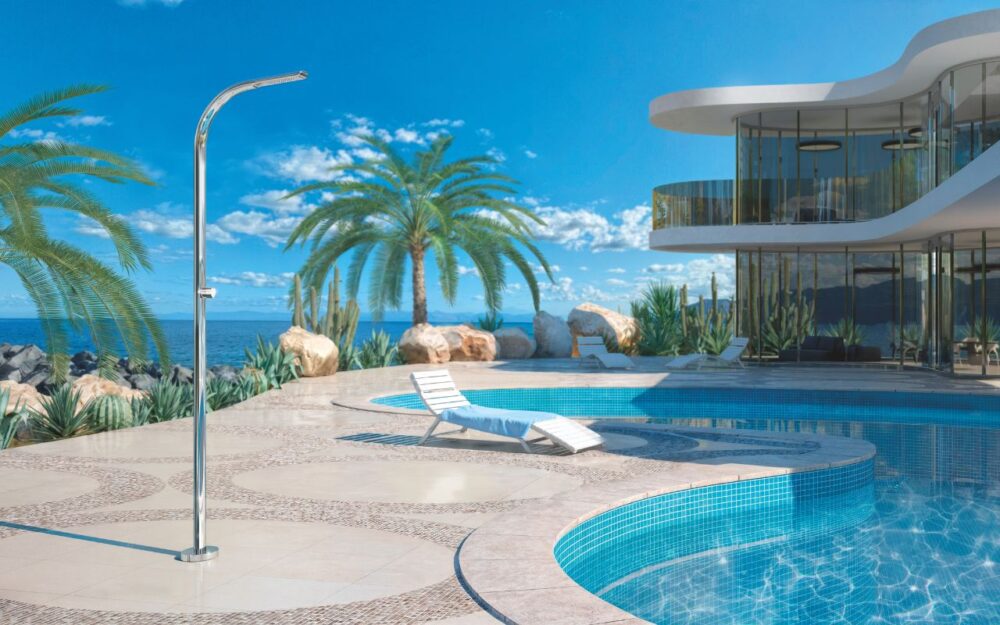
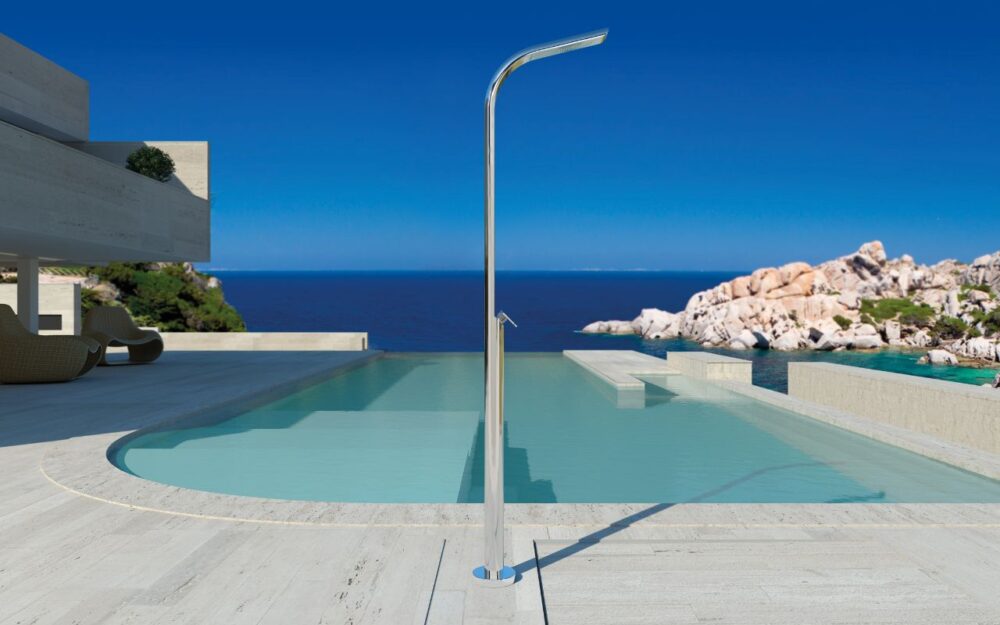
However, performance alone is not enough. The real value of a premium outdoor shower lies in its ability to integrate seamlessly into its surroundings. Whether in a minimalist garden, a contemporary pool setting, or aboard a yacht, the shower must dialogue with the architecture. Clean lines, balanced proportions, and carefully studied geometries transform it into a sculptural presence—sometimes discreet, sometimes iconic, but always intentional.
Design
Design also plays a crucial role in defining the user experience. The positioning of controls, the ergonomics of the showerhead, and the intuitive interaction with water flows all contribute to a sense of comfort and refinement. In high-end solutions, even technical components are designed to disappear, leaving space to the purity of form. Water connections can be hidden, structures can be removable or modular, and every detail is conceived to enhance both aesthetics and functionality.
Surface Finishing
Another key aspect is surface finishing. The difference between mechanical and mirror polishing is not only visual but also qualitative. Mechanical finishes offer uniformity and industrial precision, while mirror polishing—when performed by hand through multiple stages—achieves a depth and brilliance that elevates stainless steel to a reflective, almost liquid surface. This level of craftsmanship requires time, expertise, and meticulous attention, but it is precisely what gives the product its distinctive character and luxury appeal.
Creativity
In recent years, innovation has further expanded the possibilities of outdoor shower design. New collections explore softer geometries, more fluid shapes, and a closer relationship with contemporary architecture. Award-winning designs demonstrate how a technical object can become an expression of creativity, combining advanced engineering with a strong aesthetic vision. Recognition from international design institutions confirms that outdoor showers can now be considered true design pieces, not just functional accessories.
At the same time, the market has become increasingly aware of the long-term value of quality. While entry-level solutions may seem appealing from a cost perspective, they often fail to withstand demanding environments, leading to deterioration, maintenance issues, and eventual replacement. Investing in a high-quality outdoor shower means choosing durability, reliability, and timeless design—factors that ultimately define its real value over time.
Inoxstyle’s Approach
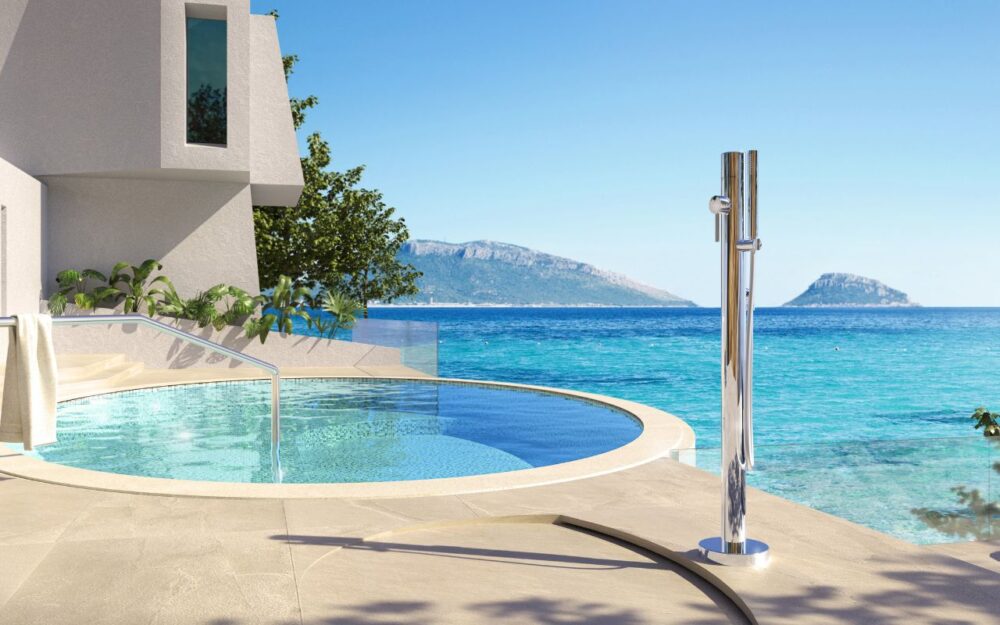
In this context, Inoxstyle represents a distinctive approach. Rooted in Italian craftsmanship and inspired by the rigorous standards of the marine world, its showers are designed to perform in the most challenging conditions while maintaining an uncompromising aesthetic. Each product is conceived as a monolithic structure, carefully engineered and finished to achieve both strength and elegance.
The result is more than a functional object. It is an architectural element that enhances outdoor spaces, a design statement that reflects a commitment to quality, and a long-term investment in beauty and performance. Outdoor showers, when designed with this philosophy, become a natural extension of the living environment—where water, material, and form come together in perfect harmony.