

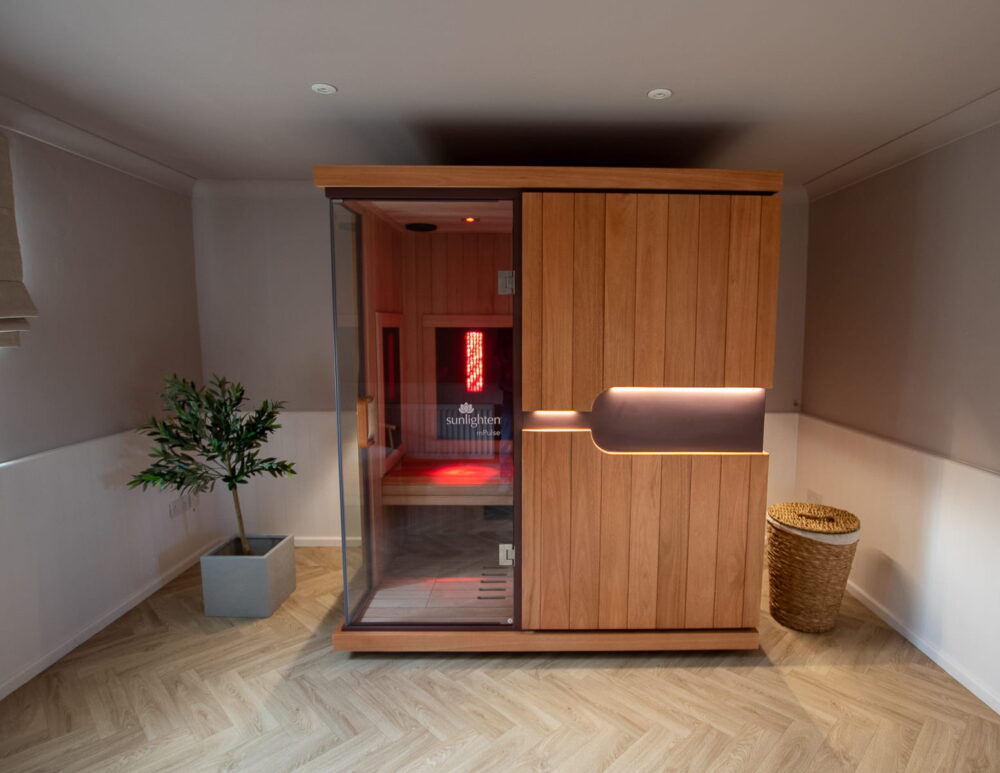

During a one-week training program at No1BootCamp, we tested and evaluated the performance outcomes and design elements of Sunlighten’s infrared sauna.
In a hurry? Here are the key takeaways:
- From object to system:Sunlighten’s sauna shifts from a passive wellness product to an interactive, programmable environment integrating light, heat, and user control.
- Design through manufacturing:In-house production, patented heaters, and material selection (basswood, low-VOC) position the sauna as a highly engineered architectural component.
- Experiential evolution:The new London flagship introduces a hybrid showroom–wellness club model, redefining how recovery spaces are designed, accessed, and monetised.
Our test of the Sunlighten infrared sauna did not begin in a showroom, but in the physically demanding environment of No1BootCamp in Norfolk. Over the course of a one-week high-intensity training program, the sauna was integrated into a structured recovery protocol. This provided a practical lens through which to evaluate not only performance outcomes, but design, materiality, and user interaction.
This field experience coincides with two key developments: the continued evolution of Sunlighten’s patented manufacturing model, and the opening of its new London flagship on March 21, an experiential space that signals a shift from product to environment.
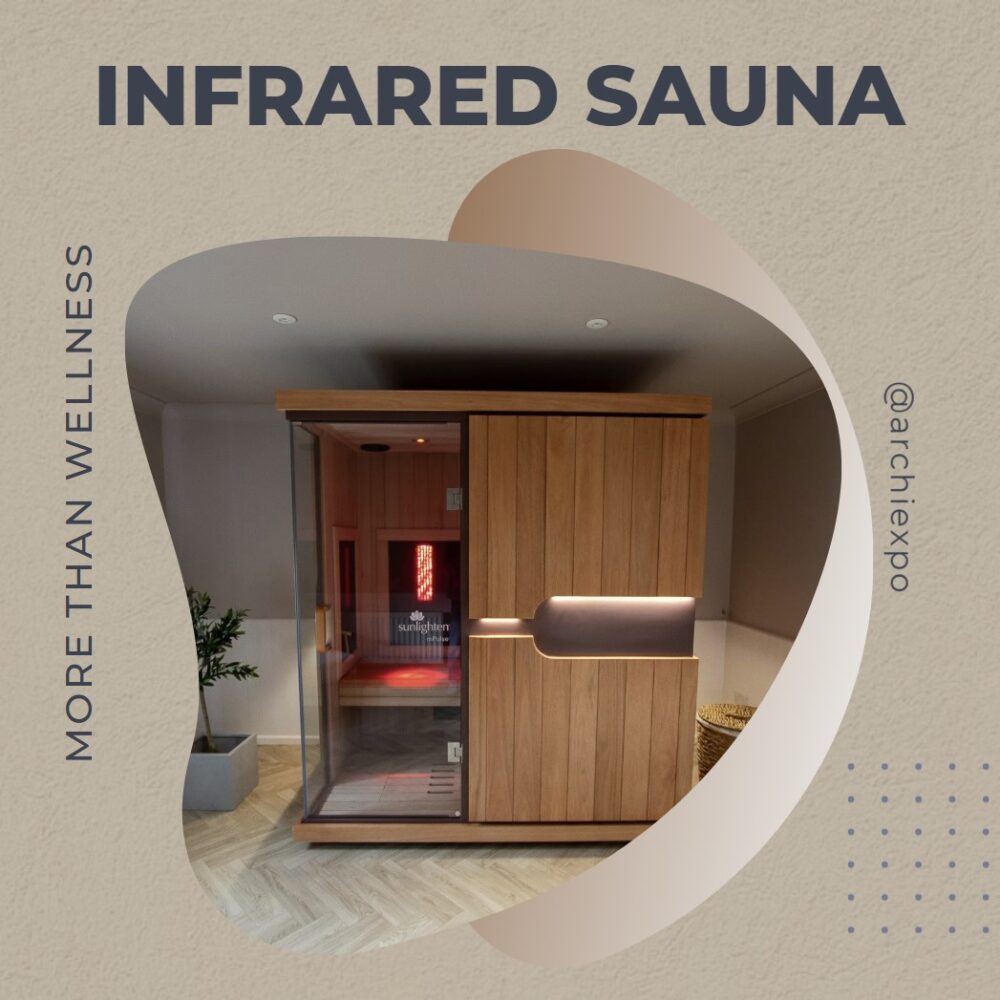
WATCH our video report published on ArchiExpo’s Instagram page, where we take you inside the sauna at No1BootCamp and provide insights from our interview with Joie Risk.
“It’s the beginning of a new chapter as we continue to expand across the UK and globally,” Joie Risk said.
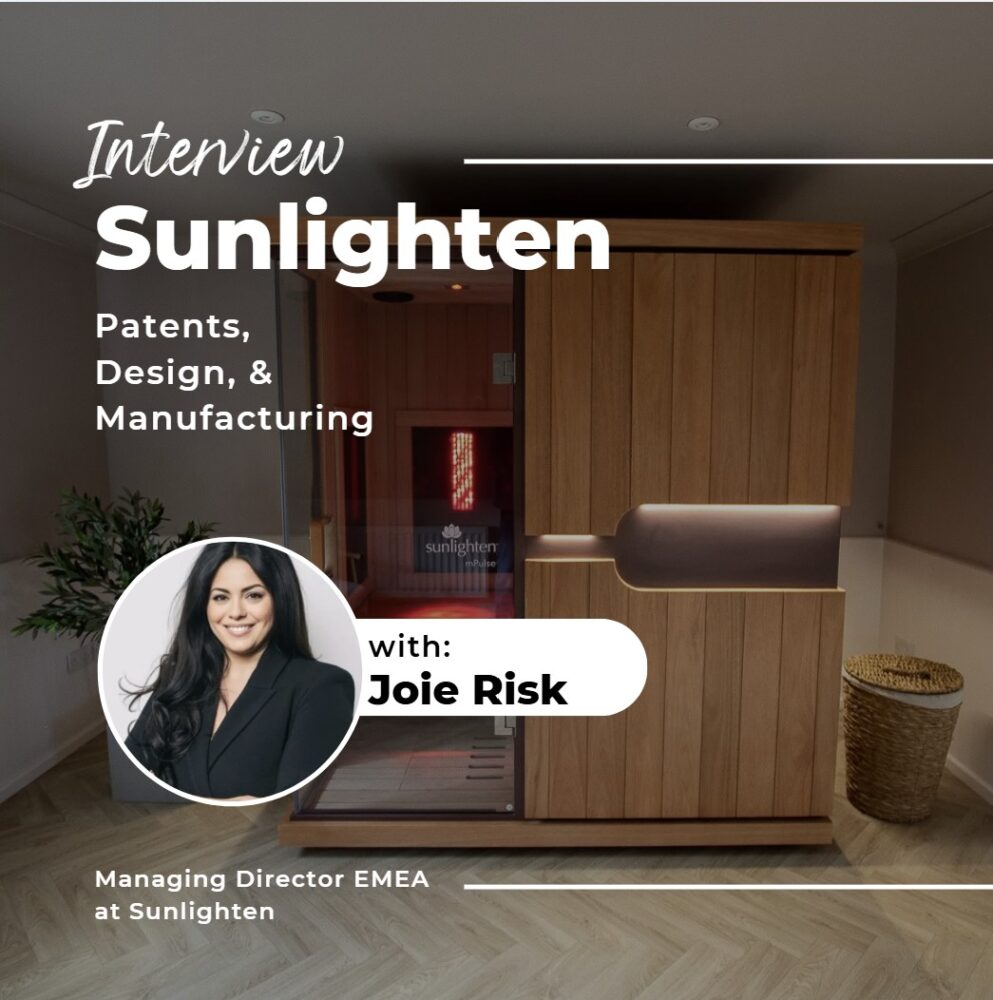
Testing the Sunlighten Sauna at No1BootCamp
At No1BootCamp, where recovery is treated as rigorously as training itself, the addition of a Sunlighten infrared sauna sits alongside ice baths and biometric tracking tools. The setting is significant: it places the sauna not in a wellness context, but within a performance-driven ecosystem.
From a design perspective, the most immediate distinction lies in the user interface and environmental control. Unlike traditional saunas, the Sunlighten unit integrates a tablet-driven system that allows users to select targeted programs—anti-aging, relaxation, or muscle recovery—by adjusting combinations of near, mid, and far infrared wavelengths.
This “smart sauna” positioning reflects a broader architectural trend toward programmable environments, where users actively shape spatial conditions rather than passively occupying them.

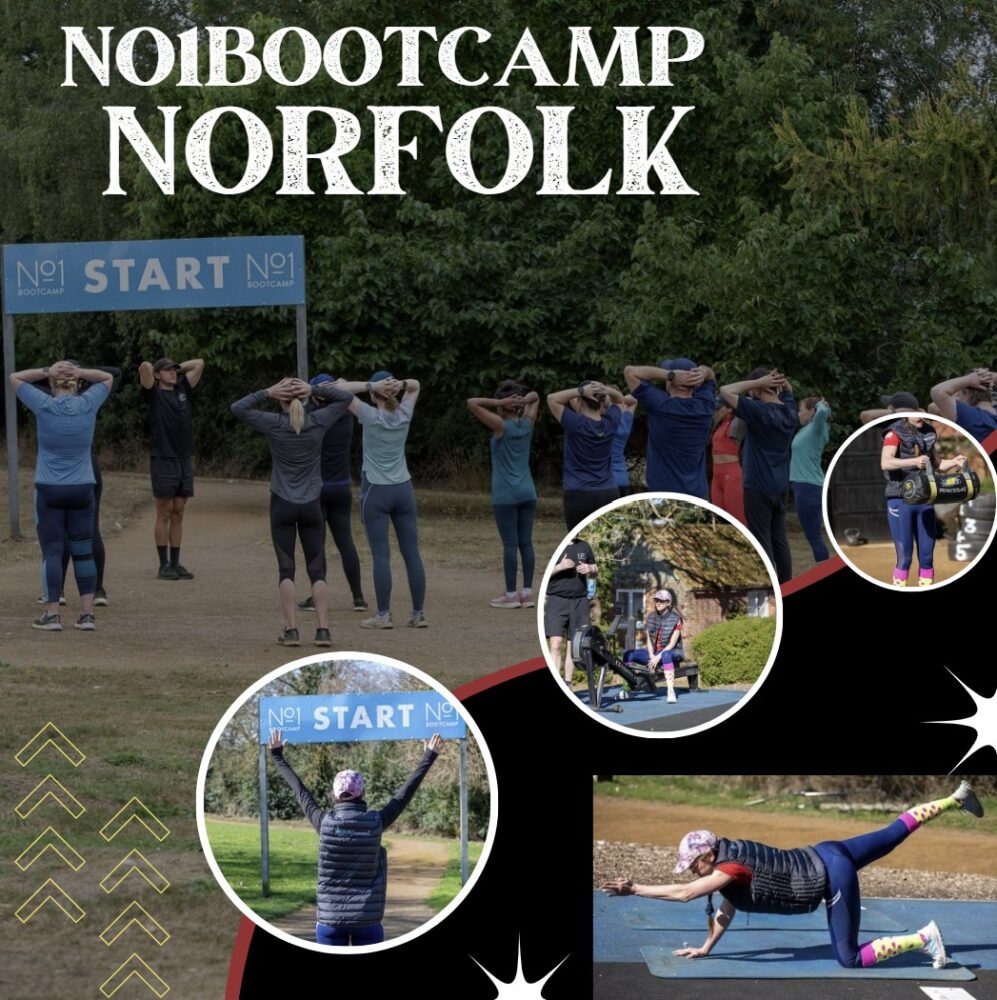
Image (above): Cristiano Ronaldo posts his experience in the Sunlighten sauna on Instagram.
Image (above): ArchiExpo e-Magazine editor at No1BootCamp, Norfolk. ©Jeremy Batch.
The physical experience reinforces this. Heat is progressive and controlled, rather than overwhelming, with the body gradually responding over repeated sessions. As Joie Risk, Managing Director EMEA at Sunlighten, explains:
“A traditional sauna provides heat by convection… with infrared, you’re combining heat and light therapy.”
This distinction is critical for designers: the sauna is no longer defined solely by temperature and enclosure, but by light delivery systems embedded within the architecture itself.
Manufacturing, Materials, and Patented Design
Behind the user experience lies a tightly controlled production model that sets Sunlighten apart in a fragmented wellness market.
Unlike many competitors, the company operates its own manufacturing facility in Vietnam, overseeing the entire process from material sourcing to assembly. This vertical integration enables precise control over performance and sustainability, two factors increasingly scrutinised in architectural specification.
Material selection is central. The primary structure uses basswood, chosen for its hypoallergenic properties and low toxicity, alongside eucalyptus. The wood is kiln-dried over several months to stabilise it and remove impurities, aligning with growing demand for low-VOC, non-toxic interior environments.
Construction methodology further differentiates the product. Sunlighten employs a patented magnet-based assembly system, eliminating the need for nails or permanent fixings. This allows for thermal expansion without structural stress, while also enabling disassembly and relocation. It’s an unusual but increasingly relevant feature in modular and circular design strategies.
At the core of the system are the company’s proprietary infrared heaters. These incorporate a patented, clinically proven SoloCarbon® far infrared sauna heater technology. The carbon coating is designed to deliver even heat distribution and high infrared emissivity, with certified absorption rates of up to 95–99%.
The result is not just a thermal environment, but a precisely engineered radiation field, where consistency of output becomes a design parameter. Risk frames the impact at a cellular level:
“The absorption of the infrared into the cell is recharging the mitochondria.”
For architects and designers, this introduces a new layer of consideration: how built environments can actively participate in physiological processes, rather than simply hosting them.
The London Flagship: From Product to Experience
Opened on March 21 at 29–31 Great Portland Street, Sunlighten’s London flagship represents a strategic evolution from product distribution to experiential architecture.
The space functions as a showroom and an immersive environment where visitors can engage directly with the technology. At its center is a “sauna club zone”, featuring multiple units available for booked sessions, effectively merging retail, wellness, and hospitality into a single spatial concept.
This hybrid model reflects a broader shift in design practice: the move toward membership-based, experience-led environments that prioritise engagement over transaction.
As Risk noted during the opening:
“It’s the beginning of a new chapter as we continue to expand across the UK and globally.”
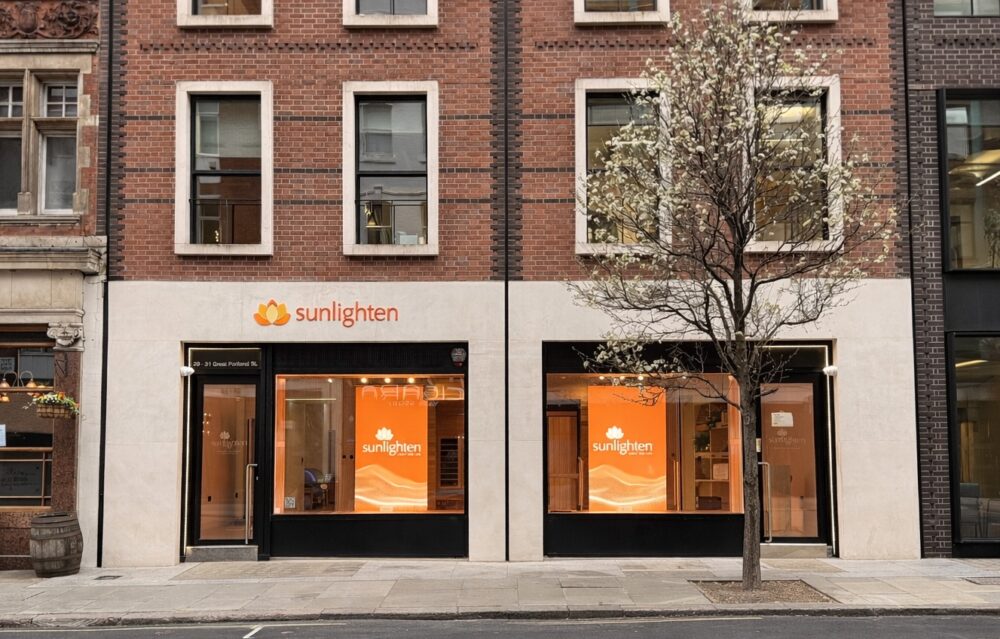
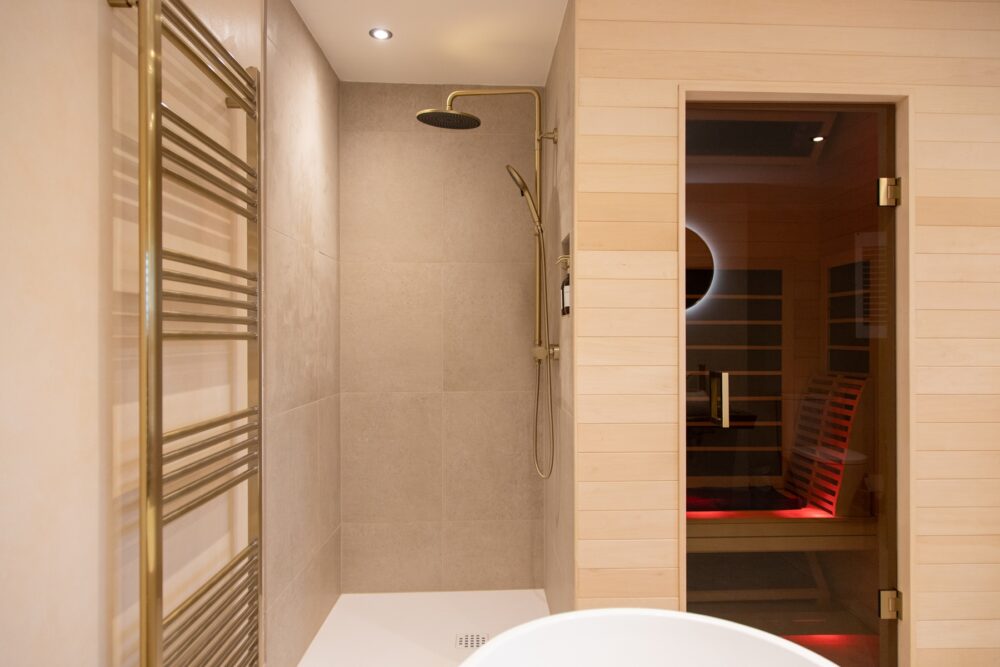
From a design standpoint, the flagship underscores the importance of narrative space-making. The sauna is no longer a standalone object but part of a curated journey—integrating lighting, materiality, and spatial sequencing to frame the user experience.
It also raises practical considerations for architects: acoustic control, ventilation integration, and user flow within compact, high-performance environments. The inclusion of bookable sauna units introduces operational design challenges typically associated with spas or fitness clubs, now embedded within a retail context.
Sunlighten’s trajectory—from bootcamp testing to patented manufacturing and experiential retail—illustrates a broader convergence between wellness technology and architectural design.
What emerges is a new typology: the intelligent recovery environment, where materials, systems, and user interfaces are integrated into a cohesive spatial experience.
For design professionals, the question is no longer whether to incorporate wellness features, but how deeply they should be embedded into the architecture itself.