

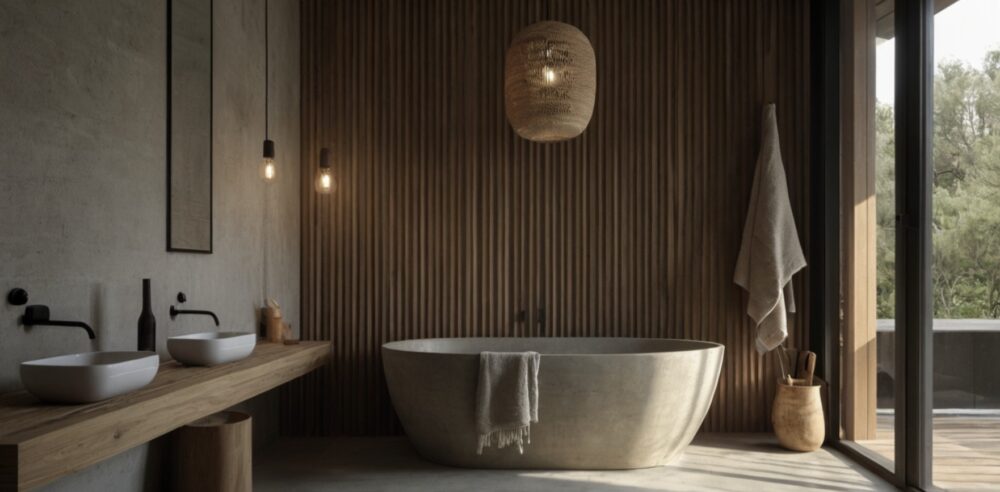

Paul McManus, President at McManus Kitchen and Bath, discusses how to rethink bathrooms and kitchens as engineered environments built to control moisture, airflow, and long-term durability.
In a hurry? Here are the key notes to know:
- Wet rooms must be engineered, not just designed: Managing moisture through drying systems, seamless materials, and proper ventilation is essential for long-term performance.
- Surface drying and seamless materials reduce failure points: Products like active shower drying systems and micro-cement finishes help minimize moisture retention and grout-related issues.
- Ventilation is still the most critical—and most overlooked—component: High-capacity fans and well-designed duct systems dramatically reduce humidity and protect finishes, cabinetry, and air quality.
There’s a quiet but important shift happening in bathroom design. For years, the focus has been on making a statement with unique tile, bold cabinetry, and luxury fixtures. Those elements are still important, but the most forward-thinking remodels are increasingly focused on something less visible and far more consequential: engineering wet areas to actively manage water, humidity, and long-term performance. Bathrooms and kitchens are the most moisture-intensive rooms in a home. Yet most are still built to look beautiful on day one rather than perform well over the lifespan of the space, which can easily be 20 years or more.
At the 2026 Kitchen and Bath Industry Show (KBIS) in February, several products stood out that signal where the industry is headed. Each tackles one of the core technical challenges of designing a successful wet room: drying surfaces quickly, eliminating vulnerable material joints, and moving moist air out of the space effectively.
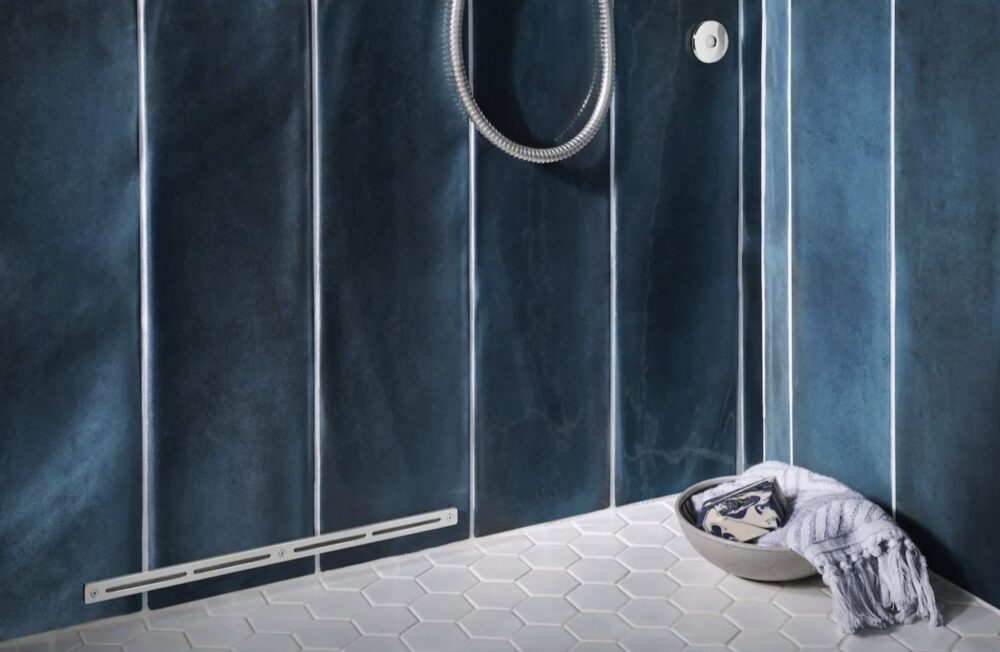
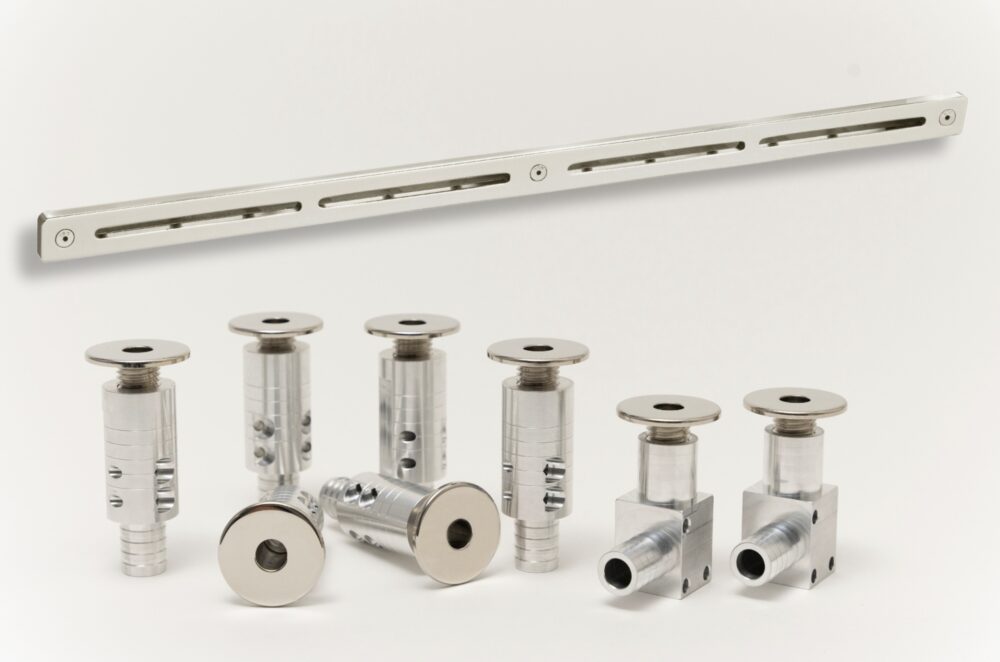
Airmada AirJet Shower Drying System
One of the most interesting products at KBIS this year addressed a problem designers know well but rarely solve directly: the amount of time moisture sits on surfaces after a shower.
The Airmada AirJet shower drying system takes a proactive approach. Instead of relying solely on passive evaporation or ceiling-mounted ventilation, the system pushes air directly across shower surfaces after use. That airflow accelerates the drying of tile, glass, grout, and other materials that normally stay damp for hours.
For architects and designers working in humid climates—Florida being a prime example—this approach could dramatically reduce the conditions that allow mold and mildew to take hold. It also has implications for material longevity. Grout joints, silicone seams, and glass hardware are often the first points of failure in showers simply because they remain damp for extended periods.
The technology also opens up design possibilities that were traditionally avoided. A good example is the shower pocket door. Historically, installing a pocket door in a wet environment was asking for trouble. The concealed cavity would trap moisture and quickly become a breeding ground for mold. With the Airmada pocket door system incorporating active drying, that concern is largely mitigated. Suddenly, designers can use space-saving sliding doors inside wet areas without the usual durability concerns.
But systems like this also highlight the complexity of designing wet rooms. Active drying requires power, integration with the bathroom’s control systems, and thoughtful coordination during construction. It’s not a product you tack on at the end of a project. It needs to be considered early in the design phase.
Craftex Wall Finishes
Materials are another area where the industry is evolving quickly. Traditional tile systems have served bathrooms well for decades, but they come with an inherent weakness: joints.
Every grout line represents a potential failure point in a wet environment. Over time, grout can crack, stain, or allow water intrusion if the underlying waterproofing system isn’t perfectly executed.
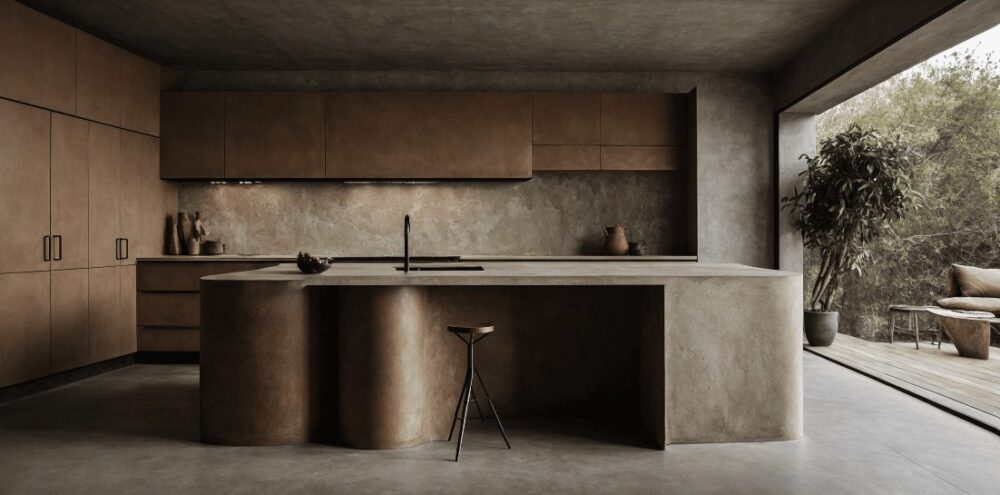
That’s one reason micro-cement systems like those from Craftex Wall Finishes are gaining traction. These finishes create a continuous surface with no grout lines and minimal seams. From a performance standpoint, fewer joints mean fewer places for water to penetrate or biological growth to develop.
The aesthetic appeal is also significant. Micro-cement delivers a soft, monolithic look that fits naturally with modern, Mediterranean, and Scandinavian design languages. Instead of a grid of tile joints, the surface reads as a continuous architectural plane.
Another practical advantage is its ability to be applied directly over existing tile in certain situations. For remodelers, this can eliminate demolition and reduce project timelines.
But specifying seamless materials introduces its own design challenges. Substrate preparation becomes critical. Movement in the underlying structure can telegraph through the surface, and installers must be trained in the application process. Micro-cement systems are less forgiving than traditional tile if shortcuts are taken.
For architects and designers, the takeaway is clear: seamless materials can improve wet-room performance, but they require careful coordination with installers and substrate conditions.
Revent 150 CFM Model
No matter how advanced the materials or drying systems become, ventilation remains the backbone of moisture management.
Unfortunately, ventilation is also one of the most commonly overlooked elements in residential bathrooms. Builder-grade bath fans are frequently undersized and poorly ducted, which means they fail to remove moisture efficiently.
The signs are familiar to anyone who has walked into a poorly ventilated bathroom: fogged mirrors, condensation on painted walls, and lingering humidity long after the shower is off.
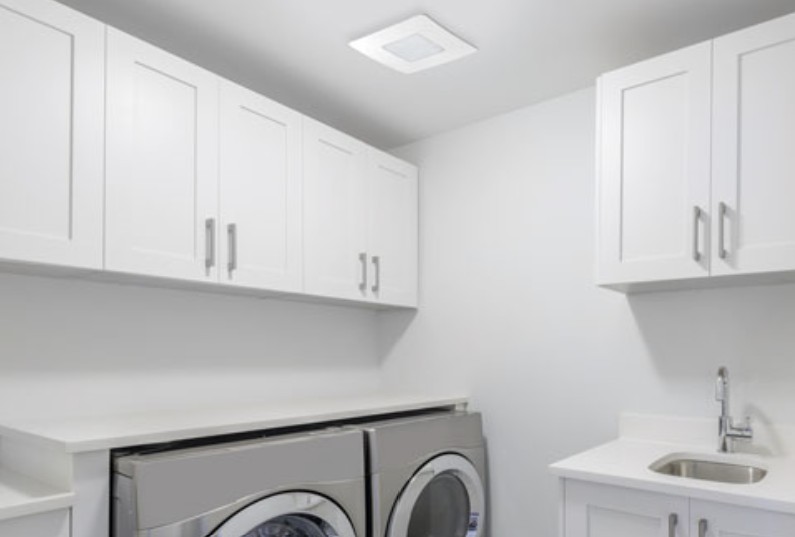
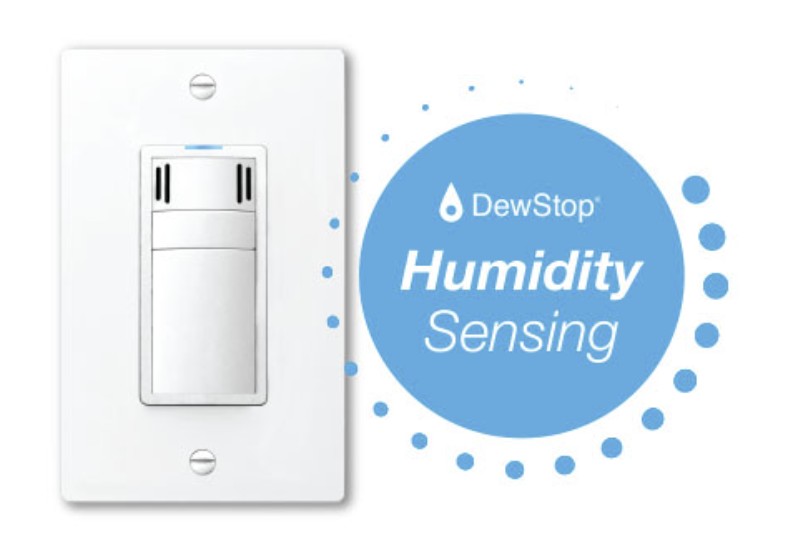
High-capacity fans like the Revent 150 CFM model offer a more effective solution. With significantly greater airflow, these units move moisture out of the room faster, reducing the amount of time humidity remains suspended in the air.
That reduction in “moisture dwell time” has a cascading effect on the entire space. Cabinetry lasts longer. Paint and wall finishes hold up better. Indoor air quality improves.
Revent has also addressed a design concern that often leads architects to downplay ventilation: aesthetics. Their fans are paintable, allowing them to blend more seamlessly into the ceiling plane rather than standing out as a visual distraction.
The challenge for designers isn’t just specifying a better fan. It’s ensuring the entire ventilation system—from duct routing to exterior termination—is designed properly. Even the best fan won’t perform if the ductwork is poorly installed.
A Mindset for Coordination
If there’s one takeaway from KBIS this year, it’s that bathrooms are becoming more like engineered systems and less like purely decorative spaces.
A successful wet room requires coordination between materials, ventilation, waterproofing, and mechanical systems. Each element affects the others, and a weakness in one area can undermine the entire design.
The best remodels we see today are the ones where architects, designers, and contractors think about performance from the beginning of the project. Waterproofing details are planned early. Ventilation is sized correctly. Materials are chosen not just for their appearance but for how they behave under constant exposure to moisture.
A beautiful bathroom should still look great twenty years from now—not just on the day the project is photographed.
Designers who embrace that mindset will create spaces that don’t just impress clients visually, but perform reliably for decades.
Paul McManus
Paul McManus is the owner and president of the design build remodeling company, McManus Kitchen and Bath, In Tallahassee, FL. Paul first became interest in design and constructing when studying architecture at the University of Florida. During school he starting a painting company where he learned how much he loved working with his hands. In 2015 he combined the two passions to create McManus Kitchen and Bath and has an in house design and production team focused on upscale remodels for homeowners in the Tallahassee area.